


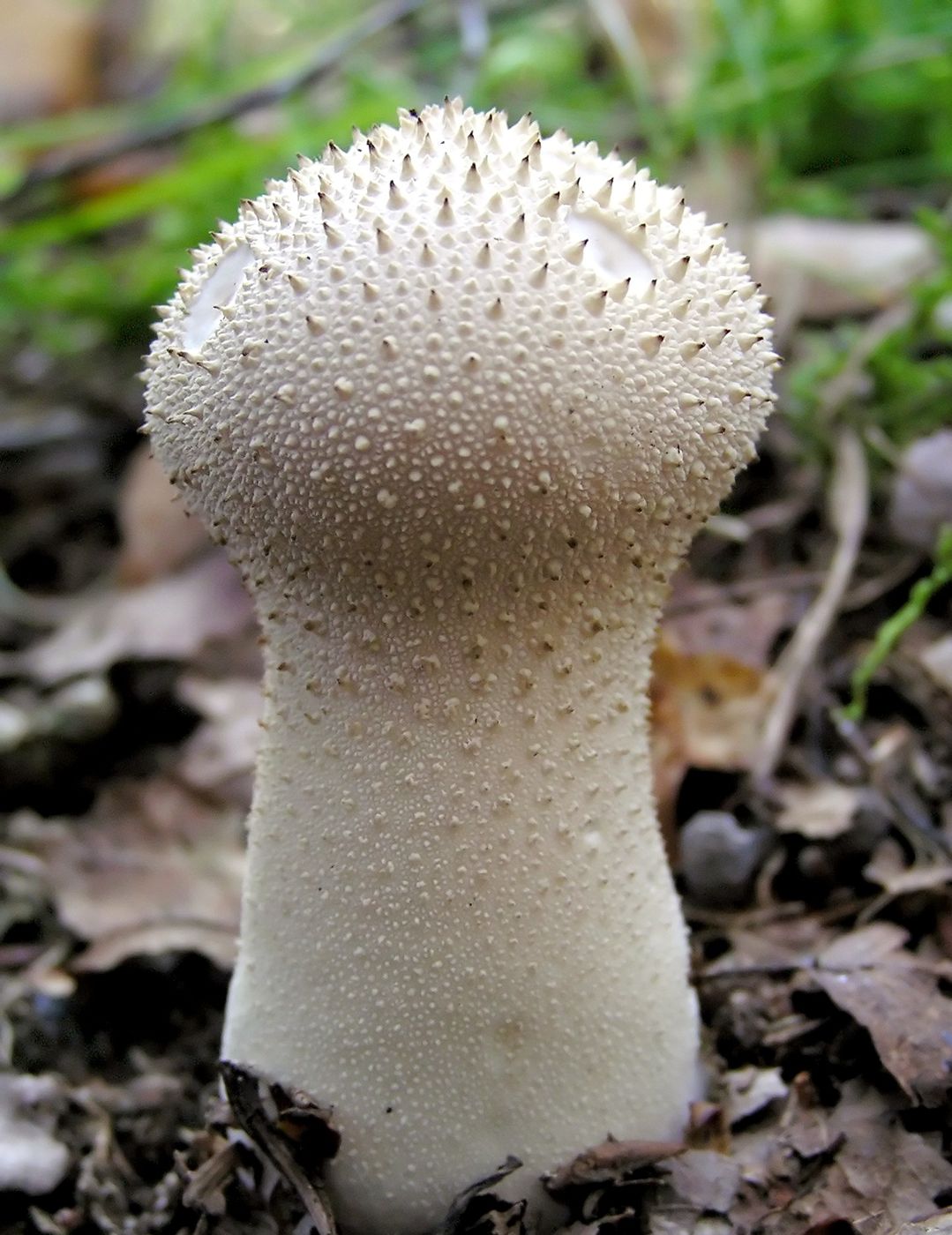
Anyone who has nudged a brown, papery ball in the woods and watched a puff of what looks like smoke drift out has met one of the cleverest spore-dispersal tricks in the fungal world. That smoke is not smoke at all. It is a cloud of microscopic spores, each one a potential start for a new fungus. Puffballs, a loose group of fungi that includes Lycoperdon, Calvatia, Bovista and their relatives, have abandoned the gills and pores most mushrooms use and instead package their spores inside a closed, rounded fruiting body. Understanding why they puff explains a lot about how fungi solve the problem of spreading themselves without legs, wings or seeds.
Most familiar mushrooms with gills or pores use a remarkable mechanism to shoot each spore a tiny distance off the gill or tube surface so it can fall clear and be carried away by air currents. Puffballs do something different. Mycologists describe them as gasteroid fungi, meaning their spores develop enclosed inside the fruiting body and are not forcibly launched one at a time. Inside a young puffball is a solid, firm interior called the gleba. As the fungus matures, the cells of the gleba break down, the tissue dries, and what was once spongy flesh turns into a mass of powdery spores mixed with fine threads called capillitium, which help keep the powder loose and fluffy.
The outer skin, called the peridium, changes too. In a common puffball such as Lycoperdon perlatum, the surface is covered in small spines or warts when young; these rub off with age, often leaving a faint net-like pattern, and a small opening called an ostiole forms at the top. At this stage the puffball works like a bellows. When something presses on the thin, flexible skin, the volume inside shrinks and air rushes out through the opening, carrying a plume of spores with it. Raindrops are thought to be one of the most important triggers, because each drop that lands on the papery skin can push out a small puff, which helps explain why many puffballs release spores during wet weather when conditions are also good for new growth.
Animals and people are another source of pressure. A deer stepping on a puffball, a falling branch or a curious child giving one a squeeze all produce the same result on a bigger scale. Some larger species, such as the giant puffball Calvatia gigantea, do not form a neat opening but instead crack and weather away, releasing their enormous load of spores gradually as the skin breaks up and wind, rain and passing animals disturb the contents. A single large puffball can contain a truly vast number of spores, and the sheer quantity is part of the strategy, since only a tiny fraction will ever land somewhere suitable to grow. Related fungi such as earthstars (Geastrum) use the same bellows principle but raise their spore sac on star-shaped rays that peel back from the outer skin.
Is the cloud harmful? An occasional puff in the open air is generally not a concern for healthy people, and the spores of puffballs are not toxic in the way some mushroom flesh can be. However, there is a rare condition called lycoperdonosis, a respiratory illness reported in people who inhaled large amounts of puffball spores, sometimes because of folk remedies or deliberate inhalation. It is sensible not to stick your face into a puffball, not to let children make a game of breathing the clouds, and to keep dogs from repeatedly sniffing and pouncing on them. Anyone with asthma or a lung condition who develops breathing problems after exposure to spore dust should seek medical advice.
It is also worth knowing that not everything round and white in the grass is a puffball. Earthballs such as Scleroderma citrinum have a thick, tough skin and a firm interior that turns dark purplish-black, and they tend to split open irregularly rather than puffing through a neat pore; they are poisonous. More seriously, the young egg stage of deadly Amanita species, including the death cap, can look like a small white puffball from the outside, and only cutting it in half reveals the outline of a developing cap and stem inside. This is why no one should judge a puffball-like fungus as safe to eat from its shape, colour or a single trait, and why folk ideas such as an animal having nibbled it or the skin peeling easily mean nothing. Only an expert who has examined the actual specimen can confirm edibility, and some deadly species look like popular edible ones. If anyone, child or adult, has eaten a wild fungus you are unsure of, call poison control or emergency services immediately and keep a sample of the mushroom.
If you want to know what kind of puffball or puffball look-alike you have found, a good set of photos goes a long way. Photograph the outside of the fruiting body, its base and where it is growing, and, if you are comfortable doing so with gloves, a clean cut through the middle showing the interior; for gilled mushrooms nearby, capture the cap, gills and stem base. Shroomly can then suggest likely species and highlight toxic look-alikes such as earthballs and Amanita eggs. Treat that result as a starting point for learning rather than a verdict, and confirm any identification with a local mycological society or an experienced expert who can examine the specimen in person.