


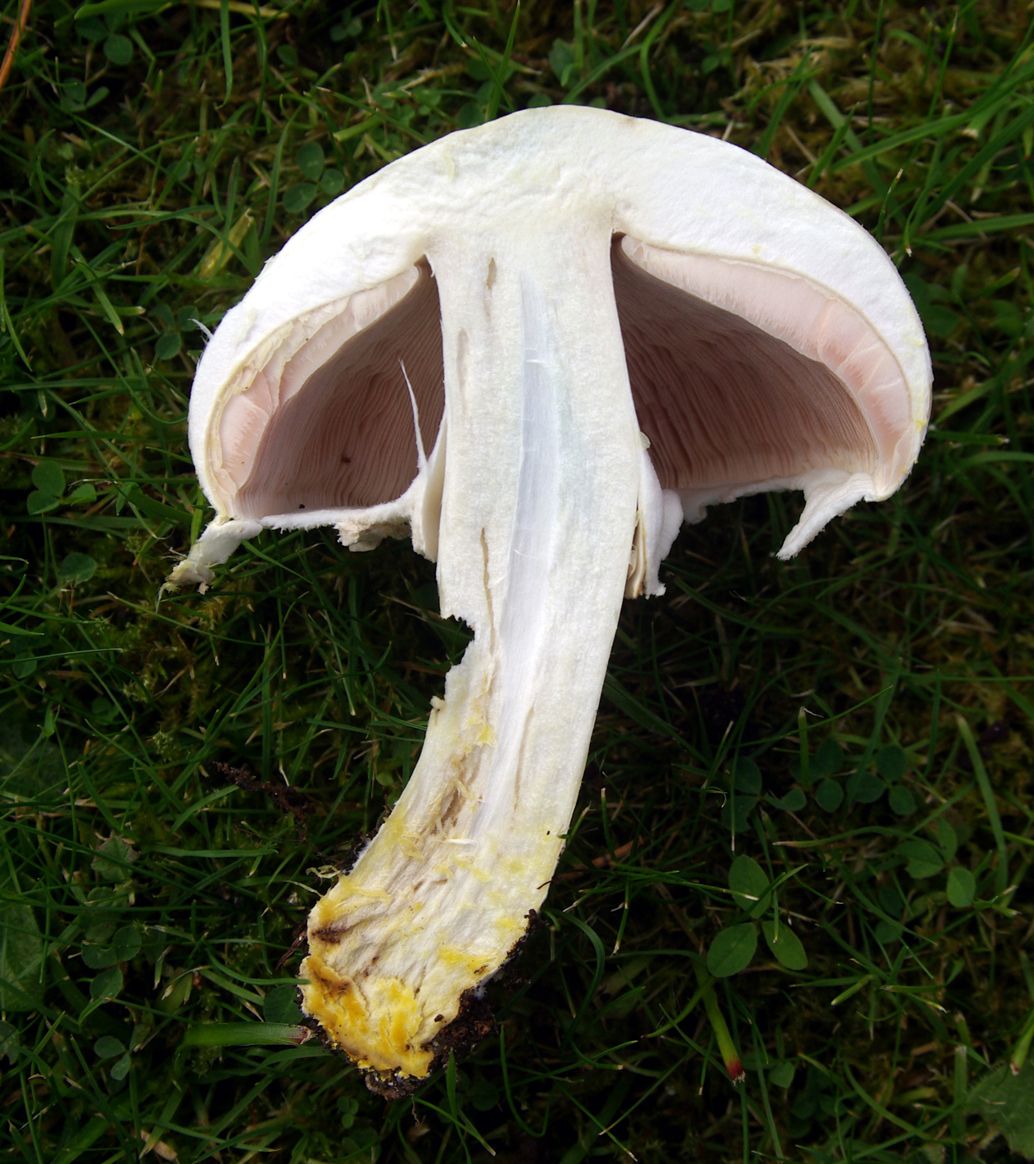
Anyone who has walked through a damp autumn wood knows the smell of fungi. It is earthy, rich and a little musty, and it often arrives before you see a single mushroom. That scent is not imagined. Fungi constantly release volatile organic compounds, small molecules that drift easily through air. The best known is 1-octen-3-ol, often nicknamed mushroom alcohol, which is responsible for much of the classic mushroom aroma. Fungi produce it as they break down fatty acids. Mycelium and fruiting bodies give off many other compounds as well, and the mix varies a great deal from species to species.
Why would a fungus bother producing smells at all? In some cases the answer is clearly about spreading spores. The common stinkhorn, Phallus impudicus, is the most dramatic example. Its tip is covered in a dark, slimy spore mass that smells strongly of rotting flesh. The odor draws in flies, which eat the slime and carry spores away on their bodies and in their droppings. Related species such as the octopus stinkhorn, Clathrus archeri, use the same strategy. Underground fungi like truffles cannot rely on wind at all, so their powerful aromas help animals locate them, dig them up and scatter the spores. For many ordinary cap-and-stem mushrooms, the role of scent is less clear. Some odors may deter animals or insects, help in competition with microbes, or simply be chemical by-products of the fungus feeding and growing.
Because smells are fairly consistent within a species, mycologists treat odor as one identification feature among many. Field guides describe scents such as aniseed, radish, raw potato, flour or meal (called farinaceous), garlic, bleach and phenol. The aniseed funnel, Clitocybe odora, is named for its sweet anise scent. The false death cap, Amanita citrina, is often described as smelling of raw potato. The poisonous yellow stainer, Agaricus xanthodermus, typically gives off an unpleasant inky or carbolic odor, especially from the stem base. That smell, together with its chrome-yellow staining, helps separate it from edible field mushrooms. Many Hebeloma species have a radish-like smell. Experienced identifiers often crush a small piece of gill or flesh and sniff it, because some odors only become noticeable once the tissue is damaged.
Smell has real limits, even as an identification aid. People's sense of smell varies widely, and some individuals cannot detect certain compounds at all. Descriptions like spicy, sweet or mealy mean different things to different noses. Odor also changes with a mushroom's age, temperature and moisture. A young specimen may smell faint, and an old or rotting one may smell bad whatever the species. Experts therefore always combine scent with features they can see and measure: cap shape and texture, gill color and attachment, spore print color, any ring on the stem, the shape of the stem base, the growing habitat and nearby trees.
The most important point is that smell is not a safety test. A widespread myth says poisonous mushrooms smell bad and edible ones smell pleasant. That belief is false and dangerous. The death cap, Amanita phalloides, causes most fatal mushroom poisonings worldwide. It does not reliably smell unpleasant, and fresh specimens can smell quite mild, while older ones are sometimes described as sickly sweet. People who have survived death cap poisoning have reported that it tasted good. Other folk tests are just as unreliable, including tarnishing a silver spoon, peeling the cap, or watching whether animals eat the mushroom. Edibility can only be confirmed by an expert who has examined the actual specimen. Even then, it matters that several deadly species closely resemble popular edible mushrooms. If you ever suspect someone has eaten a poisonous mushroom, call poison control or emergency services immediately and keep a sample of the mushroom for identification.
If an unusual smell catches your attention on a walk, treat it as a clue to note, not an answer. Take clear photos of the top of the cap, the gills or pores underneath, and the full stem down to its base. Dig gently around the base if needed, because a hidden sac-like volva is a key warning sign in deadly Amanita species. Shroomly can use those photos to suggest likely species and flag any toxic look-alikes. You can add your own notes on smell, habitat and nearby trees to help narrow things down. For any question of edibility, take the specimen to a local mycological society or an experienced expert who can examine it in person, and never rely on a photo, an app result or a sniff alone.