


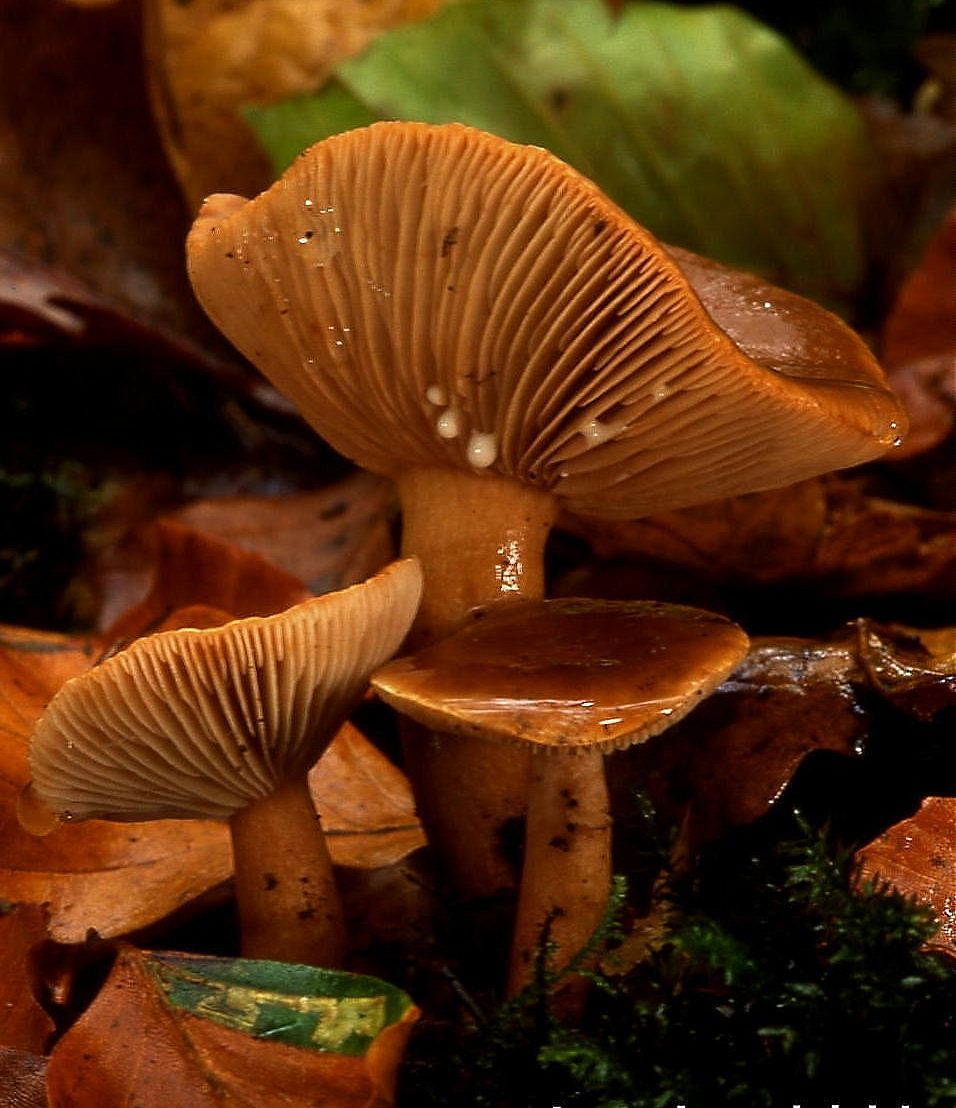
When you turn over a typical umbrella-shaped mushroom, the first thing you notice is the intricate pattern of thin, radiating plates suspended beneath the cap. Known botanically as lamellae or gills, these delicate structures are central to the mushroom's existence. The visible mushroom is not the entire organism, but rather the ephemeral fruiting body of an extensive fungal network called mycelium that lives hidden underground or inside decaying wood. The sole purpose of this fruiting body is reproduction, functioning much like an apple on an apple tree. To reproduce successfully, the fungus must manufacture millions or even billions of microscopic single-celled units called spores and cast them into the wider world. Gills are nature's elegant engineering solution to packing an astonishing amount of spore-producing machinery into a remarkably small package.
If the underside of a mushroom cap were smooth and flat, it would offer only a tiny amount of surface area from which to release spores. By folding that surface into dozens or hundreds of thin vertical sheets, the fungus expands its productive zone exponentially, often multiplying the available surface area by twenty times or more. The fertile surface covering each gill is called the hymenium. Across this lining sit microscopic club-shaped cells called basidia, each typically bearing four microscopic spores perched on tiny prongs called sterigmata. Thanks to this vast pleated architecture, a single mature cap of an everyday species like the field mushroom (Agaricus campestris) or an oyster mushroom (Pleurotus ostreatus) can release tens of millions of spores every single hour without taking up excessive space on the forest floor.
Producing spores in massive quantities is only part of the challenge; launching them into the air without letting them crash into neighboring gills requires precise physics. Fungi overcome this obstacle using an extraordinary microscale hydraulic mechanism known as a surface tension catapult. As a spore nears maturity on its gill, the basidium secretes two separate moisture droplets: a spherical drop called Buller's drop at the base of the spore and a flatter film of water along its side. As Buller's drop expands, it suddenly touches and merges with the adjacent film. This instantaneous collapse shifts the center of mass in less than a microsecond, releasing surface tension energy that catapults the spore horizontally off its peg at immense acceleration directly into the narrow air gap between adjacent gills.
Once launched into the void between the gills, the spore quickly decelerates against air resistance and begins to fall downward under the pull of gravity. Because the gills hang strictly vertical, the spores have an unobstructed path to drop clear of the cap. Intriguingly, mycological research has demonstrated that mushrooms do not simply rely on ambient weather to complete this journey; they actively engineer their own local microclimate. As water evaporates from the moist surfaces of the gills, the air directly beneath the cap cools. This localized cooling generates subtle convective currents that pull cooler air downward and out from beneath the rim, creating miniature breezes that carry spores away from the parent mushroom even on completely calm days.
Gills are not the only design fungi have evolved to disperse spores, and comparing different structural strategies offers fascinating insight into fungal evolution. While gilled mushrooms are among the most familiar, other lineages independently solved the surface-area problem using alternative architectures. Boletes, for instance, produce a spongy layer of vertical tubes terminating in pores, tooth fungi like Hericium grow downward-pointing spines, and chanterelles produce blunt, undulating ridges known as false gills. For naturalists and field observers, examining the underside of the cap is often the quickest way to determine which major fungal group a specimen belongs to. In true gilled mushrooms, noting whether the gills attach squarely to the stem, run down the stem, or remain completely free provides vital clues for sorting species.
Scrutinizing gill features is equally essential for personal safety, as several lethal species feature pale gills that closely resemble harmless wild varieties. The notorious death cap (Amanita phalloides) and destroying angels within the genus Amanita possess clean white gills that inexperienced foragers have repeatedly mistaken for edible pasture mushrooms. Folk tests for toxicity—such as boiling a mushroom with a silver coin, assuming that insect-eaten mushrooms are non-toxic, or judging edibility by pleasant smell—are dangerous falsehoods that have caused severe poisonings. Only a trained expert who physically examines every structural detail of a fresh specimen, including gill attachment, stem structures, and spore characteristics, can reliably confirm a species. If anyone ever ingests a wild mushroom and poisoning is suspected, contact emergency medical services or a poison control center immediately, ensuring you save any leftover pieces of the specimen for expert identification.
The next time you encounter a wild mushroom on a woodland trail or in your lawn, take a moment to look underneath the cap and appreciate the sophisticated biology at work. To learn how to identify the mushrooms you discover, capture clear, detailed photographs of the top of the cap, the full arrangement of the gills beneath, and the very base of the stem where it meets the ground. You can upload your photos to Shroomly to explore potential species matches and learn about any toxic look-alikes that share similar traits. To be certain of any discovery, always cross-reference your observations with trusted regional field guides or share your specimen with a local mycological society.