

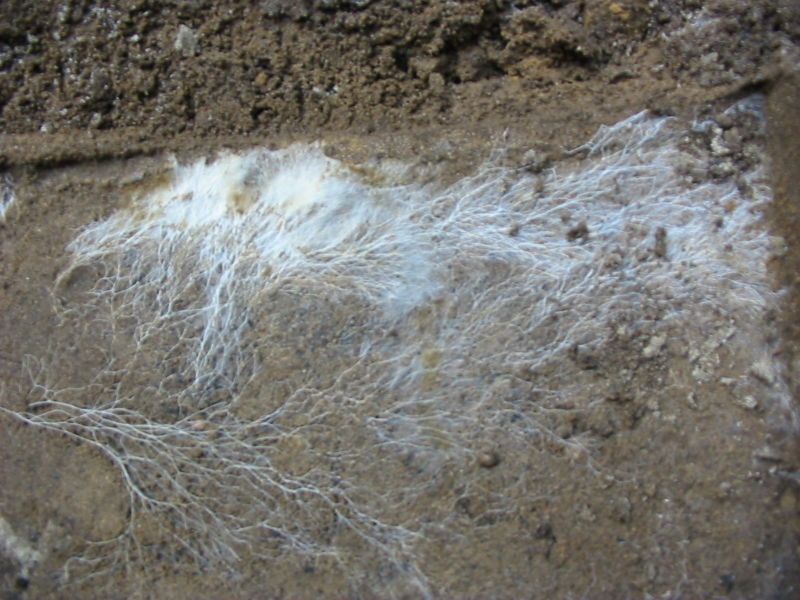
Why do mushrooms grow after rain? Because the fungus was already there. A mushroom is only the reproductive structure of a much larger organism that lives hidden in soil, wood, or leaf litter all year. That hidden part, the mycelium, is a network of microscopic threads called hyphae that feed by breaking down organic matter or by partnering with plant roots. When conditions are right, the mycelium invests in mushrooms to spread its spores.
Water is the main trigger. Mushrooms are mostly water, and building them requires a lot of it at once. A good soaking after a dry spell, combined with cooling temperatures in late summer and autumn, signals to many species that it is time to fruit. Other species respond to different cues, such as warmth in spring for morels, which is why different mushrooms appear at different times of year.
The speed surprises people. Many mushrooms seem to appear overnight because the hard work happened earlier and out of sight. Tiny primordia, the beginnings of mushrooms, form within the mycelium, and when water becomes available, they expand mainly by their cells taking up water and stretching rather than by producing large numbers of new cells. Inflation is much faster than building from scratch, so a mushroom can go from barely visible to full size in a day or two.
Their short life is just as quick. Many mushrooms release their spores and begin to collapse within days. Ink caps famously dissolve into black liquid, and many lawn mushrooms are gone by the afternoon once the sun comes out. That brief window is one reason identification can be tricky: you may only ever see a species at one age, and its colours and shape can change a lot from young to old.
None of this means rain creates mushrooms out of nothing or that a mushroomy lawn has a new problem. The same patch will usually fruit again after the next heavy rain, because the mycelium beneath it is long-lived. In most gardens, it is doing useful work recycling buried wood and roots into nutrients.
If a burst of mushrooms has appeared after the rain and you want to know what they are, photograph the cap, gills, stem, and the spot they are growing in, and let Shroomly identify the most likely species and flag any that are toxic. It is a good way to learn your local fungi, as long as you treat every wild mushroom as off the menu unless an expert has confirmed it in person.