


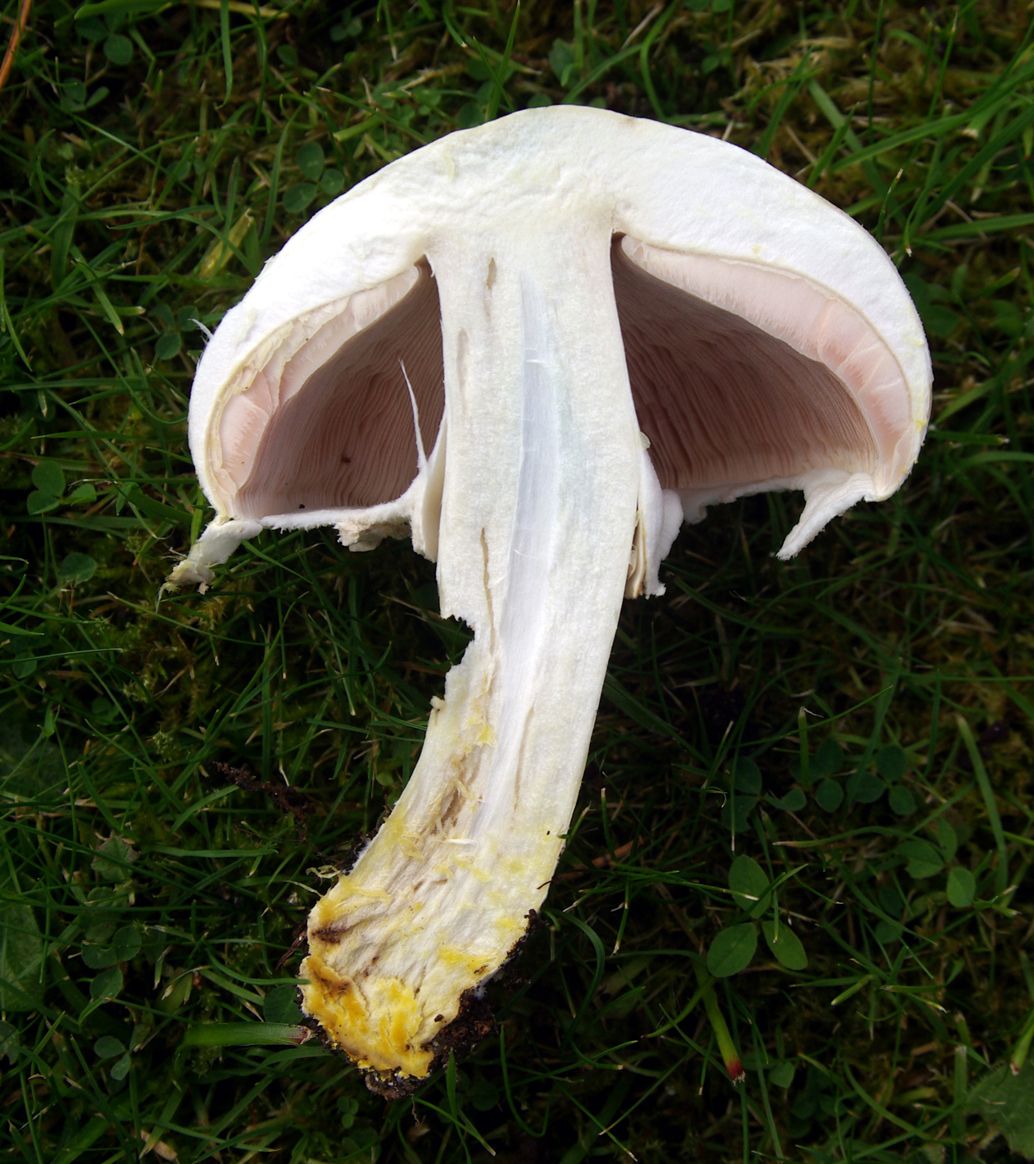
When you cut, handle, or step on certain wild mushrooms, their caps and stems can transform with startling speed, shifting from pristine white to vivid ink-blue, bright chrome-yellow, or deep blood-red. This phenomenon, known in mycology as bruising or staining, is a biochemical defense and an inevitable consequence of cellular damage. Inside the living fungal tissue, specific precursor compounds and specialized enzymes are kept segregated within separate compartments of the cell. When the cell walls rupture due to pressure or cutting, these chemicals mingle in the presence of atmospheric oxygen, setting off enzymatic oxidation that synthesizes intensely colored pigments almost instantly.
The exact shade of the bruise depends on the chemical makeup of the particular species. In many boletes, such as species in the genera Cyanoboletus and Neoboletus, injured tissue turns startlingly blue because enzymes oxidize organic acids like variegatic acid and xerocomic acid into blue quinone pigments. A completely different biochemical pathway produces the blue staining seen in certain psychoactive fungi, where the compound psilocin degrades under oxidation. Staining is not limited to shades of blue: the toxic yellow stainer (Agaricus xanthodermus) flashes a diagnostic, electric yellow at the base of its stipe due to phenolic oxidation, while blushing species like the blusher (Amanita rubescens) slowly develop a reddish, vinaceous hue as their flesh oxidizes over several minutes.
Because these transformations are so visually dramatic, generations of folk wisdom have attempted to tie mushroom color changes to edibility, creating dangerous and pervasive myths. Some believe that any mushroom that bruises blue is fatally poisonous, while others believe that blue discoloration is an infallible marker of magic mushrooms. Similarly, some foragers assume that poisonous mushrooms always turn color and that edible ones stay pure white. In reality, fungal chemistry does not correlate with human safety. Numerous wholesome edible species stain brilliant shades of blue, while some toxic boletes do as well. Most dangerously, some of the planet's deadliest fungi, including the death cap (Amanita phalloides) and the destroying angel (Amanita bisporigera), undergo no dramatic color change whatsoever, remaining stubbornly pale and unmarked when crushed.
Relying on single traits or casual tests to evaluate a wild mushroom is one of the leading causes of accidental poisoning worldwide. Old wives' tales suggest that boiling a silver spoon alongside wild mushrooms will detect toxins by turning black, that caps that peel easily are always safe, that pleasant aromas guarantee a harmless meal, or that insects and woodland animals will avoid toxic mushrooms. Science has thoroughly debunked each of these notions. Lethal peptides such as amatoxins do not tarnish silver, have no offensive smell, and do not inhibit insects, slugs, or rodents, whose digestive enzymes and metabolic pathways differ vastly from our own. A wild mushroom can look, smell, and bruise in a way that seems benign while still harboring fatal concentrations of cellular toxins.
For mycologists and experienced field observers, staining is not a shortcut to determining edibility, but rather one valuable taxonomic trait among many. When using color change to identify a species, specialists note the exact location of the reaction—whether it occurs on the cap surface, along the gill edge, throughout the context of the stem, or strictly at the bulbous stem base. They also track the speed and progression of the change, recording whether the flesh flashes instantaneously and fades, or transitions gradually through intermediate tones of orange, pink, or gray. This behavior must always be evaluated alongside physical features such as spore print color, gill attachment, ring anatomy, and habitat.
Anyone who suspects that a wild mushroom has been ingested—particularly one that cannot be positively identified with absolute scientific certainty—should contact local poison control or emergency medical services immediately. You should never wait for symptoms like stomach pain, nausea, or sweating to begin, nor should you attempt home remedies or induced vomiting. Some of the most lethal mushroom toxins produce a deceptive delay of twelve hours or more before physical illness appears, by which time severe internal organ damage may already be underway. Whenever possible, carefully collect and preserve the remaining specimens, including the intact base, so toxicologists and medical professionals can examine them.
Observing the swift, colorful reactions of wild fungi is one of the most rewarding aspects of exploring nature, offering a direct window into the invisible chemistry of forest ecosystems. When you encounter an interesting specimen in your lawn or on the trail, take clear, well-lit photos of the top of the cap, the underside showing the gills or pores, and the subterranean stem base, noting any color shifts that occur when the flesh is scratched. You can upload these images to Shroomly to explore candidate species and review potential toxic look-alikes. However, because toxic mushrooms frequently resemble edible varieties, you should never consider a wild mushroom safe to eat based on an app or photograph; edibility can only ever be confirmed in person by a qualified mycological expert who has physically inspected the intact specimen.