


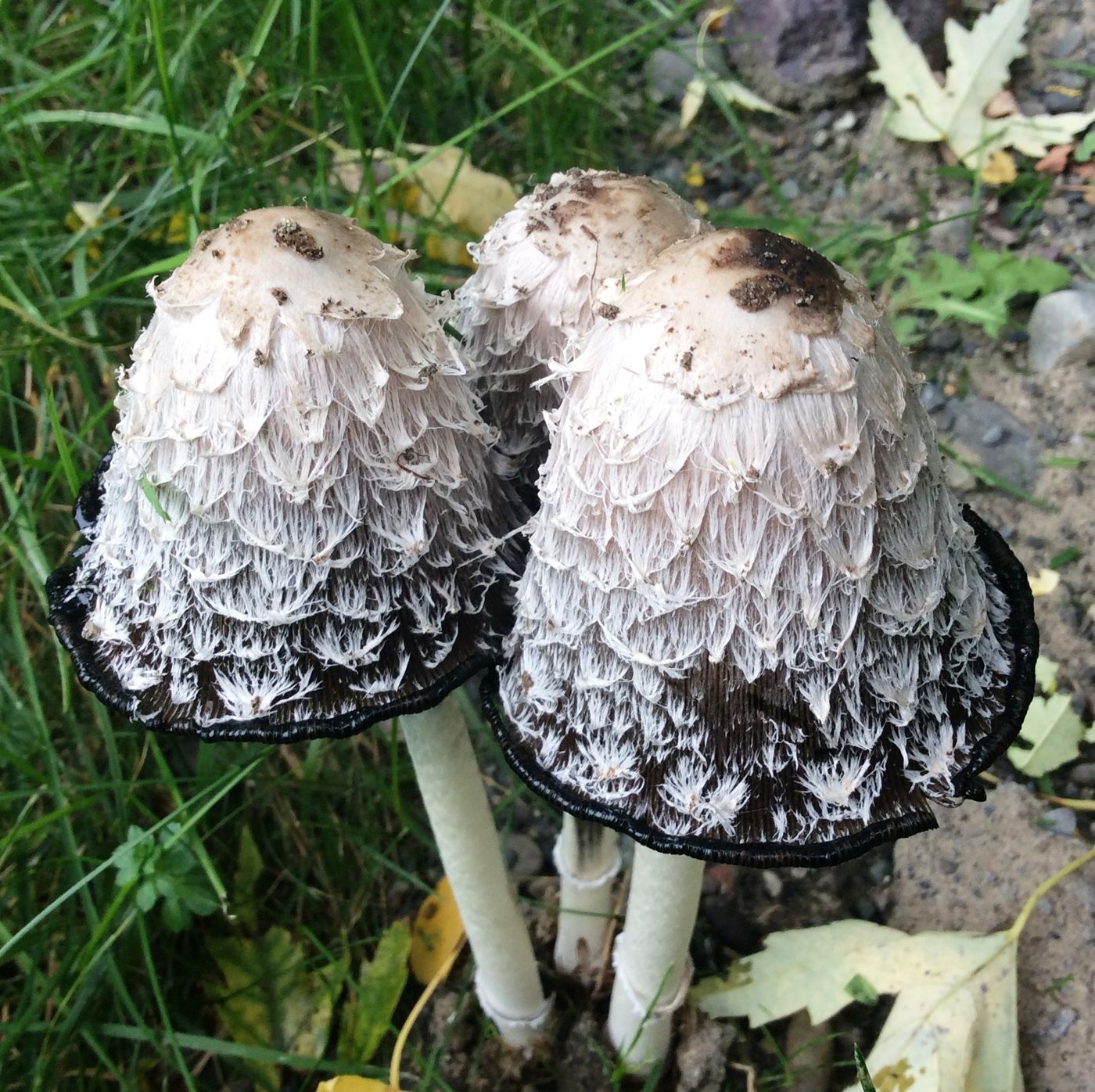
Anyone who has discovered a cluster of pristine, cylindrical white mushrooms in their lawn only to return hours later to find a puddle of dark goo has witnessed one of the fungal kingdom's most dramatic transformations. Mushrooms belonging to the ink cap family, including the well-known shaggy ink cap (Coprinus comatus) and the common ink cap (Coprinopsis atramentaria), do not merely dry out or slowly rot when they reach maturity. Instead, their flesh undergoes a rapid self-liquefaction called deliquescence. What looks to human eyes like disastrous decay is actually a finely tuned reproductive mechanism that has evolved to solve a physical problem of spore dispersal.
Most standard gilled mushrooms, such as field mushrooms or agarics, produce broad, umbrella-shaped caps with gills suspended horizontally over empty air. This open architecture allows microscopic spores to drop clear of the fungal tissue and drift away on gentle air currents. Ink caps, by contrast, possess tall, bell-shaped or cylindrical caps with gills that are crammed tightly together in near-vertical planes. If an ink cap simply shed its spores all at once inside this narrow chamber, millions of them would become trapped against neighboring gills and never escape into the surrounding environment. Deliquescence solves this structural dilemma through sequential self-destruction.
The liquefaction process is powered by endogenous chitinase enzymes, which are specialized proteins produced by the fungus that break down chitin, the primary structural component of fungal cell walls. This digestion begins at the lower rim of the cap and works its way upward in a steady wave. As the lowest section of a gill matures and releases its spores, the underlying tissue digests itself into a viscous, black fluid and curls outward. By dissolving away the spent tissue, the mushroom clears a path, leaving the next tier of mature spores completely exposed to the open air. Over the course of a single day or two, an entire cap can consume itself from base to apex, ensuring that almost every spore has an unblocked trajectory into the breeze.
The resulting black liquid is densely concentrated with millions of dark spores. While airborne breezes carry away many of the spores released during the curling stage, the inky residue itself provides an alternative dispersal strategy. In humid, rainy weather where air currents are subdued, raindrops splashing against the dripping cap can fling spore-laden droplets across the immediate area. In addition, moisture and the organic compounds in the liquid frequently attract crawling insects, flies, and beetles, which pick up the sticky spores on their bodies and inadvertently transport them to fresh patches of organic material.
Because ink caps change appearance so rapidly, they require extreme caution from outdoor enthusiasts. Foragers often seek out young specimens of Coprinus comatus before any blackening begins, but several closely related species contain dangerous toxins. For example, the common ink cap contains coprine, an amino acid derivative that blocks the normal breakdown of alcohol in the human body, triggering intense nausea, facial flushing, and rapid heart rates if alcohol is consumed days before or after eating the fungus. Even more concerning, inexperienced observers can confuse immature, unopened ink caps with deadly white amanitas, including the destroying angel (Amanita bisporigera) and the death cap (Amanita phalloides). Folk rules—such as believing that poisonous mushrooms never turn to liquid, that pests avoid toxic species, or that boiling neutralizes fungal compounds—are completely untrue. Only a qualified mycological expert who has physically examined a fresh specimen can ever verify identity and edibility.
Understanding the life cycle of ink caps can turn an alarming garden discovery into an appreciation of nature's recycling power. If you spot these distinctive fungi in your grass, woodchips, or garden soil, document their transformation by capturing clear photographs of the cap surface, the attachment of the gills, and the base of the stem before the mushroom begins to dissolve. You can submit these images to the Shroomly app to review candidate species, study similar look-alikes, and track key fungal characteristics, before confirming your findings with a local mycological society.