


If you have ever wondered what mushrooms are actually for, the short answer is that they are the visible tip of organisms that keep forests, grasslands and gardens running. A mushroom is a fruiting body, a temporary structure built to release spores. The fungus itself lives as mycelium, a mass of microscopic threads called hyphae that spread through soil, leaf litter and wood. It is this hidden mycelium that does most of the ecological work, and that work touches almost every other living thing on land, from the tallest trees to the insects and bacteria in a handful of soil.
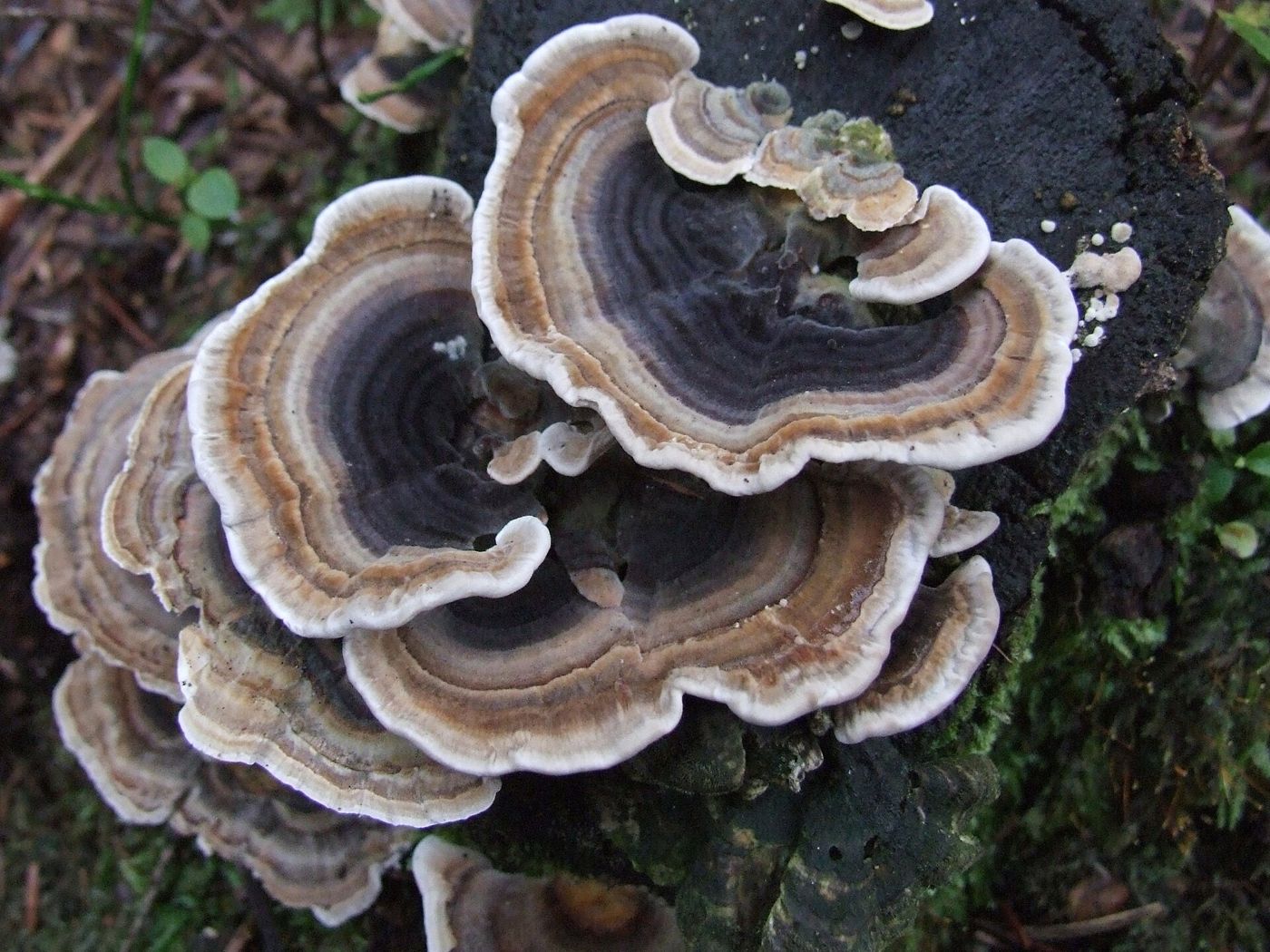
The best known job fungi do is decomposition. When a tree falls or leaves drop in autumn, that material is locked up in tough compounds such as cellulose and lignin. Lignin in particular is extremely difficult to break down, and certain fungi, especially the so-called white rot fungi, are among the very few organisms that can degrade it efficiently. Bracket fungi like turkey tail (Trametes versicolor) and many gilled mushrooms on stumps and logs are slowly dismantling wood from the inside. Without fungal decomposers, dead plant material would pile up far faster than it could rot, and the nutrients inside it would stay trapped instead of returning to the soil for new growth.
Just as important, though less visible, are mycorrhizal fungi. The word mycorrhiza means fungus root, and it describes a partnership in which fungal threads wrap around or grow into plant roots. The fungus extends far beyond the reach of the roots and gathers water and mineral nutrients such as phosphorus and nitrogen, passing some of them to the plant. In return the plant supplies the fungus with sugars made through photosynthesis. The large majority of land plants form some kind of mycorrhizal relationship, and many familiar woodland mushrooms, including chanterelles, boletes and Amanita species, are the fruiting bodies of fungi partnered with trees such as oak, birch, beech and pine. This is why certain mushrooms reliably appear under certain trees.
Fungi also shape the wider food web. Mushrooms, truffles and mycelium are eaten by slugs, insects, squirrels, deer and many other animals, and some small mammals help spread truffle spores by digging them up and eating them. Fungi themselves are food for bacteria, mites and springtails living in the soil. It is worth stressing, however, that animals eating a mushroom says nothing about whether it is safe for people. Many animals tolerate fungal toxins that are dangerous to humans, and slugs and squirrels are known to nibble deadly species such as the death cap (Amanita phalloides) without apparent harm.
Not every fungal role looks friendly at first glance. Some fungi are parasites or pathogens, attacking living plants, insects or other fungi. Honey fungus (Armillaria species) can kill trees, and many bracket fungi colonize weakened or ageing trunks. Yet even these play a part in natural forests, opening up gaps in the canopy, creating hollows that birds, bats and insects use as homes, and speeding the recycling of old trees. Fungi also team up with algae or cyanobacteria to form lichens, which colonize bare rock and help begin the slow process of building soil. Over long timescales, fungi are thought to have helped the earliest plants move onto land, and today they contribute to soil structure and the storage of carbon underground.
Because so much depends on them, the mushrooms popping up in your lawn, under a hedge or on a fallen log are usually a sign of healthy, active soil and natural recycling rather than a problem. That does not mean they are harmless to handle carelessly or eat. Some of the most important ecological partners in a woodland, including several Amanita species, are also among the most toxic mushrooms in the world, and some deadly species look remarkably like popular edible ones. No single trait, folk test or rule of thumb can tell you whether a wild mushroom is safe, and only an expert who has examined the actual specimen can confirm edibility.
If you want to learn more about the fungi doing this work around you, start by identifying what you find. Photograph the top of the cap, the gills or pores underneath, and the full stem including the very base, which may be hidden in soil or leaf litter. Shroomly can suggest likely species from your photos and flag toxic look-alikes, helping you understand which fungi are decomposers, which are tree partners and which are parasites. Treat any result as a starting point for learning, not a verdict on edibility, and confirm identifications with a local mycological society or an experienced expert who can examine the specimen in person. If anyone ever eats a wild mushroom and you are worried, call poison control or emergency services immediately and keep a sample of the mushroom.