


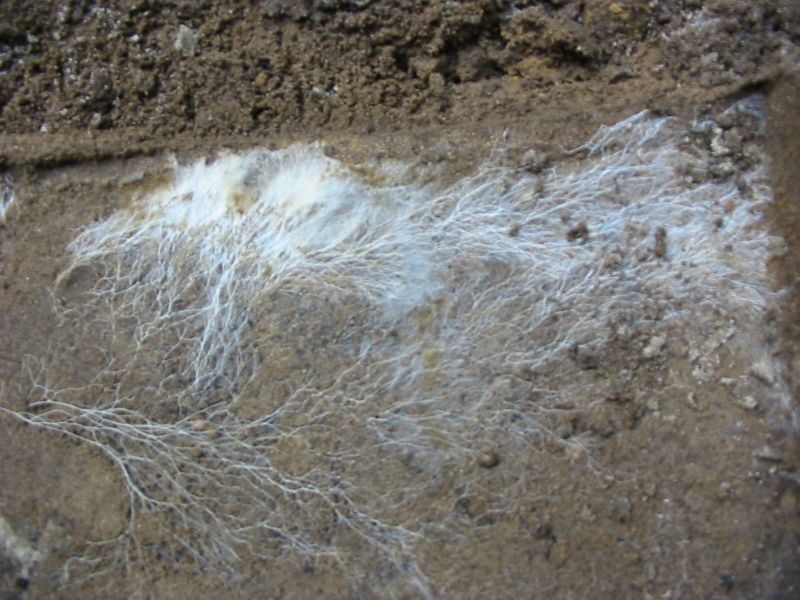
The phrase zombie fungus has exploded in searches thanks to The Last of Us and countless nature documentaries, but the real organism behind the legend is a small fungus living in tropical forests. Ophiocordyceps unilateralis, in the broad sense, is actually a complex of closely related species, each tending to specialize on particular species of carpenter ants in the genus Camponotus. It belongs to a large group of fungi, often loosely called cordyceps, that make their living by infecting insects and other arthropods rather than by rotting wood or partnering with tree roots. Understanding how it works is a good reminder that fungi are not just mushrooms on the forest floor; they occupy almost every ecological niche imaginable, including the inside of living animals.
The life cycle of the zombie ant fungus is genuinely remarkable. An ant walking on the forest floor picks up a spore, which sticks to its outer skeleton and germinates, pushing through into the body. Inside, the fungus grows as yeast-like cells and threads that gradually fill the ant's body. As the infection advances, the ant typically leaves its colony, climbs vegetation and clamps its jaws onto a leaf vein or twig in what researchers call the death grip, often at a height and in conditions of humidity and temperature that favor the fungus. After the ant dies, a slender stalk emerges, frequently from the back of the head, and eventually releases spores onto the ground below, where new ants may forage. Research suggests the fungus surrounds and invades the ant's muscles extensively while largely sparing the brain, so the behavior change appears to involve chemical manipulation and control of the body rather than a fungus simply taking over the brain, though scientists are still working out the details.
Ophiocordyceps unilateralis is only one example among hundreds of insect-attacking fungi. Cordyceps militaris, known in Britain as the scarlet caterpillarclub, infects buried moth and butterfly pupae and sends up small orange, club-shaped fruiting bodies in grassland and woodland across North America, Europe and beyond. Ophiocordyceps sinensis, the caterpillar fungus of the high Tibetan Plateau and Himalaya, grows from ghost moth larvae in the soil. Closer to home, many people have unknowingly seen Entomophthora muscae, the fungus responsible for dead house flies stuck to windows with their wings raised and pale bands of fungal growth across the abdomen. Massospora species infect periodical cicadas in North America, and Beauveria bassiana, which covers insects in a white fuzz, is even used commercially as a biological pest control. Some former Cordyceps species do not attack insects at all; Tolypocladium ophioglossoides, for example, parasitizes underground false truffles in the genus Elaphomyces.
So can zombie fungus infect humans? Based on everything known in mycology, the answer is no. These fungi have evolved over millions of years to match the chemistry, immune defenses and behavior of particular insect hosts, and many are restricted to a single species or a small group of species. Human bodies are also much warmer than an insect's, and most fungi grow poorly at around 37°C, which is one reason mammals are resistant to the vast majority of fungal species. People do suffer fungal infections, such as athlete's foot, thrush or more serious infections in people with weakened immune systems, but these are caused by entirely different fungi. The global fungal pandemic of fiction is a creative leap, not a realistic scientific prediction.
Because of their fame, cordyceps also appear in health supplements, and that leads some readers to wonder about collecting wild specimens. It is important to be clear: no wild fungus should ever be eaten or used based on a photo, a description or a single feature. Many small club-shaped and orange fungi look broadly similar, and identification often requires microscopic examination by an expert who has handled the actual specimen. More generally, some deadly mushrooms closely resemble popular edible ones, and folk tests such as whether animals eat a fungus, how it smells or whether a silver spoon darkens tell you nothing about safety. If anyone has swallowed a wild fungus and you are worried, call poison control or emergency services immediately and keep a sample of what was eaten.
Insect-killing fungi play a valuable role in nature. They help regulate insect populations, including pests, and they contribute to the balance of tropical and temperate ecosystems alike. In some ant colonies, a graveyard of infected ants can persist under a tree for years, a sign that the fungus and its host have been locked in an evolutionary arms race for a very long time. Fossil evidence of a characteristic bite mark on a leaf around 48 million years old has even been interpreted as an early record of this behavior. For naturalists, spotting a scarlet caterpillarclub poking through moss or a fungus-covered fly on a windowpane is a rare glimpse into one of the strangest relationships in biology.
If you come across an unusual fungus on an insect, in the grass or on the forest floor, a careful photograph is the best place to start. Capture the whole fruiting body from several angles, including the cap or head, any gills or surface texture, and the base where it emerges from the soil, wood or host, and let Shroomly suggest likely species along with toxic look-alikes. Treat the result as a starting point for learning rather than a final answer, and confirm anything important with a local mycological society or an experienced expert who can examine the specimen in person.