


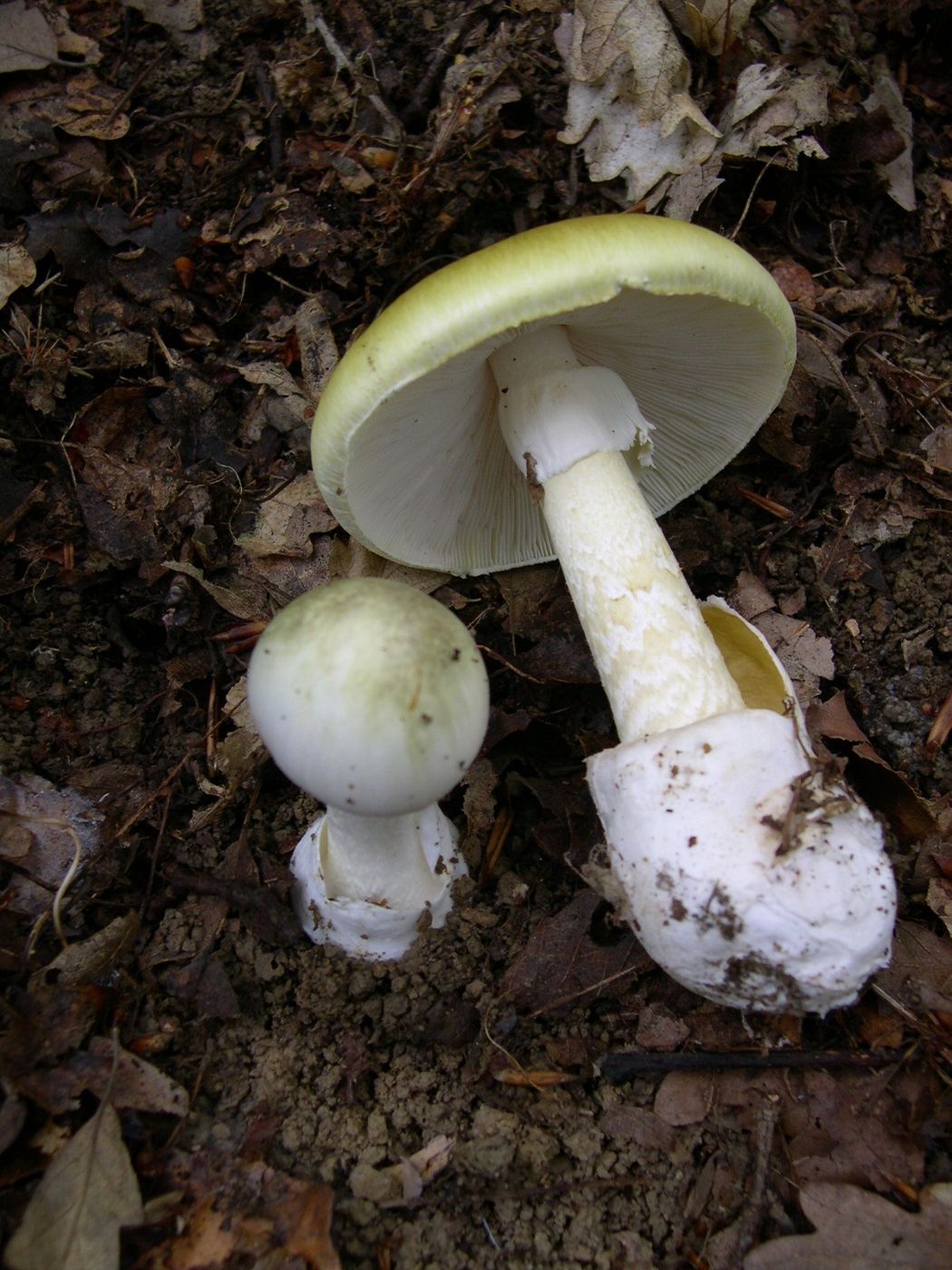
When people ask which mushroom is the most poisonous in the world, mycologists and toxicologists usually point to the death cap, Amanita phalloides. It may not have the most potent toxin by weight of any fungus, but it is the most dangerous in practice: it is responsible for the large majority of fatal mushroom poisonings worldwide. That combination of strong toxins, a deceptively ordinary appearance and a wide geographic range is what makes it so deadly. Native to Europe, the death cap has spread to North America, Australia and other regions, often arriving on the roots of imported trees such as oaks, and it now turns up in parks, gardens and street plantings as well as woodland.
The death cap's danger comes from amatoxins, a group of compounds that stop liver and kidney cells from making the proteins they need to survive. Amatoxins are not destroyed by cooking, drying or freezing, and it is often said that a single mushroom can be enough to seriously poison or kill an adult. Worse, the first symptoms usually do not appear for roughly six to twenty-four hours after eating. Severe vomiting, diarrhoea and abdominal pain may then be followed by an apparent improvement, sometimes called a false recovery, while liver damage quietly continues. By the time someone realises how sick they are, the toxin has often been doing its work for a day or more, which is why rapid hospital care matters so much.
The death cap is not alone. Several close relatives carry the same amatoxins, including the European destroying angel (Amanita virosa), the eastern North American destroying angel (Amanita bisporigera) and the western destroying angel (Amanita ocreata). These are often pure white, which makes them easy to confuse with button mushrooms, puffballs or other pale edible species. Amatoxins also occur well outside the genus Amanita. The funeral bell (Galerina marginata) is a small brown mushroom that grows on rotting wood and has been mistaken for honey fungus and other wood-loving edibles, while several small dapperlings in the genus Lepiota, such as Lepiota brunneoincarnata, contain the same toxins despite looking modest and unremarkable.
Other mushrooms are deadly through entirely different poisons. Deadly webcaps, including Cortinarius rubellus and Cortinarius orellanus, contain orellanine, which attacks the kidneys. Symptoms can be delayed for days or even a couple of weeks, so the link to a mushroom meal may not be made at all, and some victims have needed long-term dialysis or kidney transplants. The poison fire coral, Trichoderma cornu-damae (formerly Podostroma cornu-damae), is a red, finger-like fungus known from parts of East Asia and more recently reported in Australia; it contains trichothecene toxins and is considered dangerous even to handle carelessly. False morels in the genus Gyromitra contain gyromitrin, which converts in the body into a compound that can damage the liver and nervous system.
What these species have in common is that none of them announces its danger. Many of the deadliest mushrooms look pale, brown or otherwise ordinary, and some resemble popular edible species closely enough to fool experienced pickers, especially people who learned to forage in another country where the local look-alikes are harmless. Folk tests offer no protection. A silver spoon will not darken, the cap of a death cap peels easily, survivors have described it as tasting pleasant, it does not smell alarming, and slugs, squirrels and other animals can eat mushrooms that would kill a person or a dog. Cooking does not neutralise amatoxins or orellanine. The only reliable way to know whether a wild mushroom is edible is for an expert to examine the actual specimen, and even then, many experts advise beginners simply to avoid whole groups such as Amanita, Galerina, Lepiota and Cortinarius.
Because these mushrooms can grow in lawns, parks and gardens, they also pose a risk to young children and pets, who may taste things out of curiosity. If you suspect that anyone has eaten a wild mushroom, do not wait for symptoms to appear, since with the deadliest species the absence of early symptoms is not reassuring. Call your local poison control centre or emergency services immediately, and keep a sample of the mushroom, or photographs of it, along with any remains, so that specialists can try to identify what was eaten. For dogs, cats and other animals, contact a vet or animal poison line straight away.
Knowing what the world's most poisonous mushrooms look like is one of the best ways to stay safe around wild fungi. If you find a mushroom you cannot name, photograph it clearly from several angles, including the top of the cap, the gills underneath and the very base of the stem, carefully exposing any sac-like volva hidden in the soil. Shroomly can analyse those photos and suggest likely species along with their toxic look-alikes, helping you understand what you might be dealing with. Treat that result as a starting point for learning, never as permission to eat anything, and confirm any identification with a local mycological society or an experienced expert who can examine the specimen in person.