


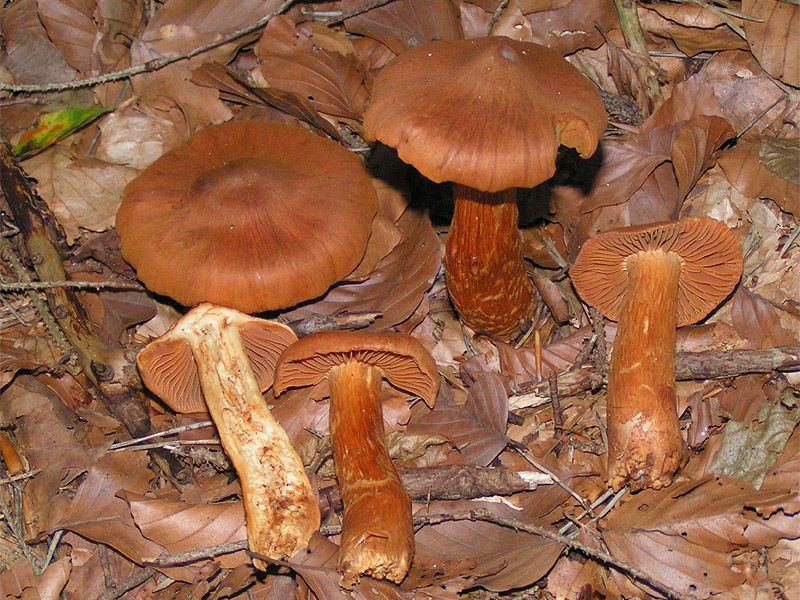
The deadly webcap, known scientifically as Cortinarius rubellus, along with its close European relative the fool's webcap (Cortinarius orellanus), ranks among the deadliest fungi on the planet. Found primarily in acidic, damp coniferous woodlands, bogs, and mossy pine forests across parts of northern and central Europe, the United Kingdom, and high-latitude or mountainous pockets of North America, this unassuming mushroom blends easily into autumnal woodland litter. Its warm cinnamon, fox-red, or rusty-brown cap measures between three and eight centimeters across, often featuring a distinct central peak called an umbo and a dry, finely fibrous surface. Despite its modest size and earthy coloring, consuming even a tiny portion can be fatal.
What makes the deadly webcap uniquely dangerous is its primary toxin, orellanine. Unlike common gastrointestinal irritants that trigger violent vomiting within an hour or two of ingestion, orellanine exhibits a notoriously prolonged latency period. People who consume Cortinarius rubellus typically experience no symptoms at all for several days, and initial signs—such as a dry mouth, extreme thirst, headache, vomiting, and fatigue—may not emerge for anywhere from two days to more than two weeks after the meal. Because days or weeks have passed, victims frequently mistake their illness for an ordinary flu or stomach bug while the toxin silently destroys their kidney tubule cells, often resulting in permanent renal failure requiring lifelong dialysis or a kidney transplant.
Tragically, deadly webcaps are frequently involved in severe poisoning cases because novice foragers mistake them for desirable wild species. Inexperienced gatherers seeking golden chanterelles, saffron milk caps, or edible hedgehog mushrooms have gathered deadly webcaps growing alongside them in mossy conifer stands, confusing the warm reddish-orange tones for edible varieties. Longstanding folk beliefs and foraging myths make this risk worse. Myths claiming that dangerous mushrooms taste foul, turn silver spoons black, smell rancid, or show no bite marks from woodland creatures are completely untrue; the deadly webcap reportedly smells mild and pleasant, and slugs and insects will readily feed on it without coming to harm. Furthermore, orellanine is exceptionally heat-stable, meaning no amount of boiling, frying, drying, or pickling neutralizes the poison.
Recognizing the genus Cortinarius requires paying careful attention to several specific anatomical details. When young, webcaps feature a fine, cobweb-like protective veil called a cortina that stretches between the cap margin and the stem. As the cap expands, this gossamer structure tears, leaving subtle rusty threads or faint banding around the stem as falling spores dust the remnants. The gills underneath are relatively spaced, attached broadly to the stem, and transition from a pale ochre to a rich, rusty cinnamon-brown as their spores mature. However, the genus Cortinarius contains hundreds of visually similar species that puzzle even veteran researchers, and relying on color or superficial resemblance is never enough. Only an experienced mycologist who has physically handled and examined an actual specimen can verify its identity.
If you suspect that you, a child, or a pet has swallowed any portion of a deadly webcap or an unidentified wild mushroom, do not wait for symptoms to manifest before acting. Given the lengthy asymptomatic window of orellanine poisoning, delaying medical attention until nausea or lower back pain begins can mean missing the crucial window for supportive care. Call your regional poison control center or emergency medical services immediately. Retrieve any uneaten remnants, trimmings, or fresh specimens from the same patch and place them inside a breathable paper bag or hard container to give directly to toxicologists and consulting mycologists at the hospital.
Whenever you encounter wild mushrooms in the forest, treating every unknown specimen with healthy caution is the best safeguard against tragedy. Take clear, sharp photographs showing the top of the cap, the gills or pores underneath, and the full base of the stem where it meets the forest floor. You can then let Shroomly suggest likely species profiles and warn you of potential toxic look-alikes in your area. Use these digital clues as a learning foundation, and always seek confirmation from a local mycological society or experienced expert before ever considering handling or harvesting wild fungi.