

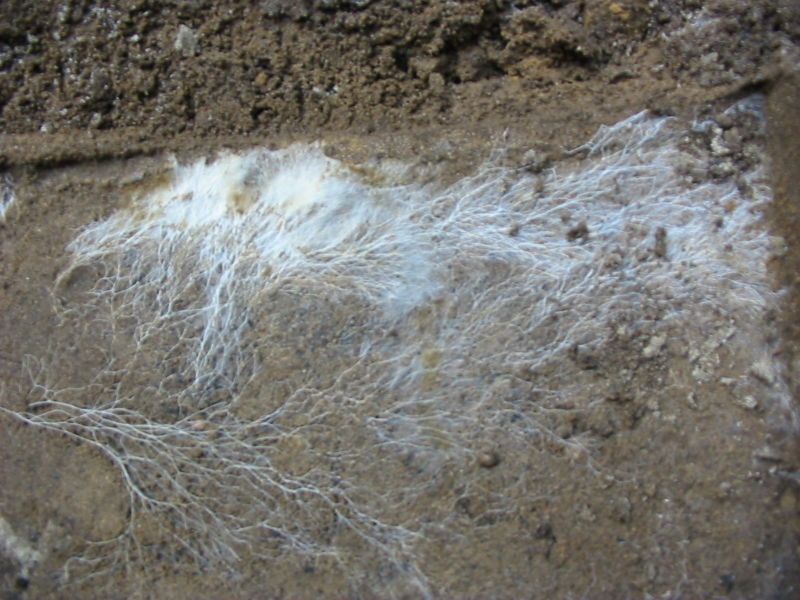
Mycelium is the invisible engine of most fungi: a network of microscopic filaments called hyphae that colonize whatever food source the fungus uses. Where plants use roots to gather water and sunlight to produce sugars, fungi extend hyphae into soil, wood or leaf litter to release enzymes that break down complex organic matter into small molecules the fungus can absorb. Those hyphae link up into a mass — the mycelium — which functions as the organism’s main body and can persist for months, years or even centuries.
Hyphae grow at their tips and branch repeatedly, advancing through pores and cracks in substrates. As they grow they secrete enzymes that chemically digest cellulose, lignin and other tough molecules in dead plant material; some fungi also parasitize living trees or form partnerships with plant roots. Nutrients absorbed by hyphae are transported through the mycelial network, allowing parts of the fungus to thrive even when local conditions vary. Mycelium’s large surface area and thin threads make it highly efficient at scavenging sparse nutrients across a wide area.
Mycelial networks aren’t just feeding machines — they’re also communication and reproductive systems. When conditions are right, mycelial colonies produce visible fruiting bodies (mushrooms) that bear spores for long-distance dispersal. The network can also reroute resources toward growth fronts, repair damage, and sometimes respond to chemical signals from plants and other fungi. In woodland ecosystems, mycelium plays a major role in nutrient cycling, breaking down dead material and returning carbon and minerals to the soil.
Many mycorrhizal fungi form close, mutually beneficial relationships with plant roots: the fungus supplies water and mineral nutrients to the plant, and the plant supplies sugars produced by photosynthesis. These mycorrhizal networks can connect multiple plants, and researchers have shown that carbon and signalling molecules can move through fungal strands between trees. Popular media calls these connections a “wood-wide web,” but while the analogy is useful, the specifics are complex and vary by species and ecosystem.
Mycelium also has remarkable ecological and practical properties. Some species can tolerate extreme conditions, degrade pollutants, or decompose tough woody material that bacteria cannot. Because of these abilities, people are experimenting with mycelium for uses ranging from soil remediation to biodegradable materials. That said, the visible mushroom is only a small, transient part of the organism’s life cycle; the mycelium does most of the work day-to-day out of sight.
If you’re documenting mushrooms or trying to learn what’s growing nearby, remember that the fruiting bodies are just one clue to the larger mycelial organism. Photograph the cap, gills or pores, and the stem base (dig carefully if needed) so you capture features that help separate look-alikes. Let Shroomly suggest likely species and toxic look-alikes from your photos, and always confirm identifications with a local mycological society or qualified expert before handling, consuming, or assuming anything about edibility — only an expert who has examined the actual specimen can confirm whether a wild mushroom is safe.