


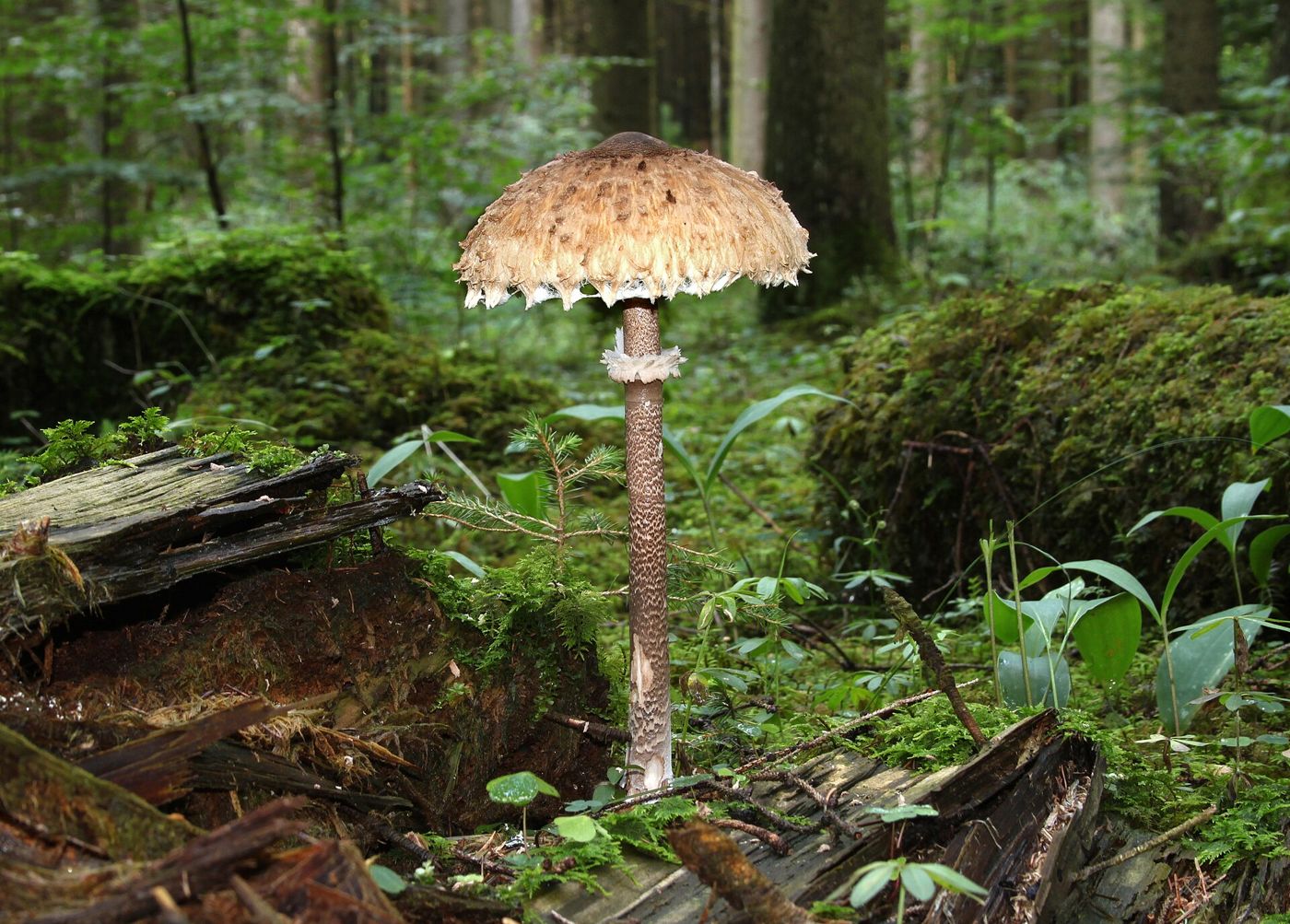
When examining a wild mushroom, one of the most prominent features you may notice midway up the stem is a collar or skirt of tissue. In mycological terms, this structure is known as an annulus. Far from being a decorative afterthought, the annulus is the leftover remnant of the partial veil, a specialized membrane of fungal tissue that shields the immature spore-bearing surface beneath the cap during the button stage of development. As the cap matures and lifts upward like an opening umbrella, this membrane tears away from the cap margin. The portion that stays attached to the stalk collapses or flares outward, creating the distinct ring seen on mature fruiting bodies.
Annulus structures vary widely across different fungal genera, making their specific texture and appearance invaluable clues during identification. On some species, such as the parasol mushroom (Macrolepiota procera), the annulus is thick, felted, and double-layered, becoming completely detached from the stem tissue so that it can slide up and down the stalk like a loose bracelet. In other mushrooms, such as many members of the genus Amanita, the ring hangs down like a delicate, pleated skirt of tissue. In certain groups like Cortinarius, commonly known as webcaps, the partial veil is not a solid membrane at all but a fragile web of fine filaments called a cortina. When the cap opens, this cobwebby veil collapses against the stem, catching falling rusty spores and leaving behind a faint, fibrous ring zone rather than a fleshy collar.
Understanding the annulus is especially vital for field safety because some of the deadliest mushrooms on Earth possess prominent stem rings. The notorious death cap (Amanita phalloides) and the destroying angels, including Amanita virosa and Amanita bisporigera, all form delicate partial veils that leave noticeable rings on their stems. Foragers observing white or pale mushrooms must pay meticulous attention to these ring characteristics, as well as the underside and base of the stalk. A mushroom with an annulus might look superficially similar to one without, but confusing a species that features a ring with one that naturally lacks one can lead to disastrous identification errors.
Spotting an annulus in the field can sometimes be tricky because these delicate structures are easily damaged or lost over time. Heavy rainfall, strong winds, foraging animals, insects, or even clumsy handling when picking a specimen can tear away an annulus, leaving behind only an inconspicuous ring zone or a bare stalk. Conversely, very young button mushrooms may still have their partial veil intact, hiding the gills completely and making the future ring unrecognizable. This fragility highlights why folk tests and rules of thumb are completely unreliable. Pervasive myths—such as the idea that poisonous mushrooms always have rings, that silver spoons tarnish in the presence of toxins, or that caps that peel easily are safe—have no basis in fungal biology and can prove fatal if trusted.
Because many lethal species look nearly identical to harmless ones and share features like stem rings, edibility can never be assumed based on the presence, absence, or appearance of an annulus. No single physical trait, color chart, or digital tool can ever guarantee that a wild mushroom is safe to consume. Edibility can only be verified by a qualified mycology expert who has thoroughly examined the actual physical specimen in hand. If you or someone you know ever suspect that a wild mushroom has been accidentally ingested, do not wait for symptoms to develop or attempt home remedies; contact poison control or emergency medical services immediately and keep a complete sample of the mushroom for laboratory identification.
Becoming skilled at recognizing stem features like the annulus is one of the most rewarding parts of learning mushroom anatomy. Whenever you encounter a specimen in the wild, be sure to take clear, well-lit photographs from multiple angles, focusing on the cap surface, the gills or pores underneath, the full length of the stem showing any ring, and the intact base in the soil. You can upload these images to Shroomly to help identify likely candidates and flag potentially dangerous look-alikes. Once you have narrowed down the possibilities, always confirm your observations with a local mycological society or trusted expert before drawing any conclusions.