


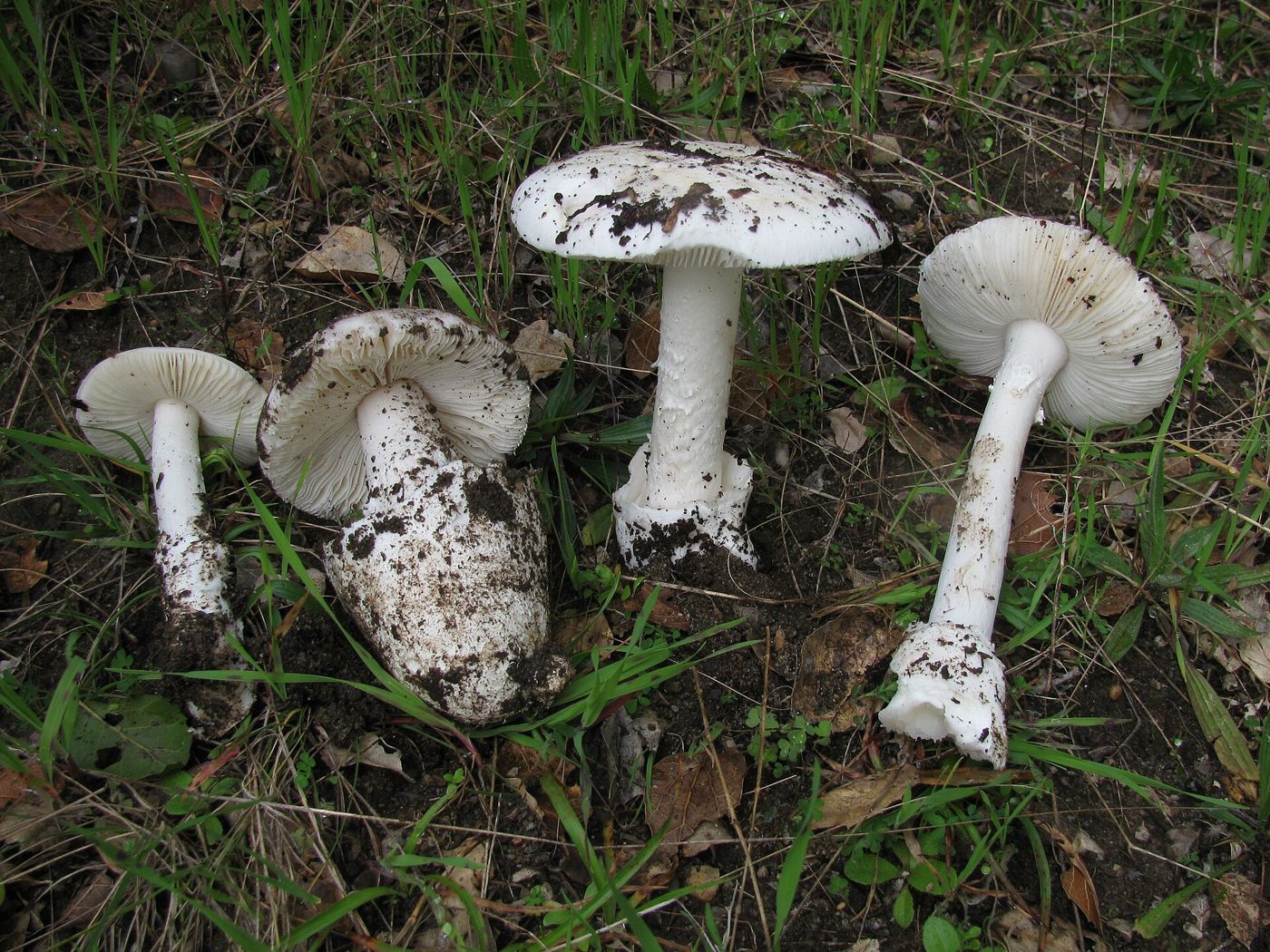
When certain mushrooms begin their life cycle, they develop entirely enclosed within a protective, egg-shaped membrane known to mycologists as a universal veil. As moisture triggers the fruit body to expand, the mushroom stem elongates and the cap swells, causing this outer membrane to rupture. In many species, the bottom portion of that torn sheath remains anchored at ground level, wrapping loosely or snugly around the swollen base of the stem. This residual cup, bag, or series of concentric collars is called a volva. While upper veil remnants often cling to the cap surface as warty flakes, the volva persists at the very bottom of the stem, frequently obscured beneath forest litter or buried under topsoil.
The presence of a volva is one of the most critical warning signs in field mycology because it is the quintessential anatomical marker of the genus Amanita. This extensive fungal family contains some of the most dangerous and deadly toxins found anywhere in nature. Infamous species such as the death cap (Amanita phalloides) and the destroying angels (including Amanita bisporigera and Amanita ocreata) all develop from distinct, sac-like volvas. Inexperienced foragers who mistake young Amanita buttons for harmless puffballs, or mature specimens for edible meadow mushrooms, frequently do so because they failed to notice this telltale cup at the stem base, leading to life-threatening poisonings.
Volvas do not all share the exact same appearance, and distinguishing their specific architecture is vital for accurate identification. In some species, such as the death cap, the volva forms a loose, membranous sack that stands distinct and tall around the stem base like a tiny bag. In others, such as the panther cap (Amanita pantherina), the structure forms a collared or guttered rim that wraps tightly above a rounded basal bulb. In fungi like the fly agaric (Amanita muscaria), the fragile universal veil disintegrates into friable rings of concentric scales and ridges along the swollen lower stem rather than forming a cohesive cup. Observing whether a volva is free, adherent, or broken into scaly zones helps experienced botanists narrow down specific species within complex genera.
The primary safety hazard associated with volvas is that they are frequently subterranean. A forager walking through the woods who simply snaps or cuts a mushroom off at the soil line inevitably leaves the volva behind in the ground. Without that subterranean tissue, a lethal Amanita can appear deceptively similar to a harmless Agaricus or a parasol mushroom to the untrained eye. This is why wild mushroom instructors insist that field identification requires inspecting the entire fruit body. To evaluate an unknown specimen safely, one must gently excavate around the base with a pocketknife or trowel, lifting the subterranean bulb and any surrounding sheath intact without damaging the surrounding mycelial network.
Numerous widespread folk beliefs suggest that a forager can identify poisonous mushrooms using shortcuts, such as boiling them with a silver coin, checking for pleasant aromas, or assuming that any mushroom nibbled by wildlife must be safe. None of these tests have any basis in science. Lethal amanitas featuring a prominent volva can smell delightfully sweet, peel effortlessly, and be consumed by insects or rodents without those animals suffering any ill effects. Never assume a wild mushroom is safe to eat based on an app scan, a photographic match, or a single physical feature. Only a qualified regional expert who physically examines the fresh specimen can confirm its identity and verify safety, as lethal look-alikes exist in almost every major fungal family. If anyone ever ingests an unknown wild mushroom, do not wait for symptoms or try home remedies; contact emergency services or poison control immediately and preserve a physical sample of the fungus for identification.
Developing an eye for mushroom anatomy takes practice, and capturing thorough photographs is the foundation of accurate study. Whenever you encounter a fungus you wish to investigate, photograph the upper cap, the underside showing the gill attachment, and the excavated base revealing whether a volva or bulb is present. Using the Shroomly app allows you to compare your photos against thousands of fungal profiles, instantly pointing out distinctive structural details, likely species candidates, and dangerous look-alikes. Once the app helps you narrow down the possibilities, always share your detailed photos and excavated specimens with a local mycological society to ensure safe, verified learning.