


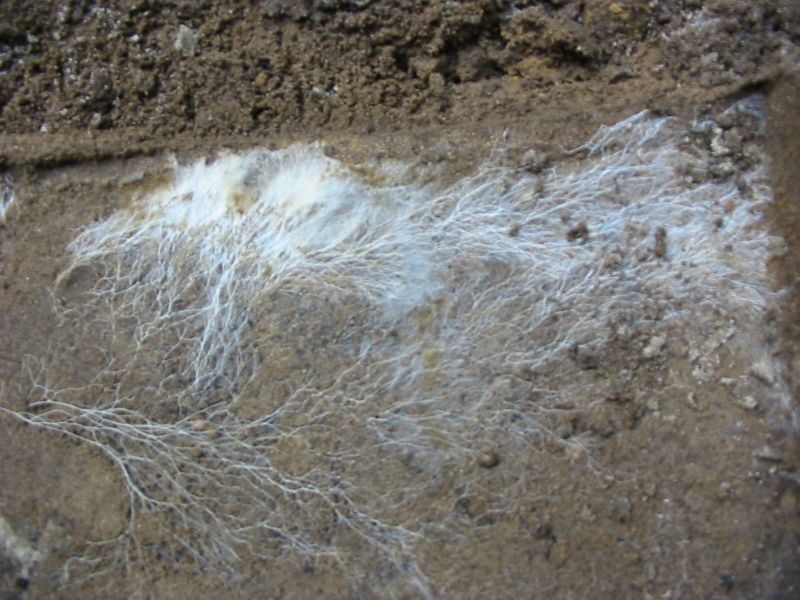
Because mushrooms sprout from the soil and remain rooted in place, it is easy to assume they feed in the same manner as garden plants. In reality, fungi belong to an entirely separate kingdom of life and do not possess chlorophyll, meaning they are completely incapable of photosynthesis. Green plants capture sunlight and carbon dioxide to manufacture their own sugars, but mushrooms are heterotrophs, requiring pre-existing organic carbon from their surroundings to survive and grow. However, unlike animals, which ingest food into an internal stomach before breaking it down, fungi solve the challenge of nourishment from the outside in through a process known as absorptive nutrition.
The visible mushroom cap resting above ground is merely the reproductive fruit of an organism whose true feeding body lives hidden within the substrate. Beneath the surface lies the mycelium, a vast and intricate network of microscopic, thread-like filaments called hyphae. Rather than taking in solid food, the tips of these hyphae secrete specialized digestive enzymes into the surrounding material, whether that substrate is a rotting oak log, a bed of autumn leaves, or moist garden soil. Enzymes such as cellulases and lignin peroxidases break down tough, complex plant polymers—compounds that very few living organisms have the biochemical capability to dismantle. Once these large molecules are broken down into basic sugars, amino acids, and minerals, the fungus absorbs the dissolved nutrients directly through its cell walls.
The majority of the wild mushrooms encountered in woods and suburban yards are saprotrophic, meaning they feed exclusively on non-living organic matter. Common saprotrophic species, including the oyster mushroom (Pleurotus ostreatus), turkey tail (Trametes versicolor), and common puffball (Lycoperdon perlatum), act as the primary recyclers of the natural world. Without saprotrophs to digest fallen timber, leaf litter, and dead root systems, terrestrial ecosystems would quickly become buried beneath mountainous piles of undecomposed debris. By breaking down dead biomass and releasing locked nutrients back into the soil and atmosphere, saprotrophic fungi sustain the continuous cycle of life in forests across the globe.
Other fungi obtain their nutrition through mutualistic partnerships rather than decay. Known as mycorrhizal fungi, these organisms establish intimate physical connections with the fine root systems of living trees and shrubs. Prized woodland species such as porcini (Boletus edulis) and chanterelles (Cantharellus cibarius) utilize their expansive underground hyphal networks to forage for water, nitrogen, and phosphorus far beyond the reach of tree roots. They deliver these vital elements directly to the host plant in exchange for rich carbon-based sugars manufactured in the sunlit canopy above. A smaller subset of fungi adopts a parasitic strategy, as seen in honey fungus (Armillaria mellea), which attacks living tree tissues and drains nutrients from its host, often causing wood rot and eventual mortality.
Understanding what a mushroom feeds on is far more than an academic curiosity; it provides foragers with indispensable context for field identification. Because different fungal species evolved specialized suites of enzymes, they are tethered to specific substrates. A fungus that only produces enzymes to break down hardwood lignins will never sprout directly from open pasture soil, while a mycorrhizal species bound to pine roots will not appear on a dead birch log. Unfortunately, folk wisdom often suggests dangerous shortcuts, such as assuming that mushrooms growing on clean living wood are safe while those feeding on soil or mulch are toxic. In reality, substrate provides zero guarantees of edibility. The deadly funeral bell (Galerina marginata) feeds saprotrophically on rotting logs, while the lethal death cap (Amanita phalloides) feeds mycorrhizally beneath healthy broadleaf trees.
Safe wild mushroom study relies on examining physical morphology alongside environmental habitat rather than relying on unscientific folk rules or assumptions about substrate. Edibility can only be verified by an experienced mycologist who has thoroughly inspected a physical specimen, as several lethal species closely mimic harmless wild varieties. When you encounter a wild mushroom, take clear photographs of the cap, the spore-bearing surface underneath, and the entire base of the stem where it meets the feeding substrate. You can use Shroomly: Mushroom Identifier to analyze these visual traits, receive probable species suggestions, and check for hazardous look-alikes before seeking confirmation from your local mycological society.