


A truffle is not a separate kind of organism from a mushroom. It is the fruiting body of a fungus, the part that produces spores, just like the cap and stem of a field mushroom. The difference is location. Instead of growing up into the air, a truffle develops below the soil surface or just under the leaf litter, usually as a lumpy, roughly rounded mass. Mycologists call fungi that fruit underground hypogeous. The best-known true truffles belong to the genus Tuber, including the black Périgord truffle (Tuber melanosporum), the summer truffle (Tuber aestivum) and the Italian white truffle (Tuber magnatum), but the underground lifestyle has evolved many separate times across the fungal kingdom.
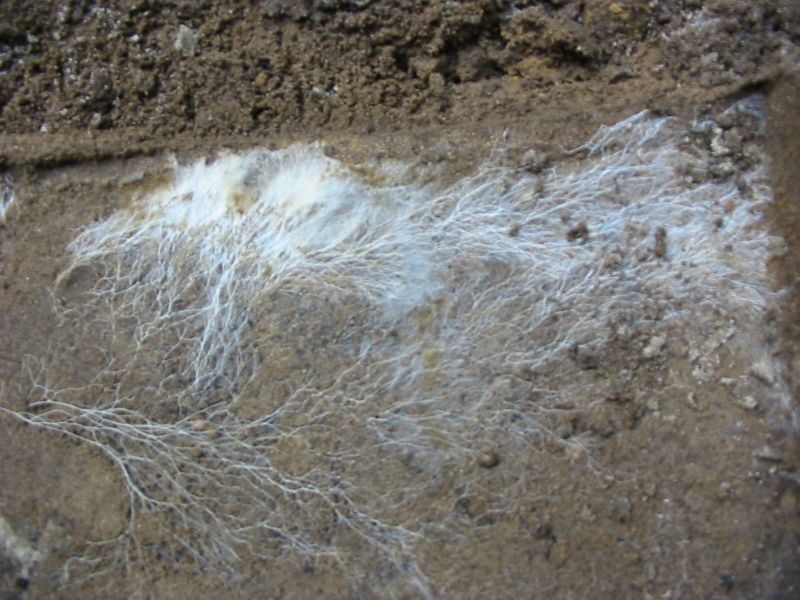
Truffles do not grow on their own in bare soil. The fungi that produce them are ectomycorrhizal, which means their mycelium wraps around and connects with the fine roots of living trees. The tree supplies sugars made by photosynthesis, and the fungus in return helps the tree take up water and mineral nutrients such as phosphorus from the soil. This is why truffles are associated with particular hosts, most famously oaks and hazels, but also beech, poplar, lime and some conifers depending on the species. Soil chemistry matters too: several prized Tuber species favour well-drained, chalky or limestone soils, which is a large part of why they are found in some regions and absent from others.
Growing underground creates an obvious problem for a fungus. An ordinary mushroom lifts its gills or pores into moving air and lets the wind carry billions of spores away. A truffle cannot do that, so it has traded wind dispersal for animal dispersal. As a truffle matures it releases a complex mix of volatile compounds that many mammals find attractive. Squirrels, wild boar, voles, deer and, in Australia, small marsupials such as bettongs and potoroos dig truffles up and eat them. The spores generally survive passage through the gut and are deposited elsewhere in droppings, often near new tree roots. In some forests, small mammals depend heavily on underground fungi for food, and the fungi in turn depend on them to spread.
This is the reason people have traditionally used animals to find truffles. Pigs, especially sows, are enthusiastic truffle hunters, and it has often been suggested that a truffle compound resembles a pig sex pheromone, although research on exactly what attracts them is mixed. Pigs also tend to eat what they find and churn up the ground, so trained dogs are now far more common. Some hunters even watch for small flies that hover over the soil where truffles lie. Cultivation has followed the same biology: truffle orchards are planted with young trees whose roots have been deliberately inoculated with truffle fungus, and it can take many years, with no guarantee, before the first truffles appear.
Not everything round and buried is a true truffle. False truffles such as Rhizopogon species, which partner with pines, and deer truffles in the genus Elaphomyces are common in woodland soils and are eaten by wildlife. Earthballs (Scleroderma species) often sit half-buried and are toxic to people, causing gastrointestinal illness. Some European truffle-like fungi, such as Choiromyces meandriformis, have been linked to poisonings. Most importantly, the immature egg stage of deadly Amanita species, including the death cap (Amanita phalloides), can lie partly hidden in leaf litter and look like a smooth, rounded lump. Because of these overlaps, finding something underground tells you nothing about whether it is safe. Animals digging it up is no guide either, since many animals tolerate fungal toxins that are dangerous to humans. Only an expert who has examined the actual specimen, including its internal structure and often its spores under a microscope, can confirm what it is, and some deadly species closely resemble popular edible ones.
If you turn up a strange lump while gardening or walking through woodland, treat it as a natural-history curiosity rather than food, and keep it away from children and pets. To learn what it might be, photograph the outside, a clean cross-section showing the interior, and the surrounding trees and soil. If the find has any stem at all, photograph the cap, gills and especially the stem base, because a hidden volva is a key warning sign of Amanita. Shroomly can use these photos to suggest likely species and flag toxic look-alikes, but treat that as a starting point. Confirm any identification with a local mycological society or an experienced expert who can examine the specimen in person, and if anyone has eaten an unknown fungus, call poison control or emergency services immediately and keep a sample of it.