
True morel vs false morel is the comparison every spring forager needs to get right. Morels (Morchella species) are some of the most sought-after wild mushrooms. False morels, mainly Gyromitra species, appear at the same time of year in similar woods, and they contain gyromitrin, which the body converts into monomethylhydrazine, a compound related to rocket fuel that can damage the liver, kidneys, and nervous system.
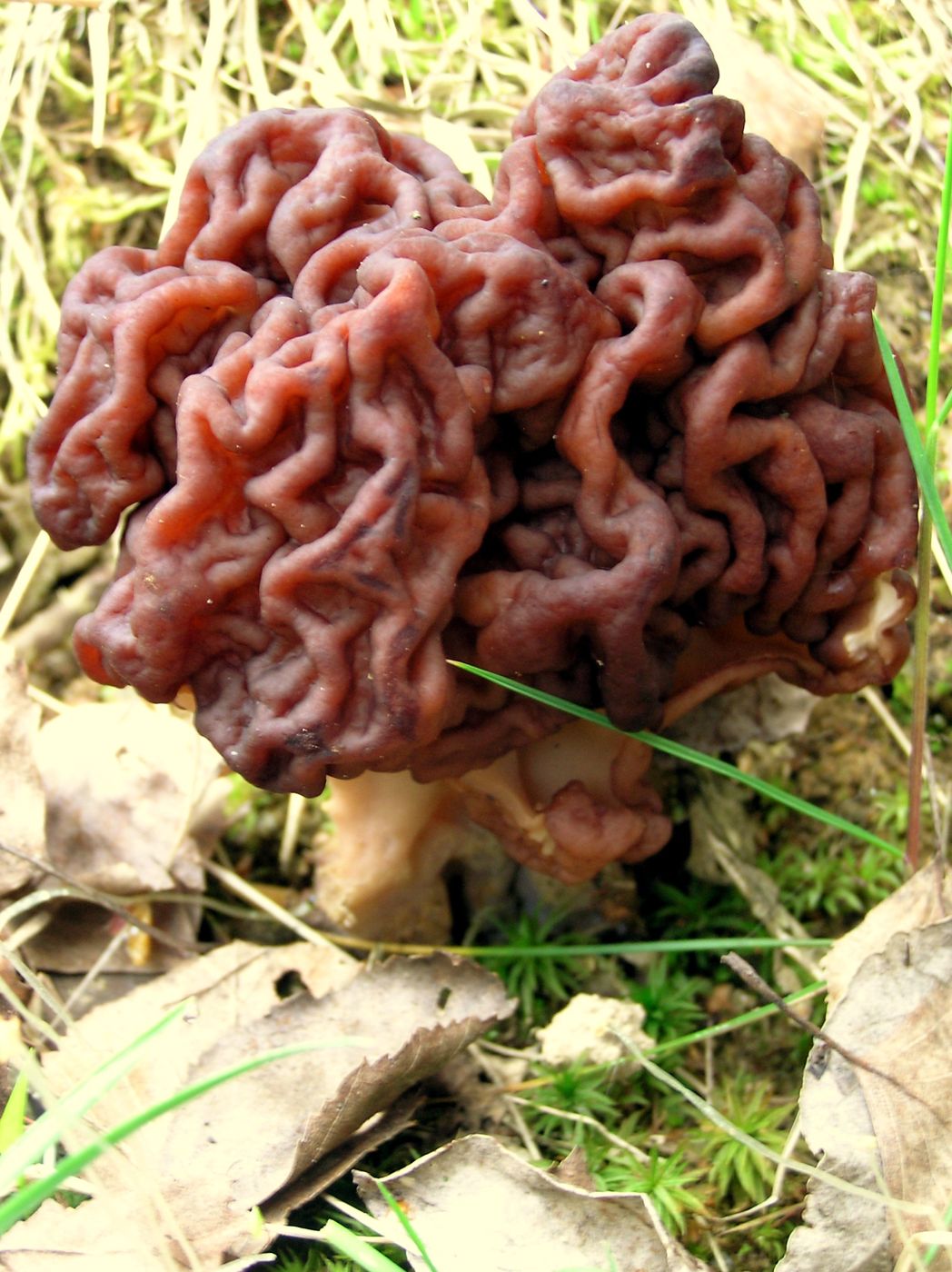
The surface is the first clue. A true morel's cap is covered in pits and ridges that form a fairly regular honeycomb, and the cap is roughly conical or egg-shaped. A false morel's cap looks wrinkled, lobed, or folded, often compared to a brain or a saddle, with no real pits. Colours overlap, though false morels often have reddish-brown tones, so shape matters more than shade.
The most reliable field check is the slice test. Cut the mushroom lengthwise from the tip of the cap to the bottom of the stem. A true morel is a single hollow chamber from top to bottom, with the cap attached directly to the stem along its length. A false morel is chambered, folded, or filled with whitish cottony tissue, and the inside looks irregular rather than like one clean tube.
There is a third group to know: Verpa species, sometimes called early false morels or thimble morels. Their cap hangs free from the stem like a thimble or a skirt, attached only at the very top, and the stem is often stuffed with cottony fibres. A 'half-free' true morel can look similar, which is one more reason beginners should learn morels with an experienced guide before collecting them.
Folk claims about false morels are a trap. You may read that they are eaten in some places after special preparation, but gyromitrin poisoning has caused serious illness and deaths, and even the vapours given off when they are heated have been reported to make people ill. No preparation method makes a mushroom you have not identified safe. If you are unsure whether you have a morel at all, you do not have one you should eat.
When you find something morel-like this spring, photograph the cap, a lengthwise slice, and the spot where it was growing, and let Shroomly compare it against true morels, Gyromitra, and Verpa. The app can help you learn the patterns; confirmation of anything you plan to eat has to come from a knowledgeable person who has the mushroom in hand.