


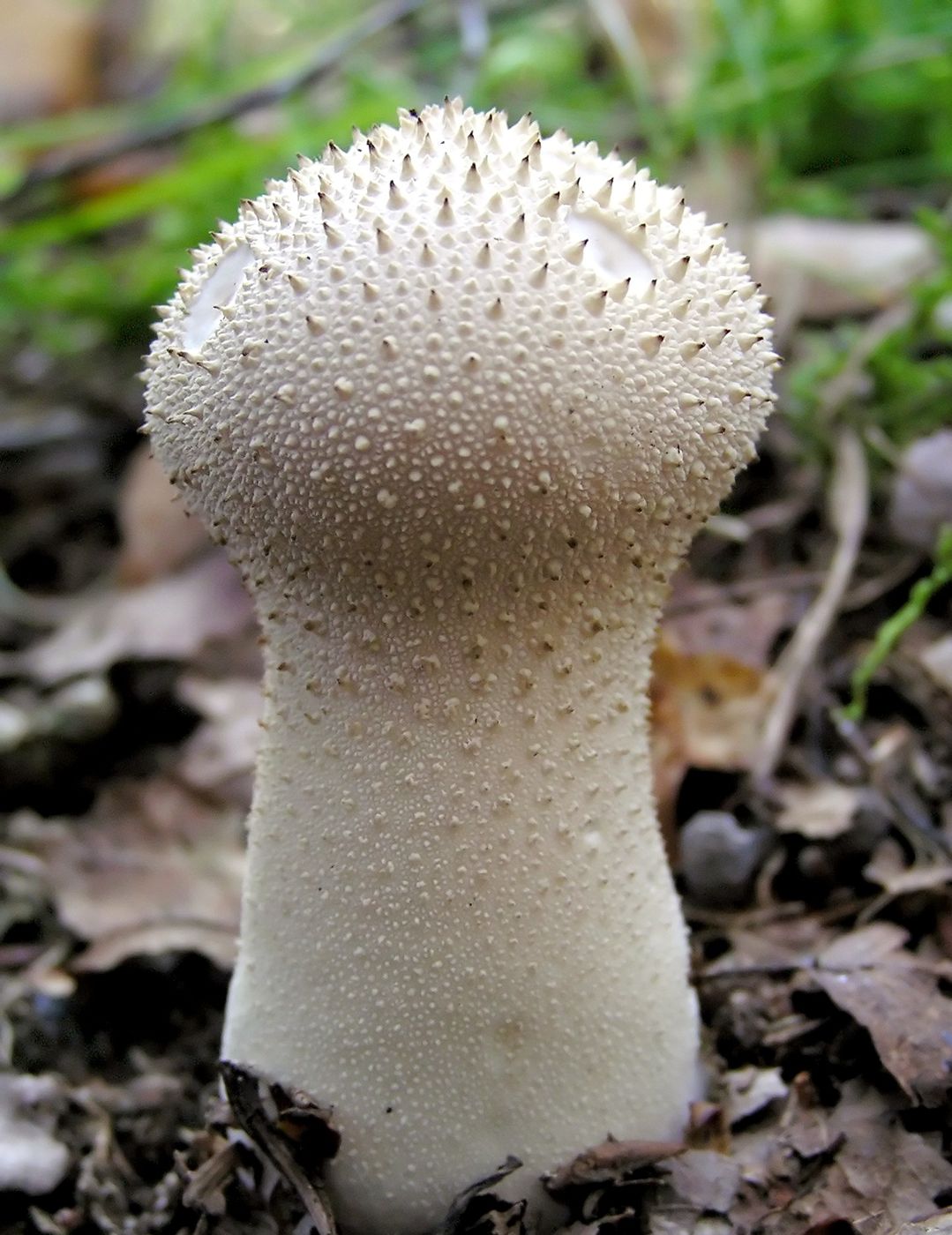
True puffballs are a familiar sight in lawns, meadows and woods: usually round, white to tan, and without a visible cap or gills. Many people search for puffballs thinking they’re easy to identify and safe to eat, but there are dangerous look‑alikes — notably earthballs (Scleroderma spp.) and immature stages of deadly Amanita species — that make a cautious approach necessary. The key differences are visible if you slice the specimen open cleanly, check for a stem or gill structures, and note the interior color and texture.
When fresh, true puffballs (genera such as Lycoperdon, Bovista and Calvatia) have solid, uniform white flesh all the way through. If you cut one open and it’s pure white inside with no internal cup, cap or gill remnants, it can be narrowed down to a puffball-type fungus. As the puffball matures its interior turns into a yellowish to brown powdery mass of spores, often leaving a small pore or hole on the outer surface where spores escape. But that later brown stage is not an indicator of edibility — it’s simply maturity.
Earthballs (Scleroderma species) commonly cause confusion because they're also round and can be similar in size and color to some small puffballs. Unlike true puffballs, earthballs usually have a thick, tough rind and their interior is often darker purple, brown or black at an early stage, not uniform white. The flesh of an earthball is typically marbled or darker toward the center even when the outer surface still looks pale. Earthballs also often have a brittle, harder skin compared with the softer surface of many puffballs.
Another hazard is immature Amanita mushrooms, which develop inside an egg‑like universal veil. These 'eggs' can appear as white, rounded blobs in the soil and may be mistaken for puffballs. Cutting an object open will reveal internal structures if it’s an Amanita egg: look for a developing cap, gills, stem tissues or a sac‑like volva at the base. Because some Amanita species (including deadly ones) can look innocuous at this stage, any specimen that shows internal organization or a differentiated structure should be treated as potentially toxic.
Do not rely on old folk tests: peeling the skin, checking if insects have eaten it, or using a silver spoon are not reliable or safe ways to judge edibility. Likewise, color changes alone can be misleading. Only a clean longitudinal cut will reliably show whether the interior is homogeneous white (a key trait of true puffballs) or contains darker, marbled, gill‑forming or cap tissues that indicate a different, possibly dangerous species.
If you suspect someone has eaten a toxic mushroom, call your local poison control center or emergency services immediately and keep a sample of the mushroom for identification; do not wait for symptoms. For foraging safety, get in the habit of photographing or collecting mushrooms before touching or picking them: show the whole fruiting body, a clean cut through the center, the base where it meets the soil, and the surrounding habitat. Use those photos with Shroomly to get likely identifications and toxic look‑alikes, and always confirm with a local mycological society or an expert who can examine the actual specimen before you consider eating any wild mushroom.