


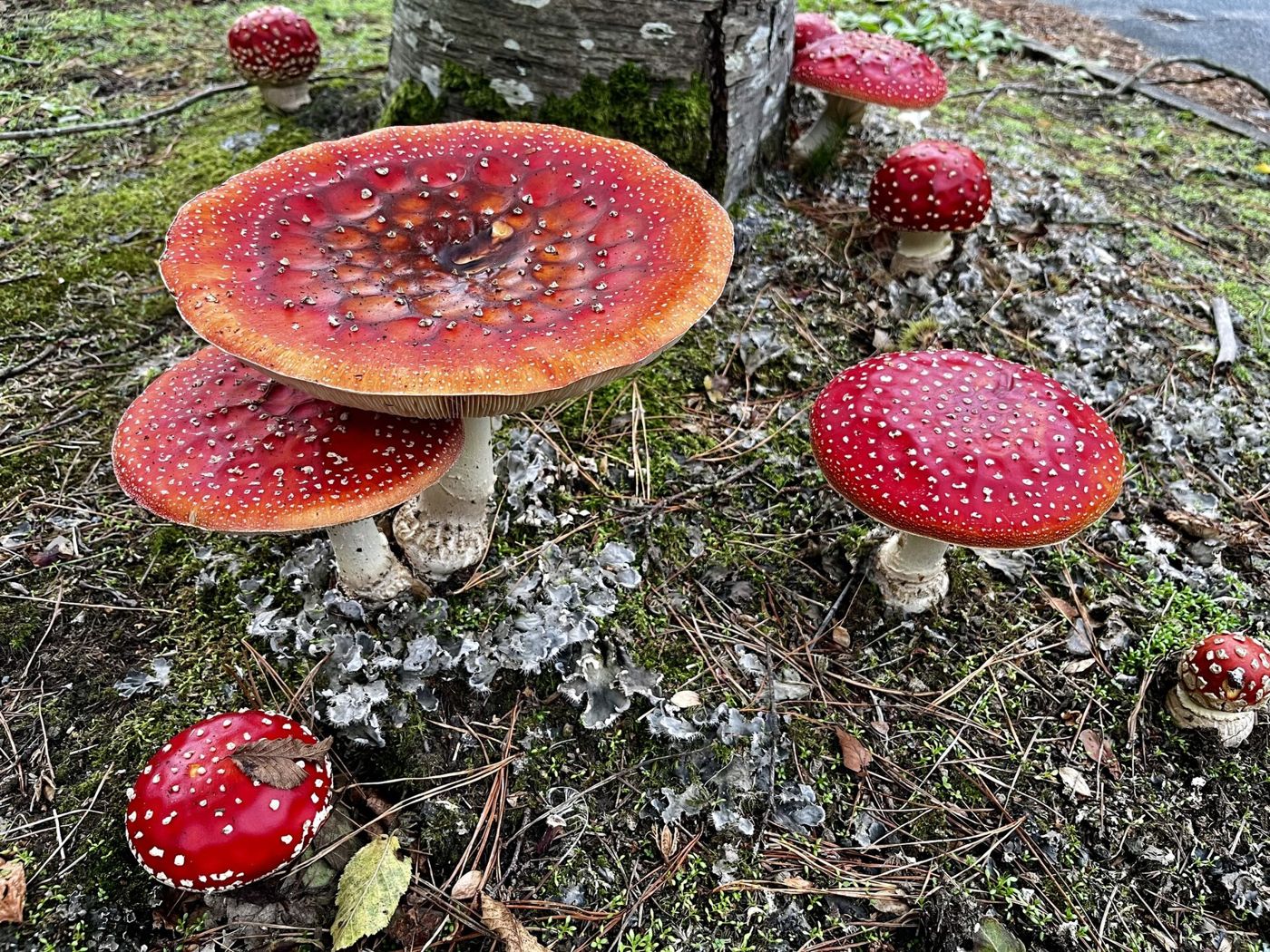
Fungal veils are temporary protective membranes that shield delicate reproductive tissues as an embryonic mushroom develops beneath the soil or leaf litter. Mycologists divide these structures into two distinct categories based on what they envelop: universal veils, which wrap around the entire immature mushroom like the shell of an egg, and partial veils, which extend solely from the cap margin to the stem to protect the developing spore-bearing surface underneath. Recognizing whether a wild mushroom possesses remnants of one, both, or neither of these structures is one of the most critical foundational skills in mycology, helping enthusiasts navigate complex fungal families and avoid potentially catastrophic identification errors.
The universal veil forms first, completely enclosing the embryonic mushroom during its earliest button stage to protect it from drying winds, insects, and soil friction. As the fruiting body absorbs water and rapidly expands, this exterior sheath is pushed past its structural limits and tears open. The way this tissue breaks apart leaves distinct anatomical clues: the upper portion often remains on the expanding cap surface as soft patches, powdery flakes, or raised pyramidal warts, while the lower portion remains anchored around the base of the stem as a loose cup, swollen bulb, or series of concentric rings known as a volva. The iconic fly agaric (Amanita muscaria) is perhaps the most famous example of universal veil remnants, with its distinctive white polka dots representing pieces of the protective membrane that once covered the entire young mushroom. In other species, such as the deadly Amanita phalloides, the universal veil leaves a smooth cap but forms a deep, membranous cup hidden just beneath the forest floor at the stem base.
In contrast, the partial veil exists entirely beneath the cap and serves a more localized purpose: shielding the immature gills, pores, or fungal teeth until the microscopic spores are fully formed and ready for distribution. This inner membrane stretches tightly from the upper portion of the stem to the perimeter of the cap margin. When the mushroom matures and its cap flattens or arches upward, the partial veil ruptures, permitting air currents to reach the spore-bearing surfaces. Remnants of this broken membrane frequently collapse against the stem to form a skirt-like annulus or persistent ring, though in some genera, such as Cortinarius, the partial veil consists of delicate, web-like fibers called a cortina. In other species, fragments of the torn veil remain attached to the outer rim of the cap, creating a ragged or fringed appearance known as an appendiculate margin.
Understanding the relationship between universal and partial veils is essential for safe identification because some of the most dangerously toxic mushrooms on Earth possess both structures. The genus Amanita, which contains lethal species such as the destroying angel (Amanita bisporigera) and the death cap, is defined by having both an outer universal veil and an inner partial veil, yielding a mushroom with a subterranean volva at the base, a ring on the upper stipe, and occasional patches across the cap. Inexperienced observers often miss these critical structures because heavy rainfall can wash delicate veil patches off the cap, or careless harvesting can leave the volval cup buried invisibly in the ground. Furthermore, persistent folk tests claim that mushrooms with smooth stems, peeling cap skins, or pleasant aromas are naturally safe to consume. These myths are demonstrably false and extraordinarily dangerous, as lethal amatoxin-containing fungi easily satisfy these naive rules of thumb while retaining toxic potency through every method of cooking.
Because fungal veils are delicate and can degrade significantly with weather, physical handling, or advanced maturity, you should never conclude that a wild mushroom is safe to eat based on an app result, a photographic match, or a single visible feature. Many popular edible fungi share overlapping structural traits with deadly veiled species, and an absent ring or weathered cap can easily mislead the untrained eye. Only a qualified regional mycologist who has physically inspected the entire fresh specimen in person can definitively confirm an identification. If you suspect that anyone has ingested an unknown wild mushroom, contact emergency medical services or a local poison control center immediately without waiting for gastrointestinal symptoms to appear, and keep any remaining intact specimens safely stored in a paper bag so specialists can evaluate the fungal anatomy directly.
Whenever you encounter a wild mushroom in the woods or across your lawn, learning to inspect the entire stem and cap for veil remnants will sharpen your identification skills and keep your field studies safe. Before plucking or disturbing a specimen, carefully document the top of the cap for loose warts, examine the upper stem directly beneath the gills for a hanging ring or cobwebby fibrils, and gently expose the base to verify whether a cup or swollen bulb rests in the soil. Taking clear, well-lit photos of the cap surface, the gill attachment, and the completely unmasked stem base enables Shroomly to evaluate these architectural markers, suggesting probable species and highlighting critical toxic look-alikes. After documenting your find, share your observations with a local mycological society to confirm your findings and safely deepen your understanding of the fungal world.