


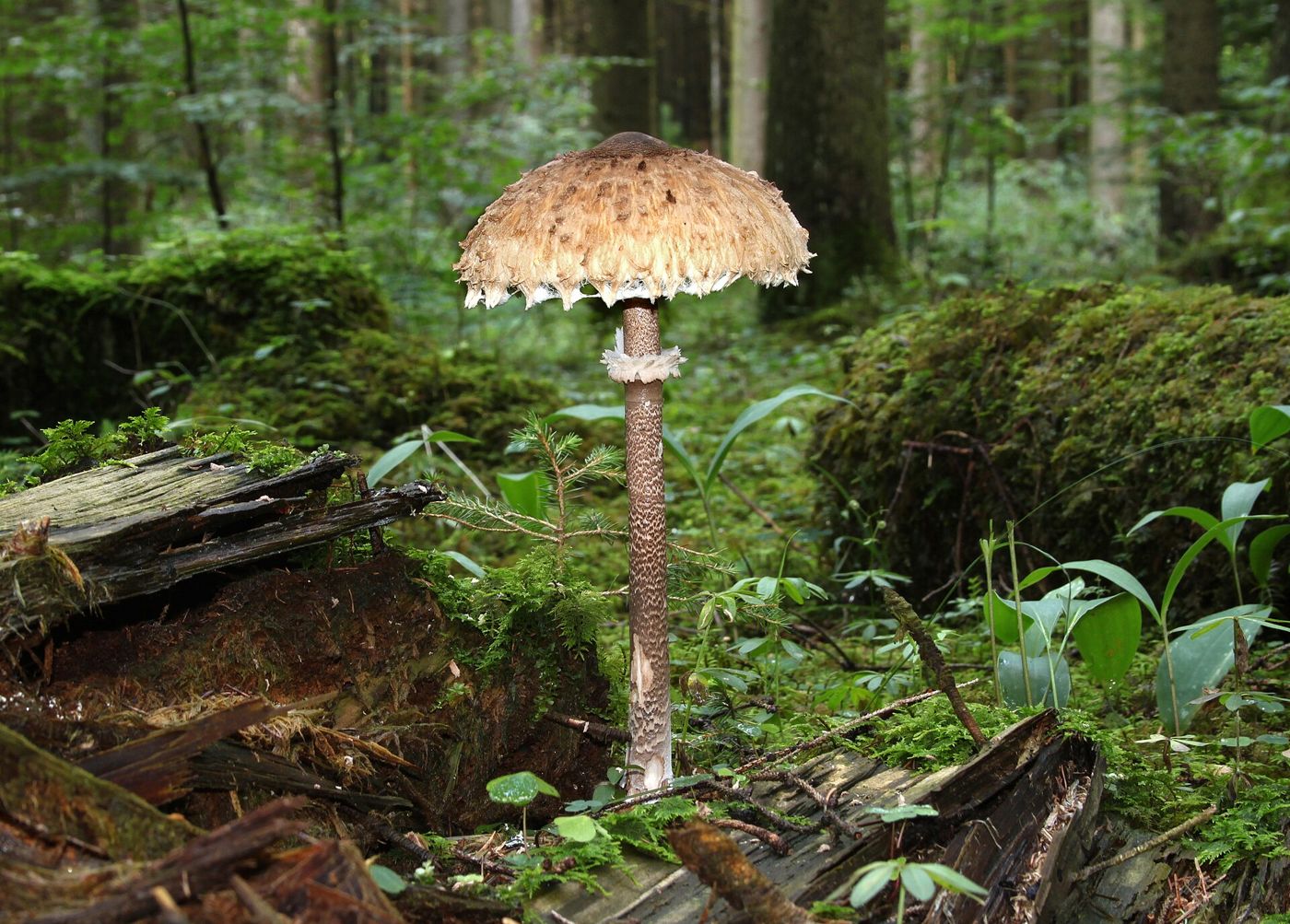
Parasol mushrooms (Macrolepiota procera) are large, distinctive fungi with a tall stipe and a broad, scaly cap that opens into an umbrella shape. A frequent look‑alike in lawns and parks is the green‑spored parasol (Chlorophyllum molybdites), a species responsible for many gastrointestinal poisonings. Although they share a similar overall shape and size, a few consistent field traits let you tell them apart when you’re careful and methodical.
The most reliable separating feature is the spore print color. Macrolepiota produces white spores, while Chlorophyllum molybdites has green to olive‑green spores. A spore print is easy to make at home by placing a cut cap on paper for several hours; the resulting dust shows the spore color. Spore prints are a clear and well‑established diagnostic tool, but they require taking the specimen and waiting, so combine them with other visible characters before drawing conclusions.
Look closely at the gills and any staining behavior. Parasol mushrooms have free, white gills that don’t change color dramatically when cut. The green‑spored parasol often has crowded gills that can develop a greenish tinge or brownish spotting with age. Some Chlorophyllum specimens bruise or show olive stains near the gill edge; if you see any green or olive tones on the gills or in the spore dust, treat the specimen as suspect and do not taste or eat it.
Cap texture and scale pattern also differ. Macrolepiota procera typically has a central brownish knob and concentric, well‑defined brown scales on a lighter background, giving a shaggy, snakeskin‑like appearance. Chlorophyllum molybdites can be scaly too, but the scales are usually more diffuse and the cap color range and pattern are often less contrasted. Habitat is another clue: true parasols often grow in grassy clearings and woodland edges, while green‑spored parasols are especially common on lawns, mulched garden beds and suburban turf in warmer months.
Many folk tests for edibility—peeling the cap, smelling it, or noting that animals eat a mushroom—are unreliable and sometimes dangerous. Do not rely on smell or a home ‘‘taste’’ test to decide if a mushroom is edible. Even two visually identical specimens can differ chemically, and some toxic species closely mimic edible ones. Always remember that only an expert who has examined the actual specimen can confirm edibility, and some toxic species can look deceptively similar to popular edibles.
If you’re photographing a parasol‑type mushroom to aid identification, take clear shots of the top of the cap, the underside showing gill spacing and color, a close view of the stem including the ring and any bulb or volva at the base, and a photo of the habitat. A spore print (white vs green) is particularly helpful for parasols. Let Shroomly suggest likely species and toxic look‑alikes from your images, and then confirm with a local mycological society or experienced expert before considering any use. If you suspect mushroom poisoning, call poison control or emergency services immediately and keep a sample of the mushroom for identification.