


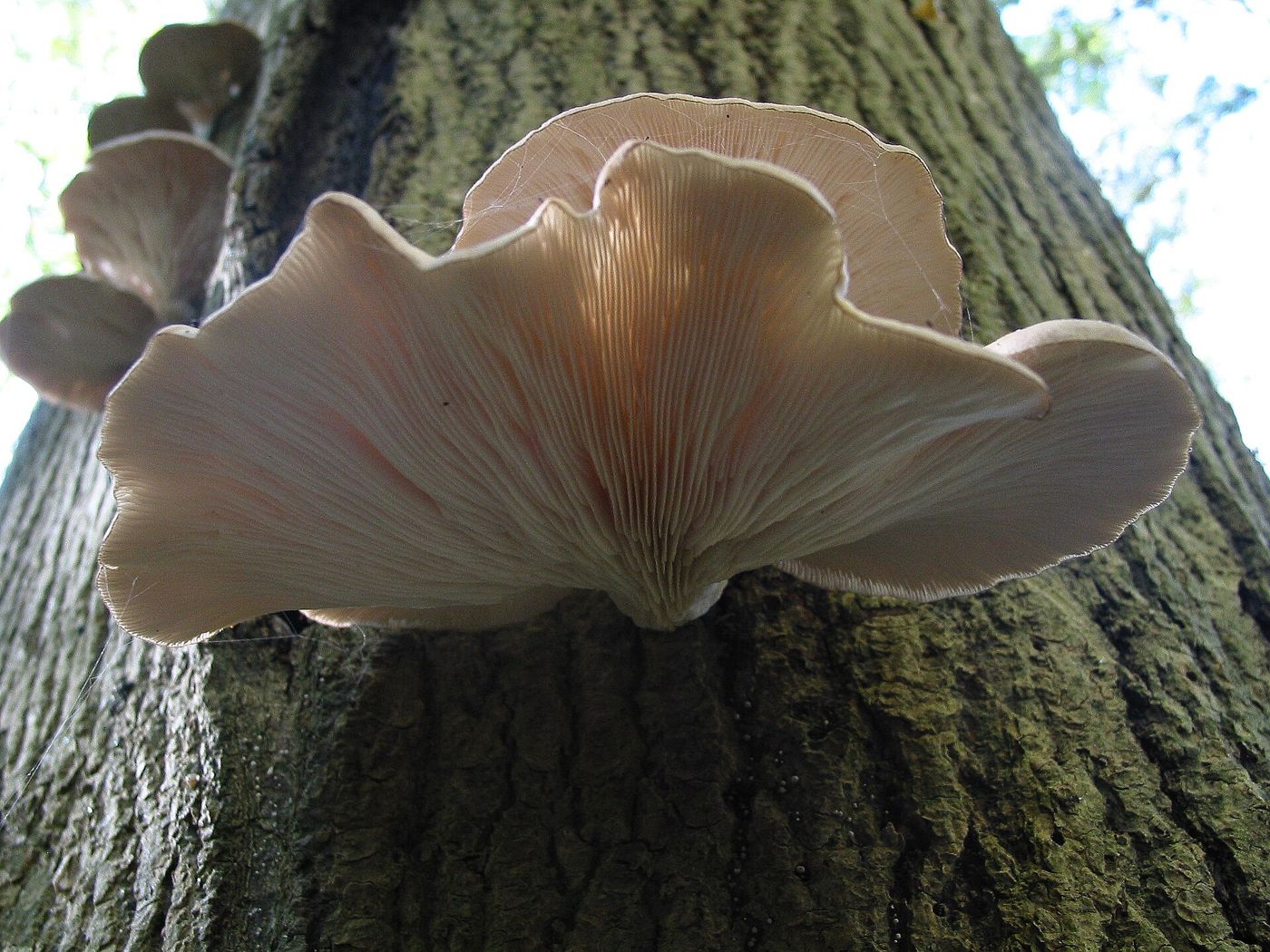
The oyster mushroom, scientifically known as Pleurotus ostreatus, is one of the most widespread and recognizable woodland fungi across temperate regions of North America, Europe, and Australia. Its common name does not stem from its flavor, but rather from the broad, shell-like outline of its cap, which often mirrors the curved profile of an oyster. These mushrooms are saprotrophic wood-decay fungi, playing an essential role in forest ecology by breaking down lignin and cellulose in dead trees, fallen logs, and old stumps. They fruit in dense, overlapping clusters, shelving out from damp wood in staggered tiers that can catch the eye of woodland walkers even in the dead of winter.
Careful visual identification starts with inspecting the cap and gill structure. The cap of Pleurotus ostreatus typically measures between five and twenty-five centimeters across, featuring a smooth, matte surface that ranges in color from pale ivory and silvery grey to ash-brown or slate. Unlike typical umbrella-shaped terrestrial mushrooms, oyster mushrooms rarely possess a tall, central stem. Instead, they produce a very short, thick, eccentric stalk set to one side of the cap, or lack a discernible stem entirely when anchored directly to vertical trunks. Beneath the cap, the white to cream-colored gills are decurrent, meaning they extend smoothly down the length of the stalk before tapering out, a structural hallmark that helps separate true oysters from many non-decurrent bracket fungi.
Understanding the preferred habitat and seasonal rhythm of the fungus is just as critical as examining its morphology. Oyster mushrooms predominantly colonize dying or dead deciduous hardwoods, demonstrating a strong preference for beech, oak, willow, poplar, and birch, though they occasionally surface on coniferous wood. Unlike warmth-dependent summer species, Pleurotus ostreatus thrives in cool, humid weather. Across most temperate zones, its primary fruiting period spans late autumn through early spring, frequently appearing in sudden flushes following cold snaps followed by heavy rain. In regions with milder maritime winters, clusters can appear almost year-round whenever cool temperatures and sustained moisture align.
Despite their distinctive appearance, oyster mushrooms share dead wood with several other shelf-dwelling fungi, some of which present serious medical risks. In northern conifer forests, foragers often encounter angel wings (Pleurocybella porrigens), a pure white, thin-fleshed species growing on decaying evergreen logs that has been implicated in fatal neurological poisonings. In Australia, the ghost fungus (Omphalotus nidiformis) produces overlapping pale brackets on dead wood that mimic oyster mushrooms in daylight, but contain potent illudin toxins responsible for violent gastrointestinal distress, along with bioluminescent tissue that glows faintly green in darkness. Other species, like the late fall oyster (Sarcomyxa serotina), develop olive-yellow caps and a gelatinous layer beneath the skin that make them unpalatable. Folk rules suggesting that all mushrooms growing on wood are safe, or that cooking neutralizes any wild toxin, are dangerous myths that must never be relied upon.
A reliable method for confirming an identification in the field is taking a spore print, which in the case of Pleurotus ostreatus produces a pale white, cream, or faintly lilac-tinted deposit when a mature cap is set over dark paper. However, single features are never enough to guarantee an identity, as weather-bleached or decomposing specimens can alter their colors and textures significantly. Only a trained mycologist or expert who has physically handled and scrutinized the fresh specimen can confirm its identity. If you ever suspect that someone or a household pet has ingested an unidentified wild mushroom, do not wait for symptoms to develop; contact emergency medical services or your regional poison control center immediately, and retain the remaining fungal material in a paper bag for professional evaluation.
Whenever you come across a tiered cluster of shelf fungi in the woods, thorough photographic documentation is the safest way to begin learning. Take clear, sharp photos of the top of the caps, the underside showing how the decurrent gills attach to the wood, and the substrate itself so you have a record of the host tree. You can submit these images to Shroomly to quickly explore candidate species like Pleurotus ostreatus and review potential toxic look-alikes. Use the app's diagnostic breakdowns as an educational guide, and always share your finds with a local mycological society or experienced expert before arriving at any definitive conclusion.