


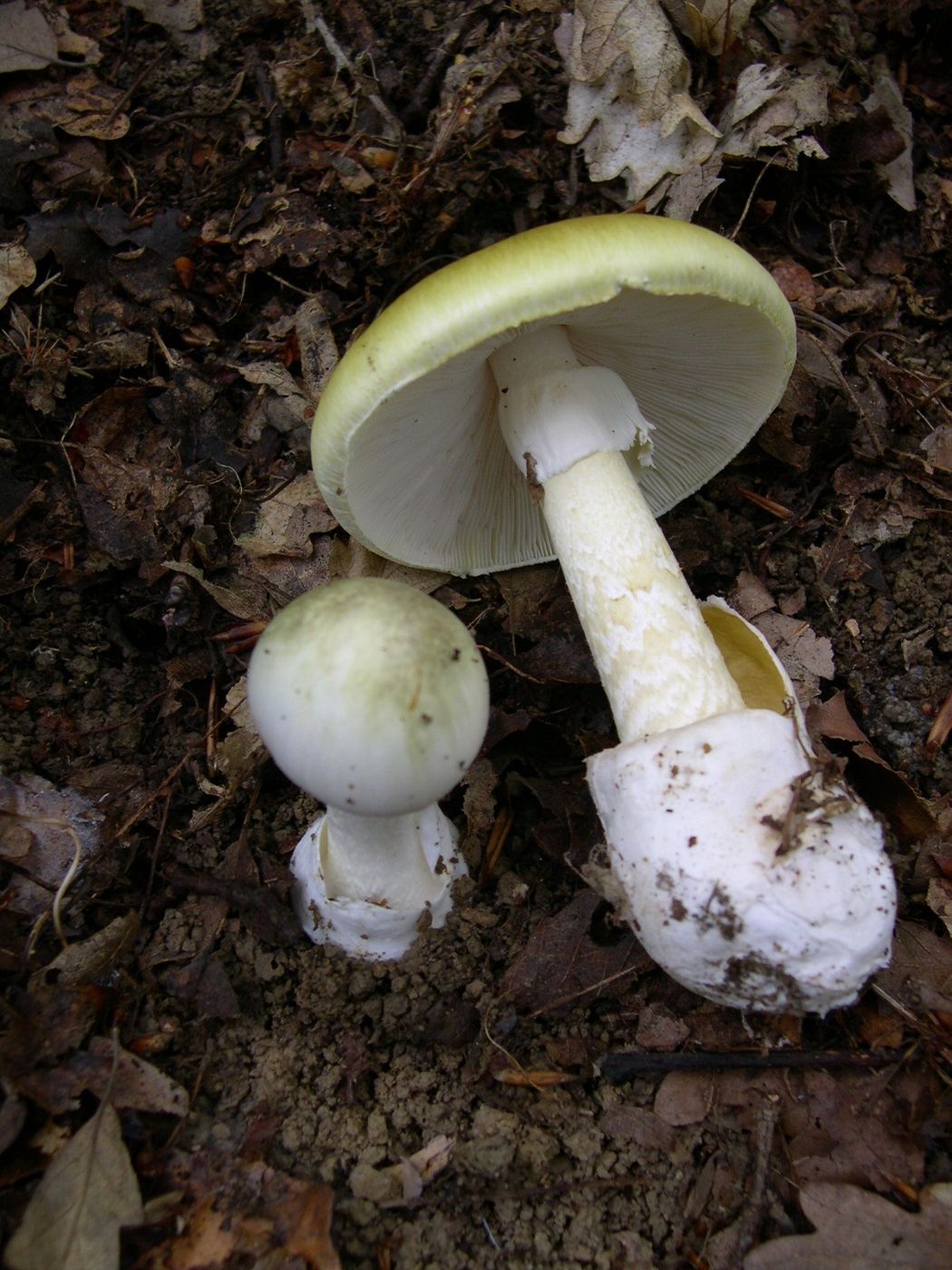
People often search for mushroom poisoning symptoms hoping for a single checklist, but toxicologists actually group mushroom poisonings into several distinct syndromes. Each is driven by a different family of toxins, attacks a different part of the body, and follows its own timeline. Knowing that these syndromes exist is useful because it explains why one person might vomit within an hour of a meal while another feels perfectly well for a day before becoming critically ill. It is not, however, a tool for diagnosing yourself or anyone else. Symptoms overlap, people sometimes eat more than one species in a meal, and the only safe response to a suspected poisoning is to call poison control or emergency services immediately and keep a sample of the mushroom, including any leftovers, peelings or photos.
The most dangerous syndrome is amatoxin poisoning, caused by species such as the death cap (Amanita phalloides), the destroying angels (Amanita virosa, Amanita bisporigera and Amanita ocreata), the funeral bell (Galerina marginata) and some small Lepiota species. Amatoxins are responsible for the large majority of fatal mushroom poisonings worldwide. The insidious feature is the delay: symptoms usually begin roughly six to twenty-four hours after eating, typically with severe vomiting, abdominal pain and watery diarrhea. These may then ease, giving a false impression of recovery, while the toxin continues to damage the liver and sometimes the kidneys. Cooking, drying or freezing does not destroy amatoxins, and death caps are reported to taste pleasant, so nothing about the meal itself gives a warning.
A second slow-acting syndrome is caused by orellanine, found in certain webcaps such as the deadly webcap (Cortinarius rubellus) and the fool's webcap (Cortinarius orellanus). Here the delay can be even longer, often several days and sometimes two to three weeks, before signs such as intense thirst, fatigue, nausea, headache and changes in urination appear. By then the kidneys may already be seriously damaged, and some victims need long-term kidney care. Because the meal may be long forgotten when symptoms start, it is vital to tell doctors about any wild mushrooms eaten in recent weeks. False morels (Gyromitra species) cause another delayed syndrome through gyromitrin, which can produce gastrointestinal upset followed by neurological effects and liver injury.
Faster-acting syndromes tend to begin within minutes to a few hours. Muscarine poisoning, linked to many fibrecaps (Inocybe) and small white funnels such as the ivory funnel (Clitocybe dealbata), causes heavy sweating, salivation, watery eyes, blurred vision, slowed heart rate and stomach cramps. Isoxazole poisoning, from ibotenic acid and muscimol in the fly agaric (Amanita muscaria) and panther cap (Amanita pantherina), affects the brain, producing confusion, agitation, delirium, dizziness and deep drowsiness; panther cap poisonings can be particularly severe. These syndromes can be frightening and occasionally dangerous, especially for children, older people and pets, and they always warrant urgent medical advice.
The most common category is gastrointestinal irritant poisoning, caused by a long list of species including the green-spored parasol (Chlorophyllum molybdites), the jack-o'-lantern (Omphalotus species), the yellow stainer (Agaricus xanthodermus), the livid entoloma (Entoloma sinuatum) and the sickener (Russula emetica). Symptoms usually appear within roughly half an hour to a few hours and include nausea, vomiting, cramps and diarrhea. Many people recover, but the illness can be violent enough to cause dangerous dehydration, and Entoloma sinuatum in particular has sent people to hospital. There are also rarer syndromes: the common ink cap (Coprinopsis atramentaria) reacts with alcohol to cause flushing, palpitations and nausea; repeated meals of the brown roll-rim (Paxillus involutus) can trigger an immune reaction that destroys red blood cells; and repeated meals of the yellow knight (Tricholoma equestre) have been linked to serious muscle breakdown.
The biggest danger in all of this is reassurance from the wrong signals. A common rule of thumb says that late-onset symptoms are more serious than early ones, and that is broadly true, but someone who ate a mixed basket could have an early stomach upset from one species while a deadly amatoxin from another is still working silently. Feeling fine after eating a wild mushroom proves nothing, and neither do folk tests: silver spoons, peeling caps, pleasant smells or seeing animals eat a mushroom tell you nothing about its toxins. Never try home remedies or wait to see whether symptoms develop. Call poison control or emergency services immediately, keep a sample of the mushroom, and note when it was eaten and how much, so that specialists can identify the species and act quickly.
The best protection is never eating a wild mushroom unless an expert who has examined the actual specimen has confirmed it, because several deadly species closely resemble popular edible ones. If you want to know what is growing in your garden, park or woodland, photograph the cap from above, the gills or pores underneath and the very base of the stem, including anything buried in the soil, and let Shroomly suggest likely species and highlight toxic look-alikes. Treat that result as a starting point for learning rather than a verdict on edibility, and confirm anything important with a local mycological society or experienced expert. In an emergency, skip the app entirely and call poison control or emergency services straight away.