


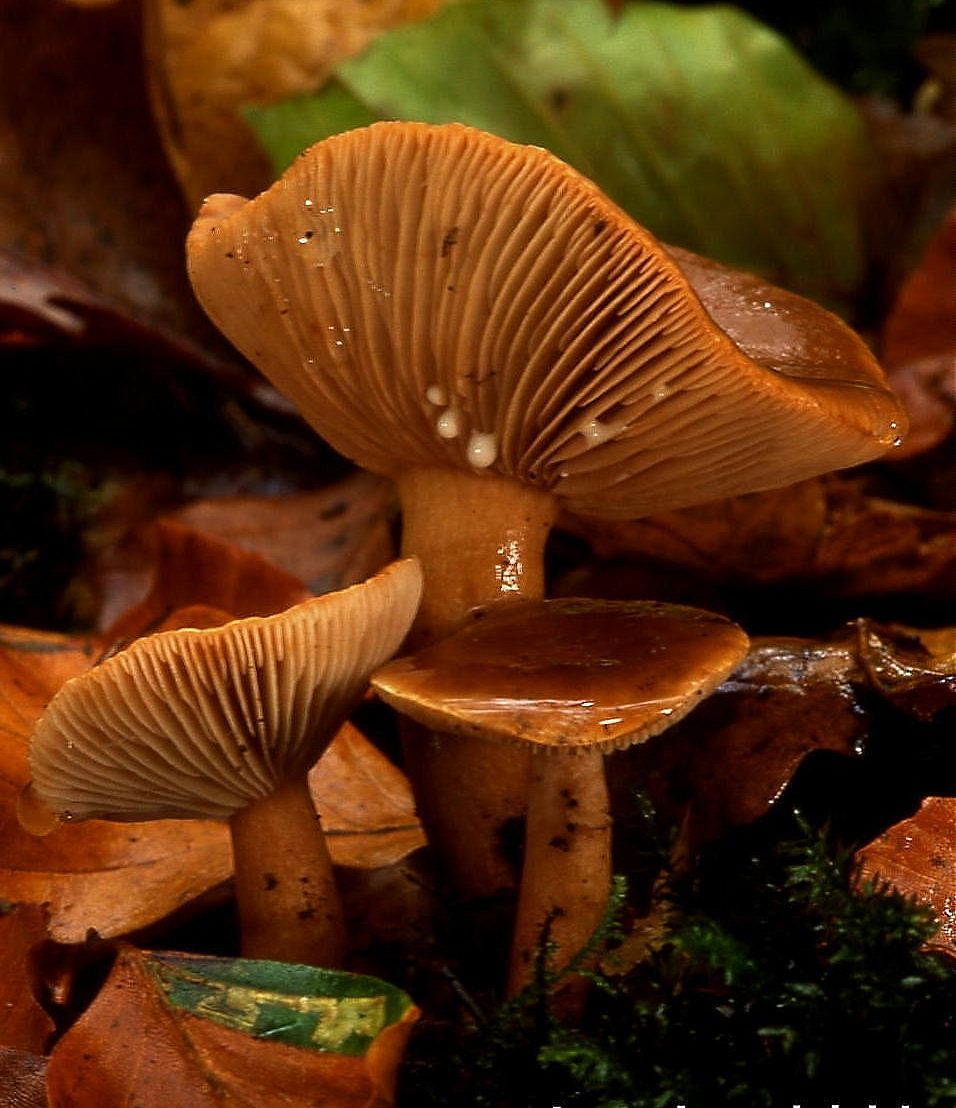
When learning to identify wild mushrooms, beginners often focus entirely on cap color and overall shape. However, field mycologists rely heavily on the underside of the cap, where the hymenium—the spore-producing surface—meets the stipe, or stem. Gill attachment describes the precise structural relationship between these paper-thin vertical blades and the stem. Because gill attachment is genetically fixed within species and often consistent across entire genera, understanding what attachment type you are looking at allows you to eliminate hundreds of possibilities within seconds.
The simplest way to inspect gill attachment accurately is to cut a fresh specimen cleanly down the center, from the top of the cap straight through the base of the stem. Looking at the gills only from beneath can create optical illusions, especially if the cap is curved, bowl-shaped, or heavily weathered. In a cross-section, you can clearly trace the individual gill lines right up to the stem wood. The primary attachment categories you will encounter in field guides are free, adnate, adnexed, sinuate or emarginate, and decurrent.
Free gills are completely detached from the stem, stopping just short of the stipe and leaving a clear ring or tiny channel of smooth cap flesh around the top of the column. This feature is a hallmark of several widespread fungal families, including the genus Amanita—which contains the lethal death cap and destroying angel—as well as the common grocery-store field mushrooms in the genus Agaricus and parasol mushrooms like Macrolepiota procera. Because both celebrated edibles and fatally toxic species possess free gills, this trait alone never indicates safety. It simply alerts you to pay intense attention to other diagnostic signs, like stem rings and underground volvas.
Adnate and adnexed gills both touch the stem, but they meet it at different angles. Adnate gills attach broadly, running horizontally to meet the stem almost perpendicular to it at a roughly ninety-degree angle, as seen in many brittlegills of the genus Russula. Adnexed gills, by contrast, curve upward before attaching narrowly at a small point of contact, giving the impression that they are pulling away from the stem without being completely free. A related variation is the sinuate or notched attachment, where the gill dips or scoops out just before reaching the stem before forming a small trailing attachment; this is a classic feature of many species in the genus Tricholoma.
Decurrent gills travel visibly downward along the stem, tapering gradually into the tissue of the stipe. You can see this sweeping, funnel-like architecture in oyster mushrooms belonging to the genus Pleurotus, in true chanterelles with their blunt ridges, and in poisonous jack-o'-lantern mushrooms of the genus Omphalotus. Distinguishing true decurrent gills from false ridges or deeply notched attachments is crucial because toxic species frequently mimic popular wild edibles with funnel-shaped caps. Foragers sometimes rely on dangerous folk myths, such as assuming all mushrooms with gills running down the stem are safe to eat or that cooking neutralizes any associated toxins; both assumptions are entirely false and have led to catastrophic hospitalizations.
Never attempt to taste or consume any wild mushroom based on gill attachment, an app match, or a single physical characteristic. If anyone ever ingests an unknown wild mushroom and poisoning is suspected, contact your regional poison control center or emergency medical services immediately, and keep a whole, untrimmed specimen stored in a paper bag to help medical toxicologists make an accurate diagnosis. Even experienced naturalists double-check multiple morphological characteristics, spore prints, and microscopic structures before reaching a definitive conclusion.
To build confidence in fungal identification, practice capturing thorough, well-lit photographs whenever you encounter a mushroom in the field. Take clear pictures of the cap surface, an undisturbed view of the underside showing the gill attachment, and the fully excavated stem base down to the soil level. You can upload these photos into the Shroomly app to help narrow down likely candidates and spot potential toxic look-alikes. Always bring your physical finds to a local mycological club or verified expert to confirm their true identity.