


When people photograph a mushroom for identification, they usually focus on color and shape. Yet the texture of the cap surface often tells you more than color does. Mycologists describe caps as smooth, dry, viscid (tacky), glutinous (slimy), velvety, fibrillose (covered in fine fibres), scaly or warty, and each of these states reflects how the outer skin of the cap, called the pileipellis, is built. Because that structure tends to be shared among related species, cap texture can quickly point you toward a group of mushrooms. It can also mislead you if you do not understand how weather, age and handling change what you see, so it is best treated as one clue among many rather than a verdict.
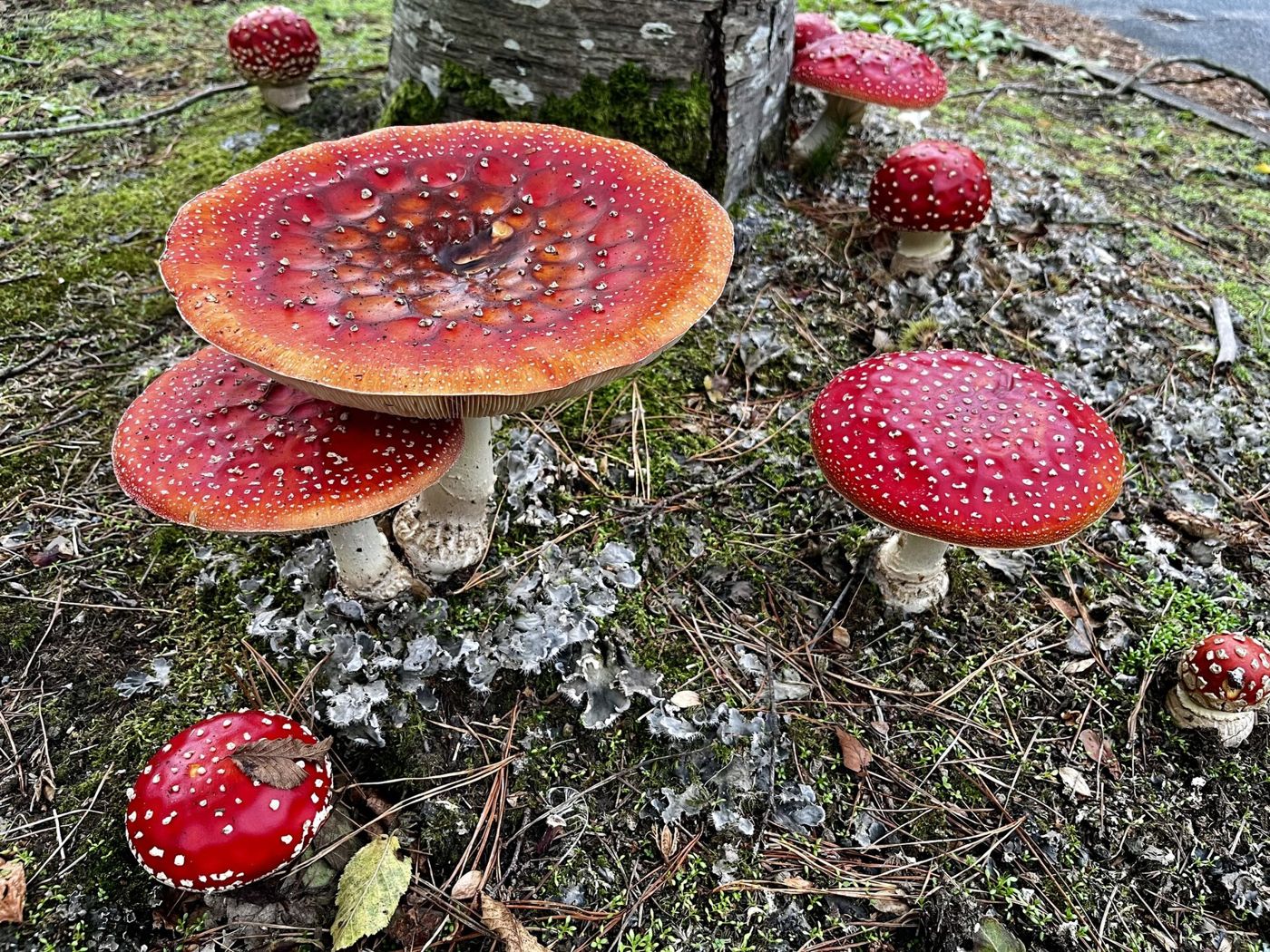
Warts and patches are some of the most famous cap features, and the red cap of the fly agaric (Amanita muscaria) with its white flecks is the textbook example. In Amanita species these warts are usually not part of the cap itself. They are fragments of the universal veil, a membrane that enclosed the whole young mushroom and tore as the cap expanded. Because they sit loosely on top of the cap, they can be washed off by heavy rain or rubbed away, leaving a smooth cap. This matters enormously for safety: a death cap (Amanita phalloides) is often almost bare, sometimes carrying just a single whitish patch, and a fly agaric after a downpour may have lost most of its warts. A missing wart pattern does not rule out an Amanita, which is why the stem base and any sac-like volva must always be checked as well.
Scales look superficially similar to warts but usually form in a different way. In the parasol (Macrolepiota procera) and the shaggy parasol (Chlorophyllum rhacodes), the cap skin itself breaks up as the cap expands, leaving concentric brown scales over a paler fibrous background and an intact darker patch at the centre. The shaggy ink cap (Coprinus comatus) has upturned, woolly scales on its tall white cap, and many small dapperlings in the genus Lepiota show fine scales arranged in rings. Some of those small Lepiota species contain amatoxins, the same toxins found in the death cap, so scaly caps are a reason for caution rather than reassurance. Note whether the scales are fixed or easily rubbed off, their color compared with the background, and whether they are concentrated in the centre.
Slime and stickiness are worth recording carefully. A viscid cap feels tacky when moist, while a glutinous cap is covered in a distinct layer of slime. The slippery jack (Suillus luteus) and many of its relatives under conifers have glossy, slimy caps in wet weather, and many waxcaps (Hygrocybe) and some webcaps (Cortinarius) are slimy too. The catch is that a slimy cap can dry to a shiny, apparently smooth surface on a dry day, while a normally dry cap can feel damp after rain. Look for clues such as leaf fragments or grass stuck to the cap, which suggest it was sticky when fresh. Touch the cap gently with a fingertip if you want to check stickiness, wash your hands afterwards, and never taste any part of a wild mushroom as an identification test.
Velvety, fibrous and smooth caps make up much of the rest of the spectrum. Many boletes, including species formerly placed in Xerocomus, have a suede-like, finely velvety cap that may crack into a mosaic as it ages or dries. Fibrecaps (Inocybe), a large genus containing many toxic species, often have caps covered in radiating fibres that split toward the edge, giving a torn, streaky look. Some webcaps have silky fibrils, and the death cap typically shows fine dark radiating fibres embedded in a smooth greenish-olive surface. A lens or a sharp close-up photograph often reveals these fibres when the naked eye sees only a plain cap, so it is worth getting very close to the surface when you document a find.
Moisture can also change cap color in ways that confuse beginners. Many small brown mushrooms are hygrophanous, meaning the cap looks dark and somewhat translucent when wet and fades to a paler shade as it dries, often starting from the centre or in a band. The deadly funeral bell (Galerina marginata) is hygrophanous, as are many Psathyrella species and the sheathed woodtuft (Kuehneromyces mutabilis), a species it is notoriously confused with. Two photographs of the same mushroom taken hours apart can look like different species. Related to this is the striate margin, fine lines at the cap edge where the gills show through thin flesh. Together, hygrophanous color change and striation are helpful clues, but they are shared by both harmless and deadly species. While on the subject of cap skin, the old belief that a mushroom is safe if its cap peels is completely false; the death cap peels easily. The same goes for other folk tests: silver spoons, animals nibbling a mushroom, and pleasant smells prove nothing about edibility. Only an expert who has examined the actual specimen can confirm whether a mushroom is edible, and some deadly species closely resemble popular edible ones.
To make cap texture useful for identification, photograph the cap from above in good, even light, then take a close-up at an angle so warts, scales, fibres or slime catch the light, and note the weather and whether the cap felt sticky. Add clear shots of the gills or pores and the whole stem, including the base dug carefully out of the soil so any volva is visible. Shroomly can use those photos to suggest likely species and flag toxic look-alikes that share the same cap features. Treat that result as a starting point, not a verdict on edibility, and confirm any identification with a local mycological society or an experienced expert who can examine the specimen in person. If anyone may have eaten a mushroom you are unsure about, call poison control or emergency services immediately and keep a sample of the mushroom for identification.