


Australia has an enormous diversity of fungi, and a surprisingly large share of it has never been formally described. That matters for safety. In Europe and North America, generations of mycologists have catalogued which mushrooms are edible and which are dangerous, but in Australia many native species, including numerous native Amanita species, have little or no reliable information about their toxicity. On top of that, several dangerous European species have arrived with imported trees and now grow in parks, gardens and plantations. The result is a country where foragers cannot simply rely on overseas field guides or on traditions brought from other countries, and where the most serious poisonings often involve mushrooms that look familiar to people who grew up picking mushrooms elsewhere.
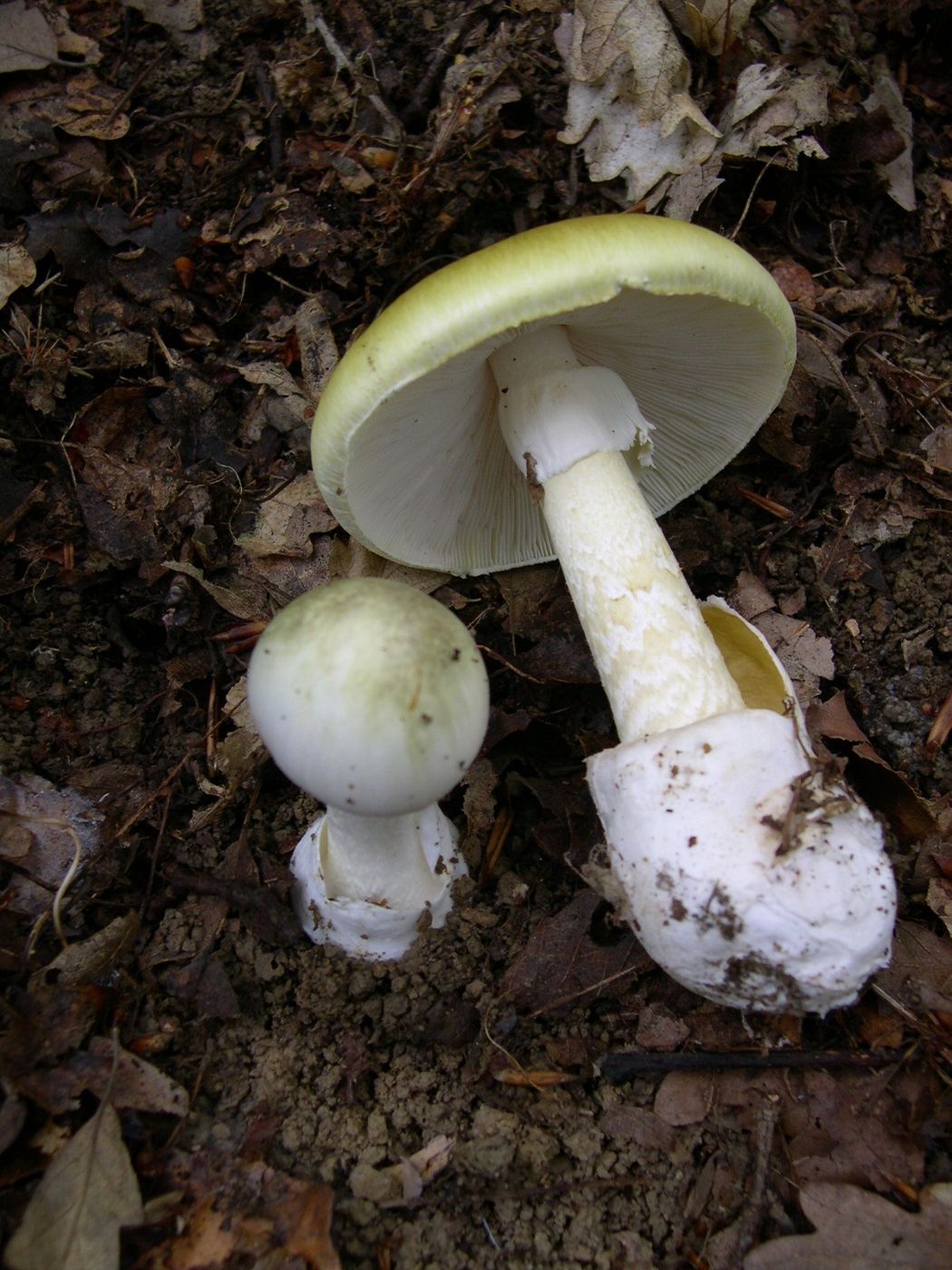
The single most dangerous mushroom in Australia is the death cap, Amanita phalloides. It is not native: it was introduced on the roots of European trees, particularly oaks, and is now well established in and around Canberra and in parts of Victoria, including Melbourne, with records from other regions as well. Death caps typically appear in autumn, often after rain, beneath established oaks in streets, parks and gardens. The cap is usually olive-green to yellowish or bronze, though it can be pale, with white gills, a white skirt-like ring on the stem and a white, sac-like volva at the base that is often hidden in soil or leaf litter. Death caps contain amatoxins, which damage the liver and kidneys. Symptoms are typically delayed for six hours or more, then a period of apparent improvement can follow before organ damage becomes obvious. Death caps have killed people in Australia, including fatal poisonings in Canberra in 2012 and a widely reported case in Victoria in 2023. Cooking, drying and freezing do not destroy amatoxins.
Part of the danger is that death caps can resemble mushrooms that are eaten in other parts of the world, most notably the paddy straw mushroom (Volvariella volvacea), which is popular in parts of Asia. Immature death caps still enclosed in their veil can also be mistaken for puffballs, and pale or faded specimens can be confused with field mushrooms (Agaricus species). Folk tests offer no protection: death caps do not reliably taste bad, peeling the cap proves nothing, a silver spoon will not change colour, and the fact that a slug, possum or other animal has nibbled one does not mean it is safe for people. Health authorities in the ACT and Victoria regularly warn the public not to pick wild mushrooms at all during death cap season.
Small brown mushrooms can be just as deadly. Galerina species, including Galerina marginata and related species recorded in Australia, contain the same amatoxins as the death cap. They grow on rotting wood, wood chips and mossy debris, and they are small, brown and unremarkable. They are a particular hazard for people looking for psilocybin mushrooms, because some Galerina species grow in similar habitats, including pine plantations and wood-chip garden beds, and can look very similar to the untrained eye. Deadly Lepiota species, small dapperlings with scaly caps, add to the risk among the so-called little brown mushrooms, a group that should never be eaten on the strength of a casual identification.
Several other species cause frequent but usually non-fatal poisonings in Australia. The yellow stainer, Agaricus xanthodermus, and related yellow-staining Agaricus species look very much like supermarket or field mushrooms and grow in lawns and gardens; they are among the most common causes of mushroom poisoning calls and can cause vomiting, cramps and diarrhoea. In warmer regions such as Queensland and northern New South Wales, the green-spored parasol, Chlorophyllum molybdites, is a common lawn mushroom that causes severe gastrointestinal illness and is easily mistaken for edible parasols. The ghost fungus, Omphalotus nidiformis, a native species famous for glowing in the dark, grows in clusters on wood and has been confused with oyster mushrooms, causing intense vomiting. The introduced fly agaric, Amanita muscaria, with its red cap and white warts, appears under pines and birches and can cause confusion, agitation and drowsiness. Children and pets are especially vulnerable to all of these, and dogs have died after eating death caps in Australian backyards and parks.
If anyone may have eaten a wild mushroom in Australia, call the Poisons Information Centre on 13 11 26 immediately, or call 000 if the person is unwell, unconscious or having difficulty breathing. Do this straight away even if the person feels fine, because the deadliest poisonings start with no symptoms at all. Keep any remaining mushroom, including pieces from the plate or the garden, wrapped in paper so experts can identify it. For pets, contact a vet or emergency animal hospital immediately. Do not try home remedies, do not wait to see whether symptoms develop, and do not assume a small bite is harmless.
Learning to recognise the dangerous species is the best defence, especially if you have children or pets who spend time in parks and gardens under oaks or pines. If you find a mushroom you are unsure about, photograph it clearly from several angles, showing the top of the cap, the gills or pores underneath, and the whole stem including the base, carefully dug out so any volva is visible. Shroomly can use those photos to suggest likely species and flag toxic look-alikes such as the death cap, but a photo-based result is a starting point for learning, never a confirmation that a mushroom is safe to eat. Only an expert who has examined the actual specimen can confirm edibility, and in Australia that caution matters more than ever. For confirmation, contact a local mycological group such as Fungimap-affiliated groups or a state field naturalists club, and remember that some deadly species look remarkably like popular edible ones.