


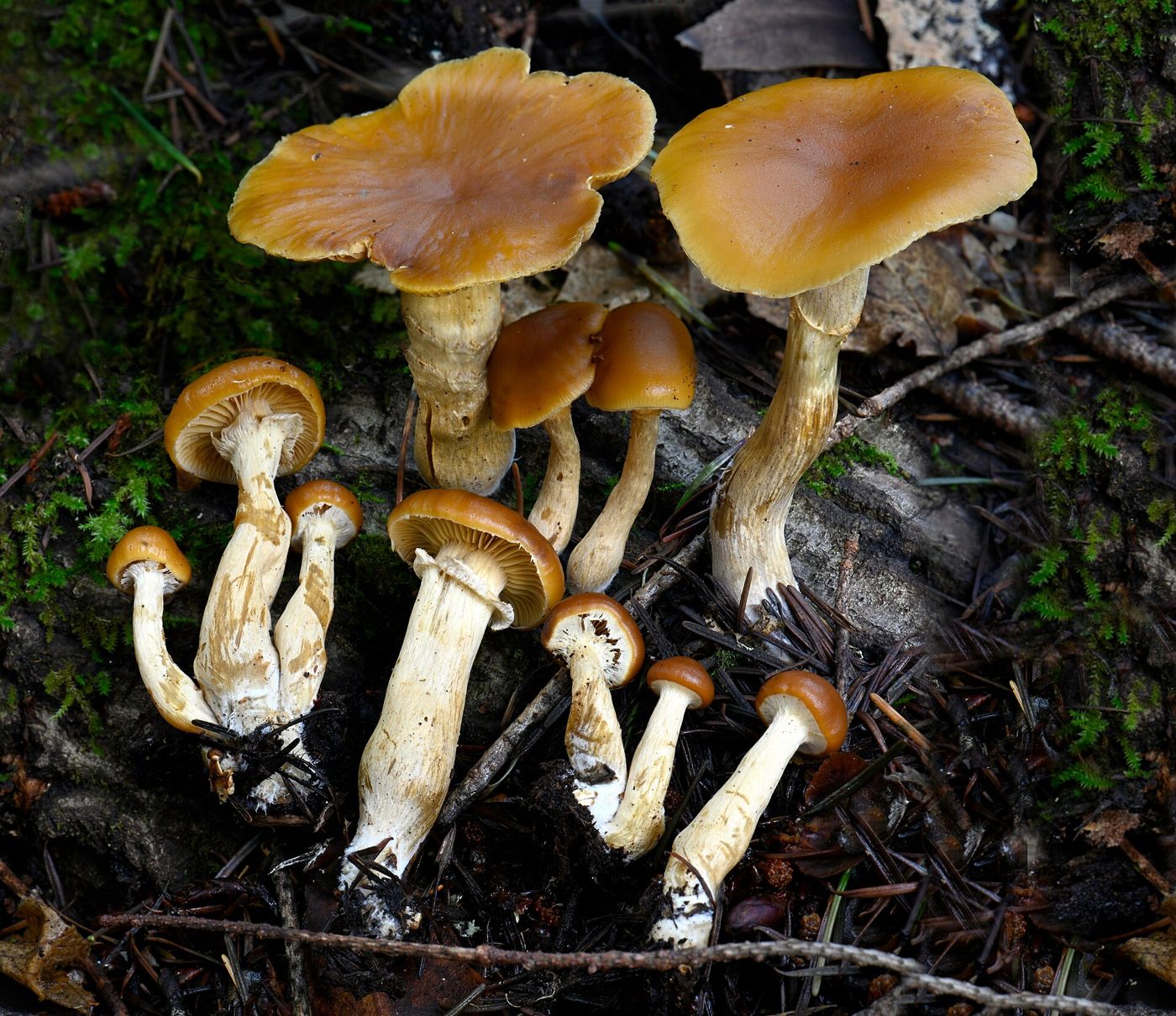
Every autumn, poison centres and emergency departments see cases that begin the same way: someone goes looking for psilocybin mushrooms, often called magic mushrooms, and brings home something that only looked similar. This article does not give guidance on finding, preparing or using psychoactive mushrooms, and psilocybin is illegal to possess in many places, including much of the United States, the United Kingdom, Canada and Australia. What it does cover is why this particular kind of mistake is so dangerous, because some of the look-alikes are among the deadliest fungi known, and because children and pets can also encounter these small, unremarkable mushrooms in lawns, parks and garden mulch.
The core problem is that psilocybin-containing species, such as the liberty cap (Psilocybe semilanceata) in grassland or wood-loving species like Psilocybe cyanescens in wood chips, belong to the broad group mycologists jokingly call little brown mushrooms. Hundreds of species share the same basic look: a small brown, tan or buff cap, thin stem and dull gills. Telling them apart often depends on spore print colour, microscopic features of the spores and cells, and careful attention to habitat. Even experienced mycologists regularly need a microscope to put a name to many of them, which is exactly why casual identification by eye goes wrong.
The most serious look-alike is the funeral bell, Galerina marginata, sometimes listed as Galerina autumnalis in older North American guides. It grows on rotting wood and buried woody debris, including wood chips, the same sort of habitat favoured by some Psilocybe species. It is a small brown mushroom, often with a thin ring zone on the stem, and it contains amatoxins, the same toxins responsible for most fatal mushroom poisonings worldwide. Amatoxin poisoning typically causes no symptoms for several hours, then severe vomiting and diarrhoea, an apparent recovery, and then potentially fatal liver and kidney damage. Cooking, drying and freezing do not destroy these toxins.
Galerina is not the only risk. Pholiotina rugosa, a slender brown mushroom of lawns, gardens and mulched beds formerly known as Conocybe filaris, also contains amatoxins and can grow in the same places people search for liberty caps or other small grassland species. Many fibrecaps (Inocybe species), common small brown mushrooms with fibrous, often cracked caps, contain muscarine, which can cause heavy sweating, salivation, watery eyes, blurred vision, a slowed heart rate and breathing difficulty. Some mottlegills (Panaeolus) and other small grassland species add to the confusion, so a patch of small brown mushrooms in a field can easily contain several genera growing side by side.
Rules of thumb circulating online make this worse. Blue bruising on the stem is often treated as a reliable sign, but it is not proof of anything safe: bruising can be faint, absent or hard to judge on old or damp specimens, other unrelated fungi also change colour, and deadly and harmless species can grow mixed together in the same patch so one blue-staining mushroom does not vouch for its neighbours. Spore print colour narrows things down but does not settle an identification on its own, since several brown-spored groups overlap. Folk tests such as smell, whether slugs or animals have eaten a mushroom, or whether the cap peels are meaningless for toxicity. Only an expert who has examined the actual specimen can confirm what it is, and some deadly species closely resemble popular ones. If anyone, including a child or a pet, may have eaten a wild mushroom of uncertain identity, call poison control or emergency services immediately, even if they feel fine, and keep a sample of the mushroom, ideally whole and in a paper bag, so it can be examined. Do not wait for symptoms, because the most dangerous toxins act after a delay.
Because small brown mushrooms pop up so readily in lawns, mulch and wood chip paths, the practical safety step for families is simple: teach children never to put any wild mushroom in their mouth, remove mushrooms from areas where young children and dogs play, and treat any unknown small brown mushroom as potentially deadly. If you want to know what is growing in your garden or local park, photograph it in place, showing the top of the cap, the gills underneath, the full stem and the very base, along with the material it is growing from. Shroomly can suggest likely species from those photos and flag toxic look-alikes such as Galerina, Pholiotina and Inocybe, which is a useful starting point for learning. A photo-based suggestion is never confirmation of identity or edibility, so take your questions and specimens to a local mycological society or an experienced expert who can examine the real mushroom.