


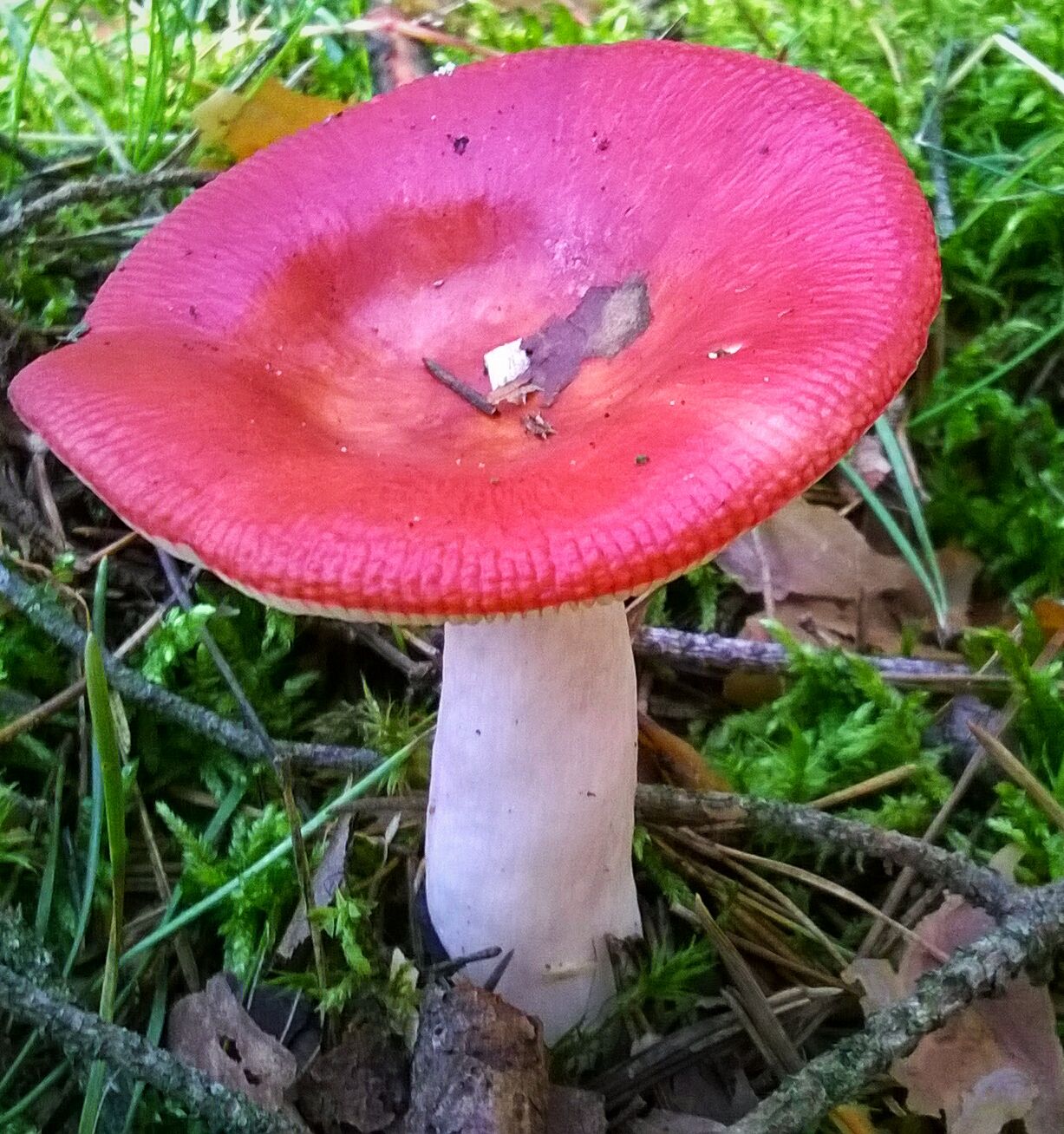
The vivid scarlet cap of the sickener (Russula emetica) makes it one of the most eye-catching fungi in the autumn woods, but its striking appearance conceals a potent gastrointestinal threat. Belonging to the large and notoriously tricky genus Russula, commonly called brittlegills due to their crumbly flesh that snaps like chalk, this woodland species typically fruits in damp coniferous forests, mossy hollows, and sphagnum bogs throughout North America, Europe, and parts of northern Asia. Its bright red cap, pristine white gills, and fragile white stem often attract curious hikers and novice foragers, yet its common name serves as an unmistakable warning about what happens when it is consumed.
The sickener is thoroughly toxic and will provoke rapid, severe gastrointestinal illness if eaten raw or cooked. The mushroom contains irritating sesquiterpene compounds that attack the lining of the human digestive tract, typically triggering violent symptoms within thirty minutes to three hours of ingestion. Victims commonly suffer intense nausea, relentless vomiting, severe abdominal cramps, and dehydrating diarrhea. While fatalities are extraordinarily rare in healthy individuals, the resulting dehydration and physical distress can be dangerous for young children, elderly adults, and household pets. If anyone consumes a mushroom suspected of being Russula emetica, you must call poison control or emergency services immediately rather than waiting for symptoms to appear or attempting home remedies like induced vomiting. Always preserve the remaining specimens in a clean paper bag or container so medical specialists can accurately confirm what was swallowed.
Because brightly colored mushrooms frequently inspire folk wisdom, numerous dangerous myths surround the sickener and its relatives. A widespread and hazardous belief claims that if insects, slugs, or woodland rodents have chewed on a cap, the mushroom must be safe for humans to eat. In reality, invertebrates and small mammals possess vastly different digestive enzymes and metabolic pathways; slugs routinely feast on Russula emetica without suffering any ill effects whatsoever. Another persistent myth asserts that peeling the red skin from the cap removes the poison or proves that a mushroom is wholesome. While the cuticle of the sickener does peel away about halfway toward the center, the irritating chemical compounds permeate the underlying white flesh, rendering the peel test completely useless and potentially harmful.
Differentiating the sickener from other brittlegills is an exercise in extreme caution because the genus Russula contains dozens of red-capped species that look virtually identical to the naked eye. While certain red brittlegills are considered edible by experienced foragers in some regions, distinguishing Russula emetica from species such as the beechwood sickener (Russula nobilis) or edible look-alikes like Russula paludosa often requires chemical reagents, spore prints, and microscopic evaluation of the spores and cap cuticle. Even seasoned mycologists frequently hesitate to name a red Russula to the species level in the field without laboratory tools. For a novice, attempting to harvest any red-capped brittlegill for the table introduces an unacceptably high risk of accidental poisoning.
Safety in wild mushroom foraging demands absolute certainty and zero reliance on rules of thumb, color charts, or automated identification tools. No wild mushroom should ever be consumed based on a photograph, an app suggestion, or superficial visual similarities, because several toxic and potentially lethal mushrooms bear an uncanny resemblance to harmless species. Edibility can only be verified by a qualified, local mycology expert who has physically examined the complete, fresh specimen in person. When there is any ambiguity about a mushroom found in your garden or on the forest floor, the only safe choice is to admire it where it grows and leave it untouched.
If you encounter a vivid red mushroom in the woods and want to investigate its identity, document every angle carefully before handling it. Take clear, well-lit photographs showing the top and texture of the cap, the attachment of the white gills underneath, and the entirety of the stem, including where it meets the moss or soil base, while noting whether it grew beneath pines, spruce, or birch trees. Uploading these images into Shroomly can instantly help you narrow down the specimen, highlighting telltale brittlegill characteristics alongside known toxic look-alikes such as the sickener. Once you have documented your find, compare the results with local field guides and share your detailed photographs with your regional mycological society to learn more about the diverse fungal community in your area.