


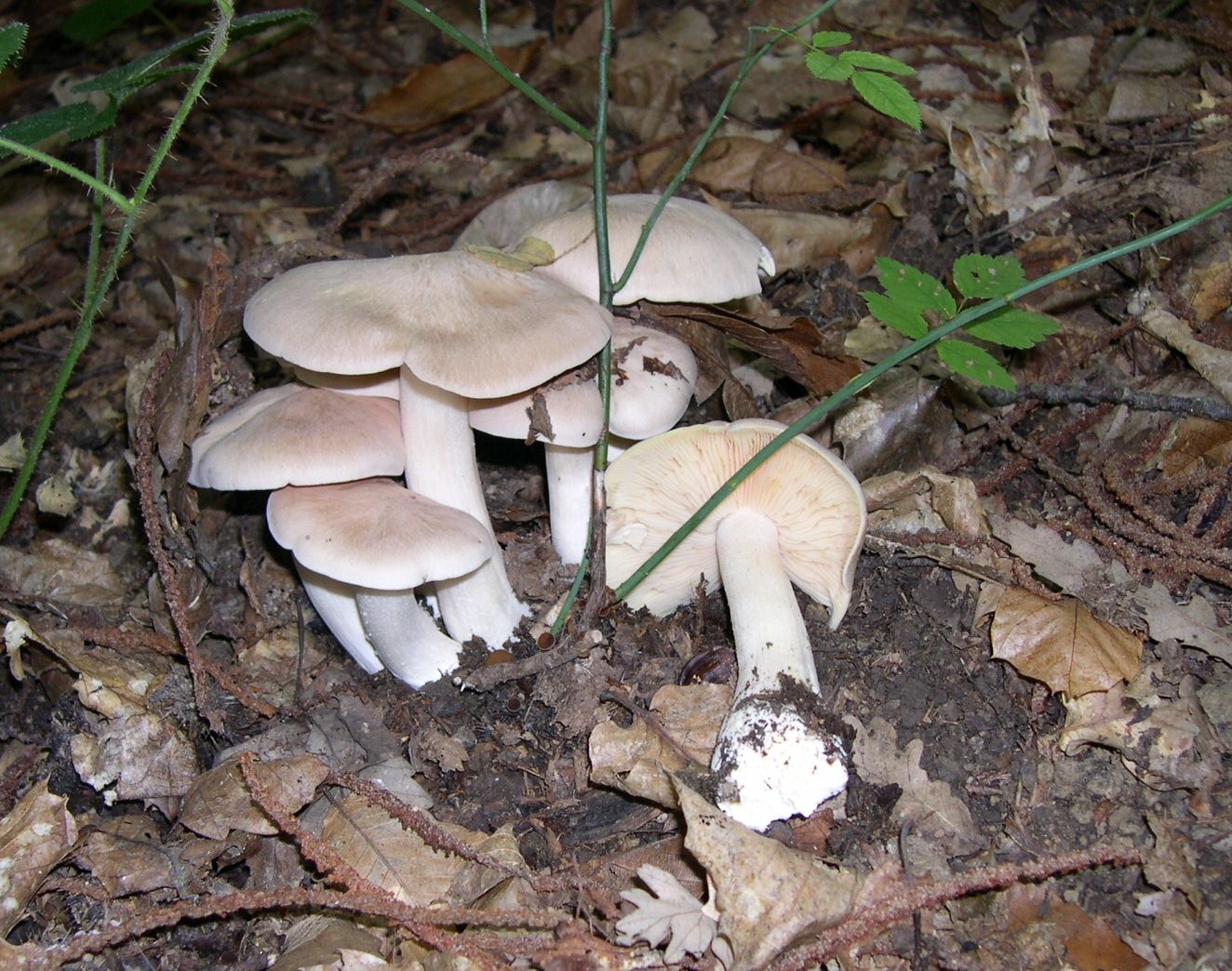
The livid entoloma (Entoloma sinuatum), also known as the livid pinkgill or the lead poisoner, is a large and substantial woodland fungus notorious among toxicologists. Found across temperate areas of Europe and parts of North America, this species grows primarily in deciduous and mixed woodlands during summer and autumn, often near oak, beech, and hornbeam. Because of its generous size, pleasant flour-like aroma, and deceptively wholesome appearance, it accounts for a disproportionate number of mushroom poisonings every year.
Ingesting Entoloma sinuatum triggers a severe gastrointestinal syndrome. Although the specific chemical compounds responsible for its toxicity remain incompletely categorized by biochemists, their physiological impact is prompt and intense. Symptoms typically begin within thirty minutes to two hours following ingestion and include profuse vomiting, agonizing abdominal cramps, dizziness, and unrelenting watery diarrhea. In severe cases, rapid fluid loss leads to acute dehydration, dangerous electrolyte imbalances, and secondary liver stress. While fatalities among healthy adults are rare, the poisoning can be life-threatening for young children, elderly individuals, or anyone with underlying health conditions.
Recognizing the physical characteristics of Entoloma sinuatum is critical for staying safe in the woods. The cap typically spans five to fifteen centimeters across, beginning convex before flattening out with an irregular, wavy margin. Its color ranges from pale ivory and smoky grey to ochre-tinted grey-brown, with a smooth surface that can feel silky or slightly greasy when damp. Underneath the cap, the gills are particularly telling: they start dirty white to pale yellowish in young specimens before turning a distinctive salmon-pink as the spores mature. The stem is stout, solid, fibrous, and white, lacking both a protective ring and a cup-like volva at the base.
The primary danger of the livid entoloma lies in how closely it mimics widely sought-after edible species. Foragers regularly confuse it with the clouded agaric (Clitocybe nebularis), the miller (Clitopilus prunulus), and St. George's mushroom (Calocybe gambosa). Many poisonings occur because individuals rely on dangerous folk rules, such as the myth that peeling the cap skin removes toxins, or that toxic mushrooms always smell unpleasant and taste bitter. In truth, Entoloma sinuatum smells pleasantly farinaceous, like fresh meal or cucumber, which frequently misleads unwary gatherers. Heat does not break down these toxins either; boiling, sautéing, or thorough cooking will not make a poisonous mushroom safe to eat.
If an accidental ingestion occurs, immediate medical intervention is essential. Never adopt a wait-and-see attitude, and never attempt home remedies like inducing vomiting unless explicitly instructed by medical professionals. Call your regional poison control center or emergency services straight away. If possible, collect any remaining mushroom pieces, trimmings, or intact specimens from the same cluster and keep them in a clean paper bag or rigid container. Providing physical material to hospital toxicologists and consulting mycologists allows for rapid microscopic analysis, which is vital for delivering the correct supportive medical treatment.
No single physical trait or casual identification app result should ever be taken as proof that a wild mushroom is safe to consume, as only a qualified mycological expert who has physically examined the actual specimen can verify its identity. When encountering unfamiliar mushrooms in fields or woodlands, take clear, well-lit photographs showing the top of the cap, the gill attachment beneath, and the intact base of the stem. Submitting these detailed angles to Shroomly helps compare key morphological features against known toxic species and their look-alikes, providing an informed starting point before confirming your observations with local experts.