


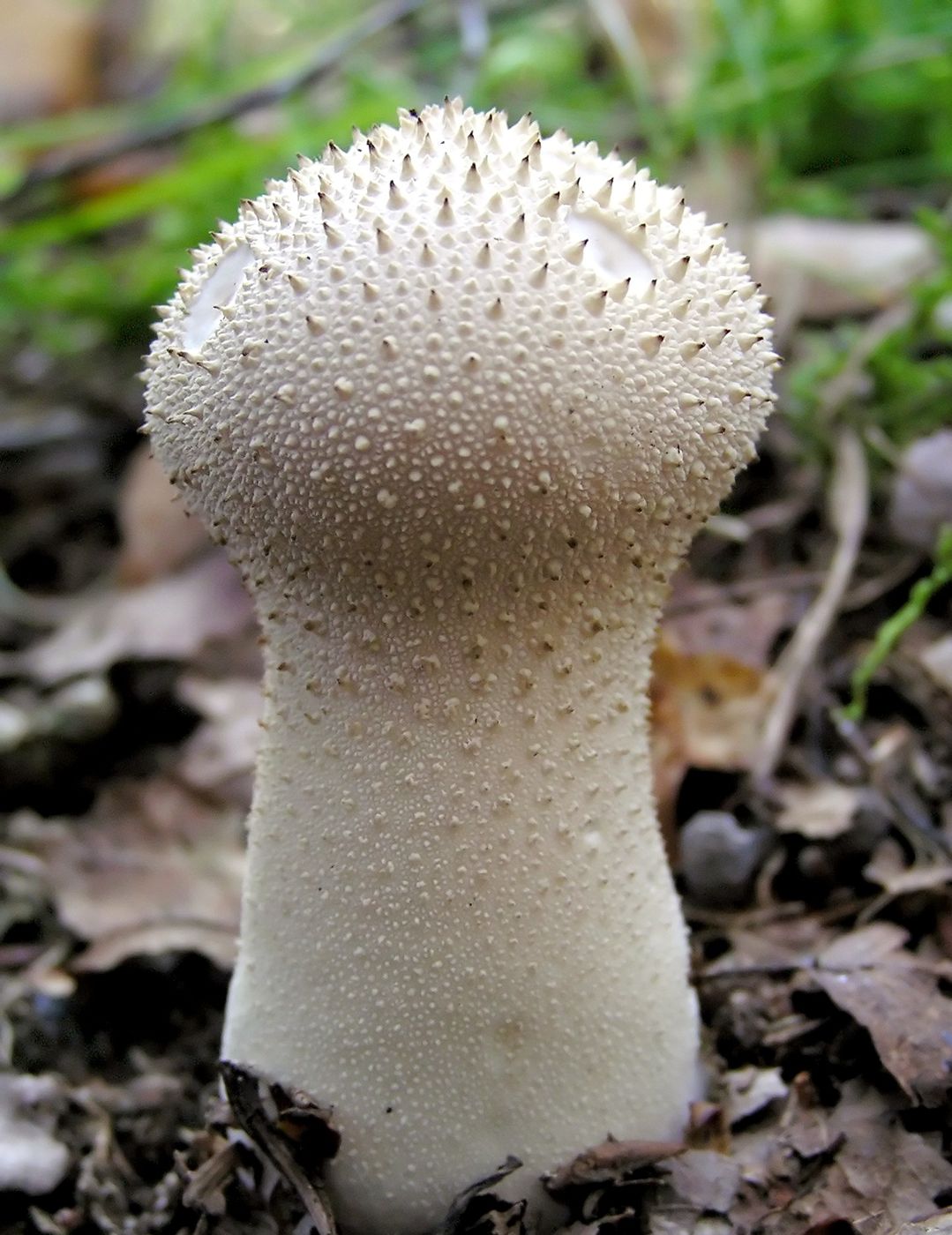
The common earthball, Scleroderma citrinum, is one of the most frequently misidentified fungi in woodlands, parks and gardens across Europe and North America. It is a round, stemless lump, which is why many people assume it is a puffball. In North America it is sometimes called the pigskin poison puffball, a name that captures both its tough, leathery skin and its reputation. Eating it can cause illness, and because it so often turns up in the same places as true puffballs, it is worth understanding why it is a problem and how to recognise it.
Earthballs belong to a different group of fungi from true puffballs. Puffballs such as Lycoperdon and Calvatia are related to gilled mushrooms like Agaricus, while Scleroderma species are more closely related to boletes. The common earthball is typically a few centimetres to around ten centimetres across, with a thick, firm rind that is yellowish to ochre-brown and covered in a pattern of coarse scales or cracks, a bit like crazy paving or pigskin. It usually has no real stem, just a wrinkled or rooting base attached to the soil by mycelial cords. It forms partnerships with trees such as oak, birch and beech, and is especially common on acidic, sandy or mossy soil along woodland paths and in heathland, mainly from late summer into autumn.
The most reliable difference is inside. When a true puffball is young and fresh, its interior is soft, uniform and pure white, like marshmallow or cream cheese. The common earthball has a firm interior that may be whitish only very briefly and quickly becomes purplish-grey to almost black, often with white marbling veins running through it. Its rind is also noticeably thick when cut, whereas a puffball's skin is thin. As earthballs age they crack open irregularly to release dark spores, rather than developing the neat central pore that many Lycoperdon species use to puff out spores. A curious extra clue is the parasitic bolete Pseudoboletus parasiticus, a small olive-yellow mushroom that grows only on Scleroderma earthballs; if you see one sprouting from a round fungus, you are looking at an earthball.
Swallowing an earthball typically causes gastrointestinal symptoms such as nausea, vomiting, abdominal pain and sometimes sweating or feeling faint, usually beginning within roughly half an hour to a few hours. It is not considered to be in the same category as amatoxin-containing species, but reactions can be unpleasant and serious, especially in young children, older adults and pets, and the amount eaten matters. Dogs in particular are drawn to round fungi on walks and in gardens, and earthball ingestion is a recognised cause of vomiting in dogs. Some people repeat folk claims that a small amount is harmless or that cooking makes it safe; neither is a reliable basis for eating anything, and earthballs should never be eaten.
Earthballs are not the only risk hiding behind a puffball shape. The immature egg stage of deadly Amanita species, including the death cap (Amanita phalloides) and destroying angels, can look like a small white puffball from the outside. Cutting such an egg vertically reveals the faint outline of a cap, gills and stem inside, a sign of a developing mushroom rather than a puffball. This is why no single trait, rule of thumb or folk test can tell you a round fungus is safe. Smell, peeling the skin, silver spoons and seeing that slugs or squirrels have nibbled it are all myths that tell you nothing about toxicity. Only an expert who has examined the actual specimen can confirm whether any wild fungus is edible, and some deadly species closely resemble popular edible ones.
If you suspect that someone has eaten an earthball or any other wild mushroom, call poison control or emergency services immediately, even if the person feels fine. If a pet has eaten one, contact your veterinarian or an animal poison helpline straight away. Keep a sample of the mushroom, or any remaining pieces, in a paper bag or container so that professionals can identify it. Do not try home remedies or wait to see whether symptoms develop. Around the home, gently removing round fungi from lawns and play areas, and teaching children not to pick or taste wild mushrooms, helps reduce the risk.
If you find a round, stemless fungus and want to know what it is, start by taking clear photos of the outside, the base where it meets the soil and, if you can safely cut it in half with gloves or a knife, the interior from top to bottom. A photo of the cut surface is often the single most useful clue for separating earthballs, puffballs and Amanita eggs. Shroomly can analyse these photos and suggest likely species along with known toxic look-alikes, giving you a helpful starting point. Treat that result as a guide rather than a verdict, and confirm any identification with a local mycological society or an experienced expert who can examine the specimen in person.