


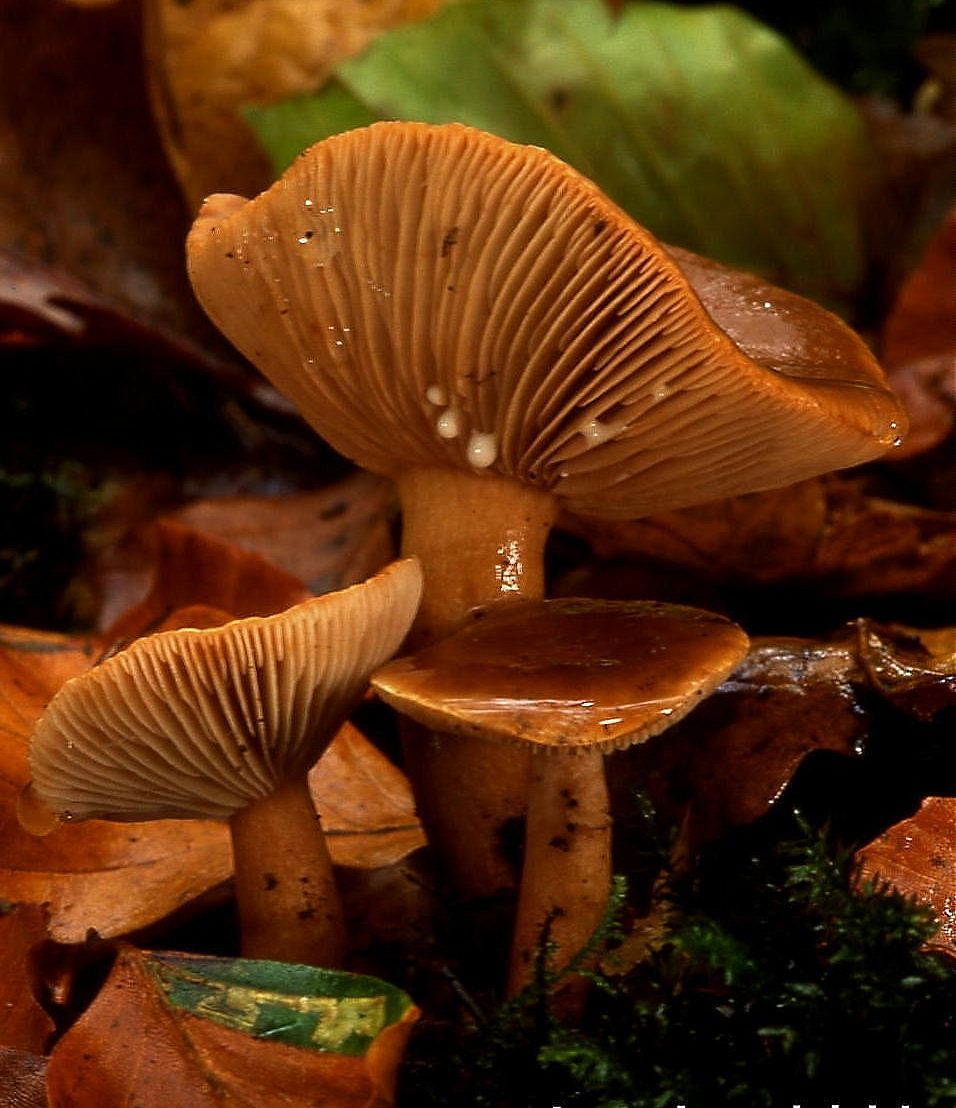
The brown roll-rim, Paxillus involutus, is one of the most common mushrooms in European woodlands, parks and heaths, and it also occurs in North America and other regions where it has been introduced with trees. For much of the twentieth century it was treated as edible in parts of central and eastern Europe, and that old reputation still circulates online and in family foraging traditions. Modern mycology is clear, however: the brown roll-rim is poisonous, its effects can be unpredictable, and it has been linked to fatal poisonings. Understanding why it is dangerous, and how it is recognized, matters for anyone who walks in woods where birch and other trees grow.
The danger of the brown roll-rim comes in two forms. Eaten raw or insufficiently prepared, it commonly causes gastrointestinal symptoms such as nausea, vomiting, cramps and diarrhea. The more serious problem is what toxicologists call Paxillus syndrome. Some people who have eaten the mushroom before, sometimes many times over years without any trouble, become sensitized. On a later meal their immune system reacts to a component of the mushroom and attacks their own red blood cells. This immune hemolysis can develop quickly and may lead to anemia, kidney failure and other life-threatening complications. The best-known case is the German mycologist Julius Schäffer, who died in 1944 after eating a dish of brown roll-rims, and his death helped change expert opinion about the species.
This immune mechanism is why preparation does not make the brown roll-rim safe. Many people still believe that thorough cooking or parboiling removes the risk, but heat does not prevent a sensitized person's immune system from reacting, and nobody can know in advance whether they have become sensitized. The fact that a person or their relatives ate it for years without problems offers no protection at all; in fact, repeated past meals are exactly how sensitization happens. This is a clear example of why folk rules about wild mushrooms fail. Silver spoons that do not tarnish, caps that peel easily, a pleasant smell or seeing animals nibble a mushroom tell you nothing about whether it is toxic to people.
Recognizing the brown roll-rim helps you avoid it. The cap is typically yellowish-brown to olive-brown or reddish-brown, often a few centimeters to well over ten centimeters across, and it becomes flattened and then depressed or funnel-shaped with age. The most distinctive feature is the margin, which stays tightly rolled under, often with a slightly felty or ribbed edge, especially in younger specimens. Underneath, the crowded gills run down the stem (decurrent) and are pale yellowish to olive-tan, and they are soft enough that they can often be pushed or peeled away from the cap flesh. Both gills and cap bruise dark brown when handled, and the spore print is brown. The stem is usually short and stout, colored like the cap or paler. It is frequently found with birch, but it also grows with many other trees and in grassy park edges near trees, mostly from late summer into autumn.
Several mushrooms can be confused with it, especially by beginners looking for something brown and funnel-shaped. Milk caps in the genus Lactarius have a similar shape and can grow in the same places, but they exude a milky or colored latex when the gills are cut, which the brown roll-rim does not. The velvet roll-rim, Tapinella atrotomentosa, grows on conifer stumps and has a thick, dark brown velvety stem, while the oyster roll-rim, Tapinella panuoides, forms fan-shaped brackets on wood. In North America, what was once called Paxillus involutus is now understood to include several closely related species, so specimens may differ somewhat from European field guide descriptions. None of these distinctions should ever be used to decide that a mushroom is safe to eat. Only an expert who has examined the actual specimen can confirm what a mushroom is, and some deadly species closely resemble popular edible ones.
If you think someone has eaten a brown roll-rim, or any wild mushroom they cannot confidently name, do not wait to see whether symptoms develop and do not try home remedies. Call poison control or emergency services immediately, and keep a sample of the mushroom, ideally whole and including the stem base, or any leftovers, so that professionals can work out what was eaten. The same urgency applies to children and pets: if a child or animal has chewed on a wild mushroom, contact poison control, emergency services or your veterinarian right away and bring the sample with you.
Because the brown roll-rim is so common, it is a good species to learn to recognize as one to leave alone. When you find an unfamiliar brown mushroom, photograph the top of the cap, the gills and the full stem including the base, and note the trees growing nearby. Shroomly can use those photos to suggest likely species, including the brown roll-rim and its toxic look-alikes, which is a useful starting point for learning. A photo or an app result can never confirm that a mushroom is edible, so take any specimen you are curious about to a local mycological society or an experienced expert who can examine it in person.