


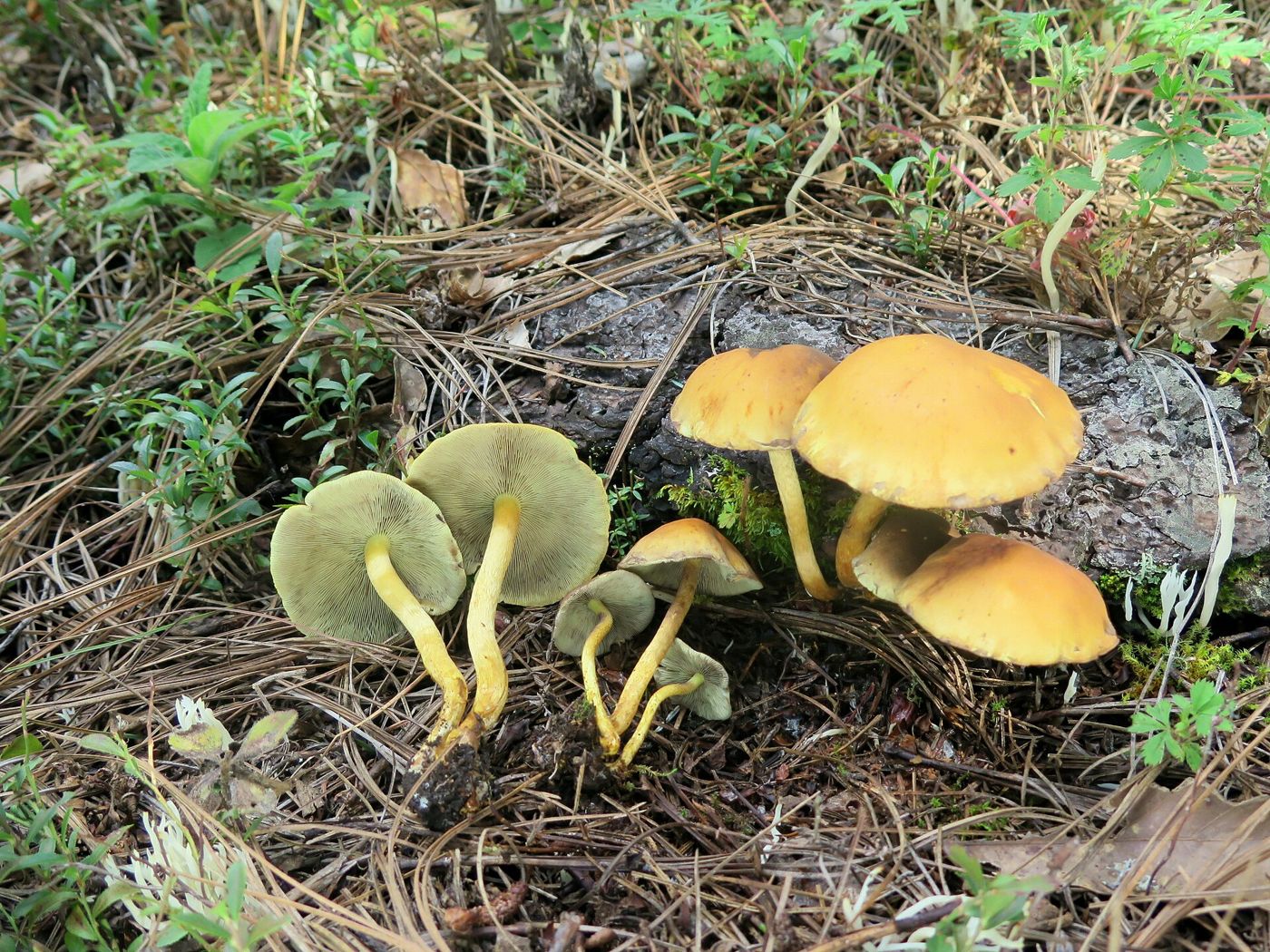
The sulphur tuft (Hypholoma fasciculare) is one of the most abundant and easily spotted fungi throughout the temperate woodlands of North America, Europe, and parts of Australia. Fruiting from spring through late autumn, and often persisting well into mild winters, this saprotrophic fungus forms dramatic, crowded clumps on decaying tree stumps, buried roots, and rotting logs. Its sheer numbers and eye-catching golden coloration frequently draw the attention of casual walkers and foragers, making it one of the most frequently recorded causes of accidental wild mushroom poisoning in regions where it thrives.
Hypholoma fasciculare is distinctly poisonous and must never be eaten. The primary toxins responsible for its severe effects are a group of steroid-like compounds known as fasciculols. Consuming even a small portion of a sulphur tuft mushroom typically triggers acute gastrointestinal distress within one to four hours, marked by persistent nausea, violent vomiting, debilitating abdominal cramps, and profuse diarrhea. In severe cases, extreme fluid loss can cause dehydration and collapse, and medical literature notes that prolonged toxic stress can occasionally impair liver and kidney function. Cooking, boiling, or drying does not neutralize these fungal toxins, and relying on old folk tests—such as watching whether an animal nibbles the cap, checking if a silver coin tarnishes during cooking, or assuming pleasant aromas mean safety—is extraordinarily dangerous.
Recognizing the physical hallmarks of the sulphur tuft is an essential skill for anyone studying wild fungi. The cap typically measures between two and eight centimeters across, starting out convex with a slightly curved-in margin before expanding and flattening with age. Its color is a vibrant sulfur-yellow or chartreuse that darkens to an orange-red or rich cinnamon-brown toward the center. Underneath the cap, the closely spaced gills offer one of the most reliable identification clues: they emerge pale sulfur-yellow, but quickly develop a distinct dingy olive-green cast before darkening to a purplish-brown or near-black shade as the dark spores mature. The stems are slender, fibrous, hollow, and often curved together into a tightly bound cluster at the base, typically matching the yellow hue of the cap.
A major reason behind accidental poisonings involving the sulphur tuft is its visual similarity to several edible wood-rotting species. It is most commonly confused with honey fungus species (Armillaria), which also fruit in dense tufts on decaying timber; however, honey mushrooms have cream or white gills and deposit a white spore print, entirely lacking the telltale greenish tints found in Hypholoma fasciculare. Foragers seeking the velvet shank (Flammulina velutipes) or the brick cap (Hypholoma lateritium) also risk fatal mix-ups, especially since multiple fungal species can share the exact same rotting log. Because some of the world's most dangerous fungi closely mimic popular edible varieties, assuming a mushroom belongs to a safe group based on general appearance alone can lead to life-threatening mistakes.
If you suspect that a child, pet, or adult has ingested any part of a sulphur tuft mushroom, treat the situation as an urgent medical priority. Do not adopt a wait-and-see approach or attempt home remedies such as inducing vomiting, administering salt water, or using unprescribed adsorbents. Instead, contact your regional poison control center or emergency services immediately for professional guidance. If possible, collect any leftover pieces of the mushroom—along with any intact specimens from the exact same cluster—and place them in a dry paper bag or rigid container so hospital staff and consulting mycologists can examine the physical specimen to confirm its identity.
Whenever you encounter clustered mushrooms on woodland logs or fallen branches, practice disciplined identification rather than relying on guesswork. Take clear, sharp photographs showing the top of the cap, the coloration of the gills beneath, the stem surface, and the base where the clump meets the wood. You can upload these images to Shroomly to analyze distinctive morphological features and explore potential toxic look-alikes. However, never consume any wild-picked mushroom based solely on an app suggestion or personal photograph; edibility can only ever be confirmed by a trained mycological expert who has physically examined the actual specimen in person.