


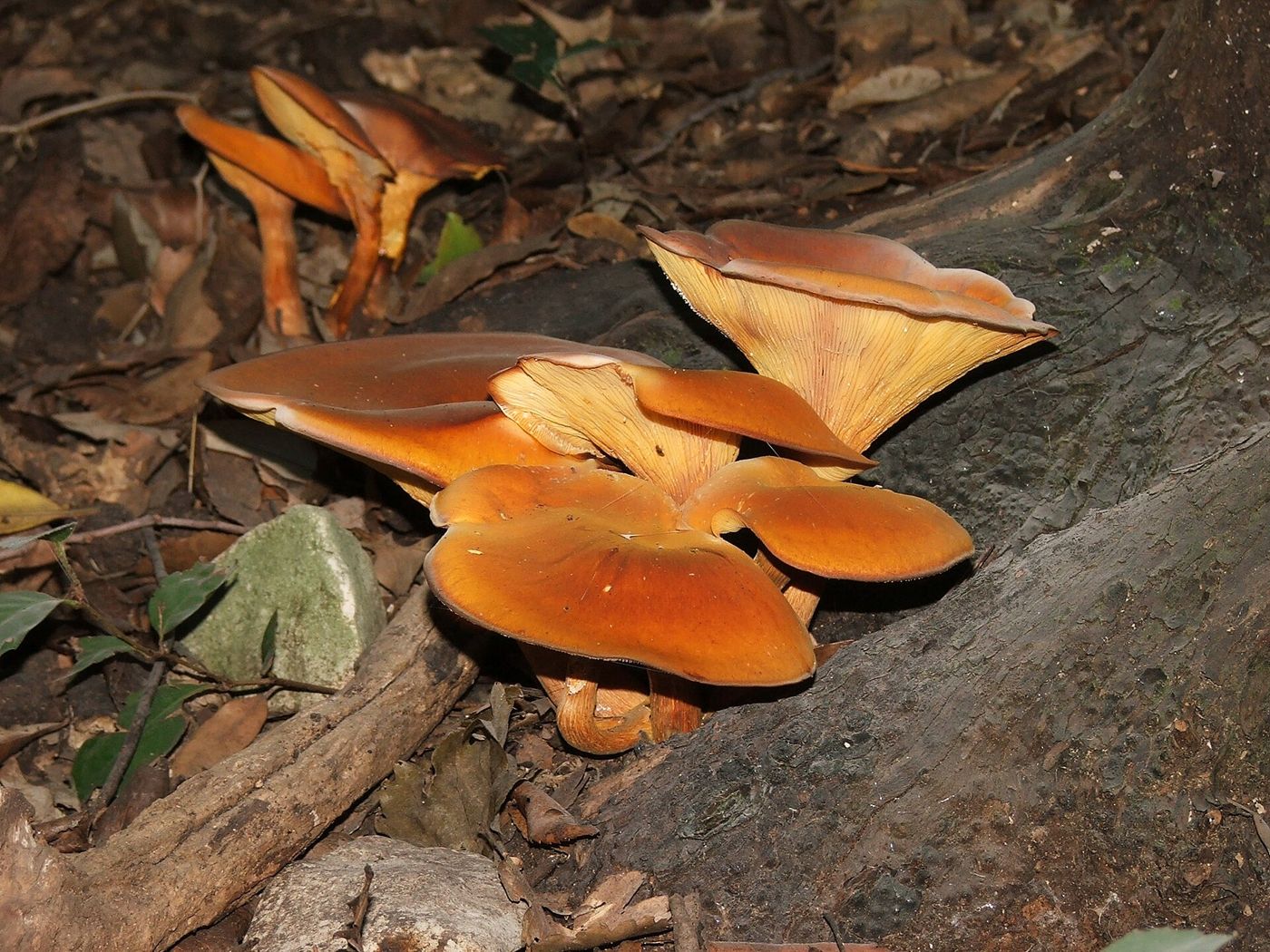
The jack-o'-lantern mushroom is a strikingly beautiful woodland fungus, but it is unequivocally poisonous. Found across North America, Europe, and parts of Asia, species within the Omphalotus genus—most notably Omphalotus olearius and Omphalotus illudens—produce eye-catching clusters of bright orange or yellowish-orange caps. Despite their cheerful appearance and faint bioluminescent glow in total darkness, these mushrooms contain potent natural chemicals known as illudin S and illudin M. These compounds are cytotoxic sesquiterpenes that act as aggressive irritants to human digestive tissue and damage cellular structures upon contact.
Symptoms of jack-o'-lantern poisoning typically develop rapidly, appearing anywhere from thirty minutes to three hours after ingestion. The clinical picture is dominated by severe gastrointestinal illness, beginning with sudden nausea followed by violent, persistent vomiting and painful abdominal cramps. Watery diarrhea, profuse sweating, excessive salivation, dizziness, and headache frequently follow as the body attempts to purge the toxins. While illudins are rarely lethal to healthy adults and generally do not cause the delayed, irreversible liver failure associated with amatoxins, the resulting dehydration and electrolyte loss can be severe enough to require urgent hospital admission for intravenous fluids and antinausea medication.
A widespread and dangerous misconception is that cooking wild mushrooms destroys their harmful properties. The illudins found in Omphalotus species are entirely heat-stable and remain fully active whether the mushroom is boiled, pan-fried, baked, or dehydrated. Foragers also fall victim to perilous folk wisdom, such as believing that toxic mushrooms smell repulsive, tarnish silver coins, or are naturally rejected by wildlife. In reality, jack-o'-lantern mushrooms have an agreeable, pleasant fungal aroma and tender flesh, and forest slugs and insects frequently graze on them without experiencing ill effects. No kitchen test, smell, or visual shortcut can reveal whether a mushroom is safe.
Accidental poisonings involving jack-o'-lantern mushrooms occur with alarming regularity because novice foragers confuse them with prized edible species, most notably golden chanterelles (Cantharellus species) and occasionally young chicken of the woods (Laetiporus sulphureus). However, key anatomical and ecological traits separate them. Jack-o'-lantern mushrooms are saprotrophic wood-decay fungi that almost always fruit in tight, dense clusters directly attached to dead stumps, rotting logs, or buried tree roots. Underneath the cap, they display true, paper-thin, blade-like gills that run slightly down the stem. Chanterelles, by contrast, grow from the soil in a mycorrhizal relationship with living trees, usually fruit singly or in loose groups, and feature blunt, vein-like false gills that repeatedly fork and cross-connect.
If you suspect that you, a family member, or a pet has consumed even a small piece of a jack-o'-lantern mushroom, treat the situation as an urgent medical event. Do not adopt a wait-and-see attitude, and never attempt unproven home remedies such as inducing vomiting, administering activated charcoal, or forcing liquids without professional guidance. Contact your regional poison control center or emergency medical services immediately. If possible, collect any remaining raw mushroom specimens, cooking trimmings, or even expelled matter in a clean, dry paper bag to bring to the hospital, as physical material allows attending toxicologists and consulting mycologists to quickly confirm the species and guide supportive treatment.
Learning to distinguish toxic species like the jack-o'-lantern from edible woodland fungi requires patience, careful observation, and methodical examination of the entire fruiting body. When you encounter unfamiliar mushrooms, take clear, well-lit photographs showing the top of the cap, the underside with gill attachment, and the very base of the stem where it meets the wood or soil. Uploading these images to the Shroomly app can help you compare distinctive anatomical traits, explore likely species candidates, and flag dangerous look-alikes. Always remember that photographic identification is an educational aid rather than a certificate of safety, and no wild mushroom should ever be consumed unless it has been physically verified by a qualified local mycological expert.