


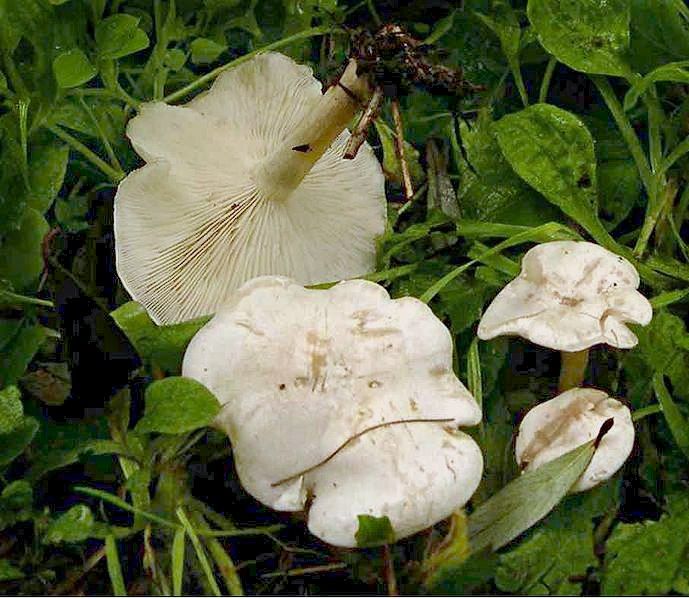
The ivory funnel mushroom, known scientifically as Clitocybe dealbata and closely related to Clitocybe rivulosa, is a deceptively delicate, pale mushroom that frequently colonizes domestic lawns, roadside verges, meadows, and public parks throughout temperate regions of North America, Europe, and parts of Australia. Despite its understated appearance and diminutive size, it ranks among the most hazardous lawn fungi encountered by suburban homeowners, foragers, and pet owners. The ivory funnel contains dangerous concentrations of muscarine, a powerful alkaloid toxin that acts aggressively on the human autonomic nervous system.
Muscarine poisoning is often referred to medically as a cholinergic toxidrome, and the ivory funnel earned its alternative common name, the sweating mushroom, because profuse perspiration is one of its hallmark clinical effects. Within fifteen to thirty minutes of ingestion, victims typically experience intense sweating, excessive salivation, watery eyes, contracted pupils, blurred vision, severe abdominal cramping, violent vomiting, and watery diarrhea. In severe cases or when consumed by children, pets, or individuals with pre-existing cardiovascular or respiratory ailments, muscarine poisoning can trigger life-threatening bradycardia, dangerously low blood pressure, and acute bronchospasms. The toxins are completely heat-stable, meaning that no amount of boiling, frying, or drying will neutralize them.
The primary reason the ivory funnel causes accidental poisonings is its tendency to share identical habitats with common edible lawn fungi. Clitocybe dealbata regularly fruits in grass, often in small clusters, irregular arcs, or distinct fairy rings that directly mirror the growth patterns of the fairy ring mushroom (Marasmius oreades). Careless gatherers gathering handfuls of grass-dwelling mushrooms can easily sweep an ivory funnel into their basket unnoticed. Furthermore, inexperienced foragers sometimes mistake immature ivory funnels for small edible field mushrooms (Agaricus campestris) or sweet-scented funnel caps, failing to notice that the ivory funnel possesses pale, decurrent or adnate gills and produces a pure white spore print, whereas Agaricus species develop deep chocolate-brown gills and spores.
A major contributor to mushroom poisonings worldwide is reliance on dangerous folk tests and unscientific rules of thumb. Many people mistakenly believe that toxic mushrooms can be detected because they tarnish silver cutlery, peel easily, lack a pleasant smell, or are avoided by insects and slugs. In reality, the ivory funnel smells faintly pleasant or mealy, peels just like many harmless species, and is readily devoured by garden slugs and insects without harming them. Wildlife physiology differs fundamentally from human biology, and what nourishes an invertebrate or wild mammal can be fatal to humans and domestic pets. Edibility cannot be inferred from a single visual cue, a folk test, or an automated guess, and only an experienced mycologist who has thoroughly examined the physical specimen can reliably verify whether any wild mushroom is safe.
If you suspect that a person or pet has swallowed an ivory funnel mushroom or any unidentified wild fungus, do not attempt home treatments, do not induce vomiting, and do not wait for symptoms to develop before taking action. Contact your local poison control centre or national emergency medical services immediately. Medical professionals can treat muscarine toxicity effectively using the specific pharmacological antidote atropine, but timing is critical to prevent severe respiratory distress and cardiovascular collapse. Carefully collect the remaining mushroom, including any broken pieces or the base of the stem, place them into a clean paper bag or container, and bring them with you to the clinic to aid medical and mycological identification.
Observing small white lawn fungi safely requires disciplined documentation and respect for how closely deadly species resemble harmless ones. If you discover pale mushrooms growing in your turf, take clear, well-focused photographs from multiple angles, showing the top of the cap, the arrangement of the gills beneath, and the entire stem base extracted intact from the soil. You can submit these images to Shroomly to explore probable species matches, learn distinguishing morphological traits, and review toxic look-alikes. Always cross-reference your findings with verified local field guides and confirm your specimens with a reputable regional mycological society before coming to any conclusions.