

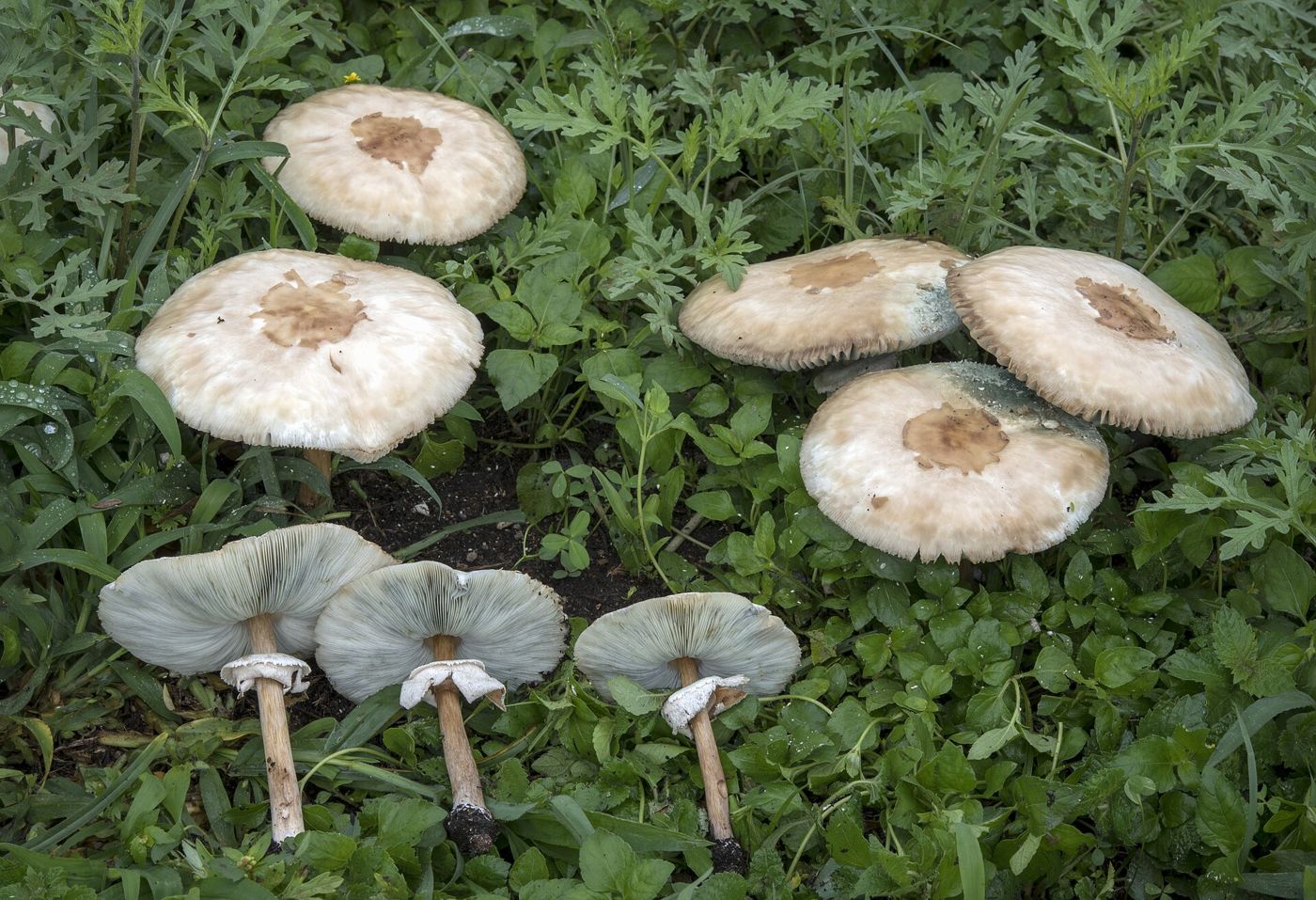
The green-spored parasol (Chlorophyllum molybdites) is widely known among gardeners and foragers because it fruits in lawns, parks and mulched beds and has a parasol-like appearance that can look edible at a glance. Unlike some deadly Amanita species that can cause liver failure, Chlorophyllum molybdites primarily causes severe gastrointestinal upset — nausea, vomiting, diarrhea and cramps — often within a few hours of eating. While these symptoms are rarely fatal in healthy adults, they can be dangerous for children, the elderly and pets, and medical help should be sought promptly after ingestion.
Identification relies on a combination of features: a medium-to-large, whitish cap often with brownish scales; free gills that turn greenish with age as the spores mature; a central stem that may bear a ring; and a green spore print. The green spore print is the most reliable field diagnostic that separates it from many lookalikes: most edible parasol-like mushrooms (for example, Macrolepiota species) produce white spores. However, spore-printing requires time and care, and gill color can be misleading on young specimens, so visual judgement alone is risky.
People commonly mistake the green-spored parasol for edible parasols or giant puffball-like mushrooms when only a cap is seen. Another lookalike is Agaricus species, which can have brownish gills and a similar shape when young. Unlike folk tests that claim to prove edibility — such as watching whether animals eat the mushroom, testing with a silver spoon, photographing it and relying on a single trait, or assuming 'if it peels it's safe' — none of these are reliable. Some toxic species closely resemble edible ones, and reliance on a single characteristic or anecdotal test can cause serious harm.
If you suspect someone has eaten Chlorophyllum molybdites (or any wild mushroom), call your local poison control center or emergency services right away and keep a sample of the mushroom in a sealed container for identification. Do not induce vomiting, give activated charcoal or attempt home remedies unless instructed by a medical professional. Describe the timing and nature of symptoms to the responders; fast access to a specimen can greatly aid clinicians and mycologists in determining risk and treatment.
Prevention starts with avoiding picking or eating any mushroom from lawns, parks or unknown sources unless you are 100% certain of identification and have confirmation from an expert who has handled the specimen. For pet owners, keep dogs and cats away from mushroom-producing areas during flushes, because animals may ingest mushrooms before symptoms appear. Gardeners can reduce fruiting by removing wood chips and thick mulch, mowing frequently, and raking to disrupt the mycelial environment where Chlorophyllum molybdites thrives.
To get a solid identification, photograph the mushroom from several angles: the cap surface, a clear view of the gills underneath, the stem including the base (dig gently to show the basal area), and a shot of the surrounding habitat. Use Shroomly to get likely species suggestions and note toxic look-alikes, then confirm the result with a local mycological society or an experienced expert who can examine the actual specimen. Remember that only an expert who has handled the mushroom can reliably confirm edibility, and that some dangerous species closely mimic popular edibles.