

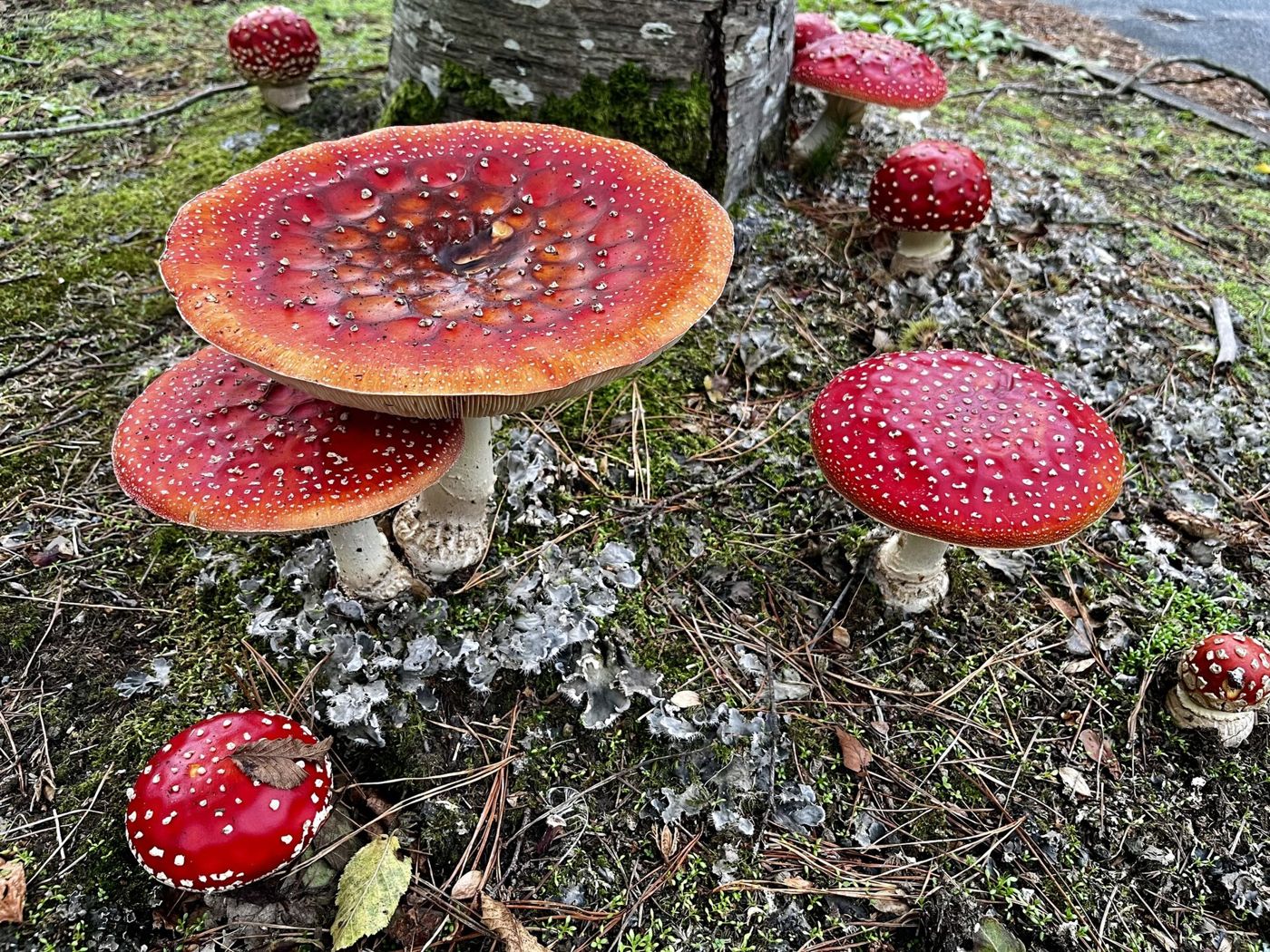
Is fly agaric poisonous? Yes. The red mushroom with white spots from fairy tales, Christmas cards, and video games is Amanita muscaria, and it contains ibotenic acid and muscimol, compounds that act on the brain. It is not usually as deadly as its cousin the death cap, but it causes real poisonings every year, and its familiarity makes people underestimate it.
The classic fly agaric has a bright red to orange-red cap covered in white or yellowish warts, white gills, a white stem with a drooping ring, and a swollen base ringed with scaly bands. In North America, common forms can be yellow or orange instead of red. The warts are remnants of a veil and can wash off in heavy rain, leaving a smooth red cap that looks quite different from the storybook version.
Symptoms usually begin within thirty minutes to a few hours of eating it. They can include nausea and vomiting, dizziness, confusion, agitation, hallucinations, muscle twitching, deep sleep, and in severe cases seizures or coma. Children are more vulnerable because of their size. Anyone who has eaten it needs medical advice from poison control or emergency services, not a wait-and-see approach.
Dogs and cats are frequent victims. Animals can be drawn to fallen mushrooms in gardens and parks, and a dog that has eaten fly agaric may vomit, stagger, seem drunk, become agitated, or have tremors and seizures. If you think your pet has eaten one, call your vet or an animal poison line immediately and bring a sample or photo of the mushroom with you.
Fly agaric grows in partnership with trees, especially birch and pine, and also spruce and other species. It fruits from late summer into autumn across much of the Northern Hemisphere and has been introduced elsewhere with planted pines, including parts of Australia, New Zealand, and South Africa. The name comes from an old European practice of using it in milk to attract and stupefy flies.
Because there are several red and orange Amanitas, including the edible Caesar's mushroom and some toxic species, it is worth confirming what you have found rather than assuming. Take photos of the cap, the gills, and the base of the stem, and let Shroomly identify the species and show the safety information. Admire it, photograph it, and leave it where it is.