


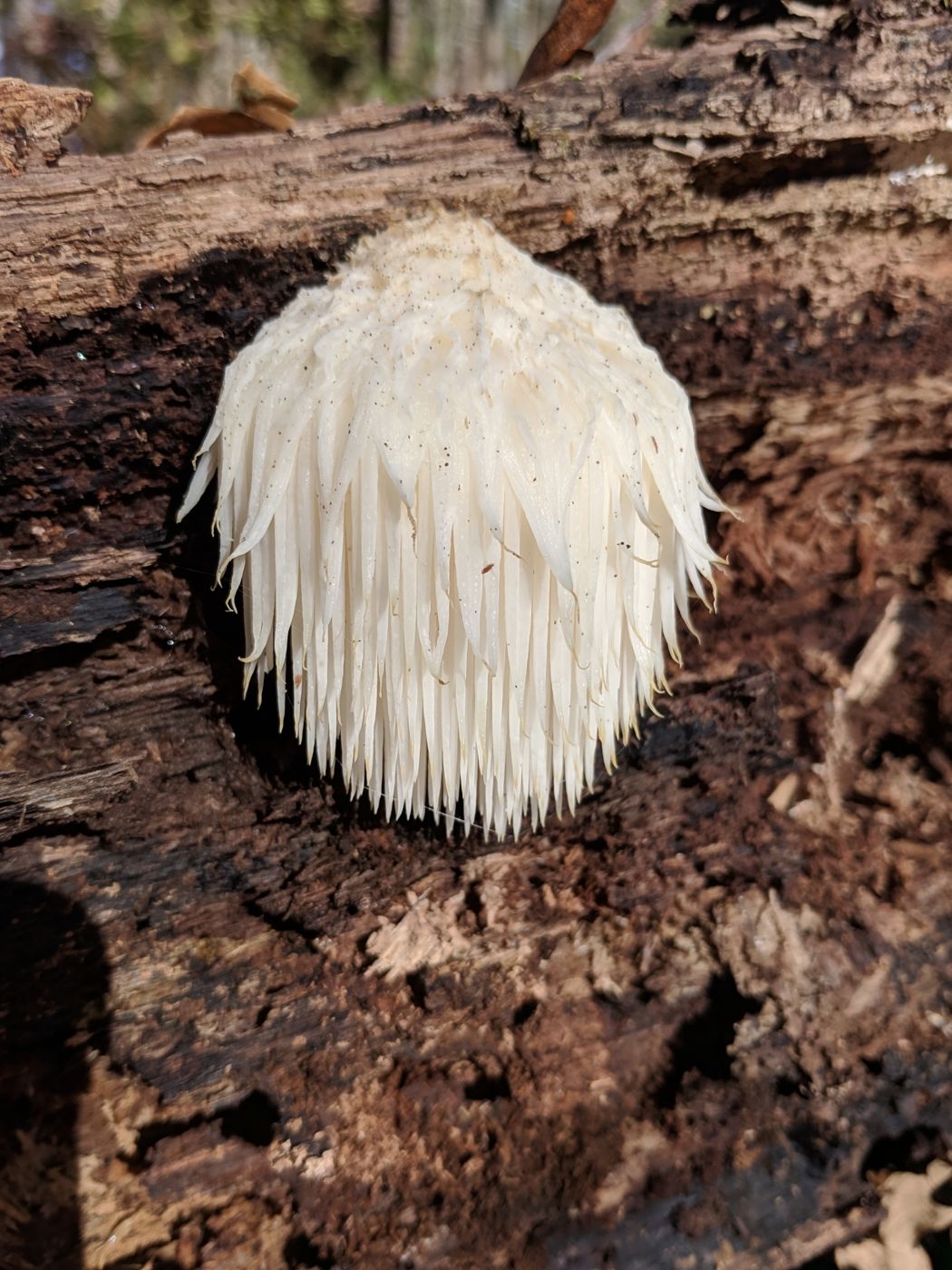
Lion's mane, known scientifically as Hericium erinaceus, is one of the most distinctive and visually striking fungi found in temperate woodlands. Unlike typical capped mushrooms with stems and gills, this tooth fungus produces a rounded, compact body covered in soft, downward-hanging spines that resemble an icicle cluster, a beard, or a pom-pom. These spines, which can grow up to several centimeters long, function as the spore-bearing surface, releasing white spores into passing woodland breezes as the fruitbody matures. When young and fresh, the entire specimen is pristine white, gradually turning cream, yellowish, and eventually dull brown with age or after exposure to heavy frosts.
Understanding where and when lion's mane grows is essential for locating it in the wild. Hericium erinaceus is a saprotrophic and weakly parasitic species that favors mature deciduous woodlands across North America, Europe, and parts of Asia. It develops almost exclusively on wounded hardwood trees, standing dead trunks, and fallen logs, showing a marked preference for oak, beech, maple, birch, and walnut. In most temperate climates, fruiting begins in late summer and continues through mid-to-late autumn, often emerging several feet up the trunk where a branch has broken off or bark has cracked. Because the underlying mycelium persists inside the wood, it often fruits in the exact same spot year after year until the timber is fully decayed.
While true Hericium erinaceus forms a singular, unbranched mass of long spines, several closely related species share similar woodland habitats. In North America and parts of Europe, you may encounter the comb tooth fungus (Hericium coralloides) or the bear's head tooth fungus (Hericium americanum). Both of these relatives are white, spine-bearing wood rotters, but they produce branched, coral-like frameworks where smaller clusters of spines dangle from multiple lateral branches rather than a single solid clump. Although these related Hericium species are distinct in morphology, none within the genus are known to be toxic, making this one of the safer fungal groups for beginners to study in the field.
True dangerous look-alikes for lion's mane are virtually nonexistent among spined fungi, but field observers occasionally confuse pale bracket fungi or tree-dwelling growths from a distance. Certain young bracket fungi or polypores, such as immature Climacodon septentrionalis (the northern tooth fungus), also grow on hardwoods and produce spine-like teeth, but they develop overlapping, tiered shelves with much tougher, leathery flesh and a foul odor rather than the soft, spherical cushions of lion's mane. Additionally, unexpanded puffballs or pale sap flows can superficially mimic a young Hericium button before its spines elongate, underscoring why finding distinct, hanging teeth is essential before concluding any identification.
A common trap among novice foragers is relying on folk wisdom, such as the idea that any mushroom growing on a tree trunk is safe, or that pleasant scents reliably confirm an edible species. Many shelf fungi and wood-inhabiting mushrooms are severely toxic or cause agonizing gastrointestinal distress, and smell is a subjective trait that varies widely between observers. Furthermore, environmental contamination can render any wild fungus unsafe; specimens growing along busy roadways or on industrial runoff sites can accumulate heavy metals and pollutants. Only an experienced mycologist who has physically examined the specimen can verify its precise identity, and you should never assume a mushroom is safe to consume based purely on photographs, rules of thumb, or superficial field traits.
Whenever you encounter a potential lion's mane or any wild fungus in the forest, careful photographic documentation is the best way to begin narrowing down its identity. Capture clear, focused photos showing the spines up close, the overall growth habit, and the host tree trunk and bark, as the wood species is a vital diagnostic clue. You can let the Shroomly app analyze your photographs to suggest likely species and flag potential look-alikes, and then bring your findings to a local mycological society for hands-on verification. If anyone ever ingests an unknown wild mushroom and shows signs of illness, contact poison control or emergency medical services immediately and save a fresh sample of the mushroom for professional analysis.