


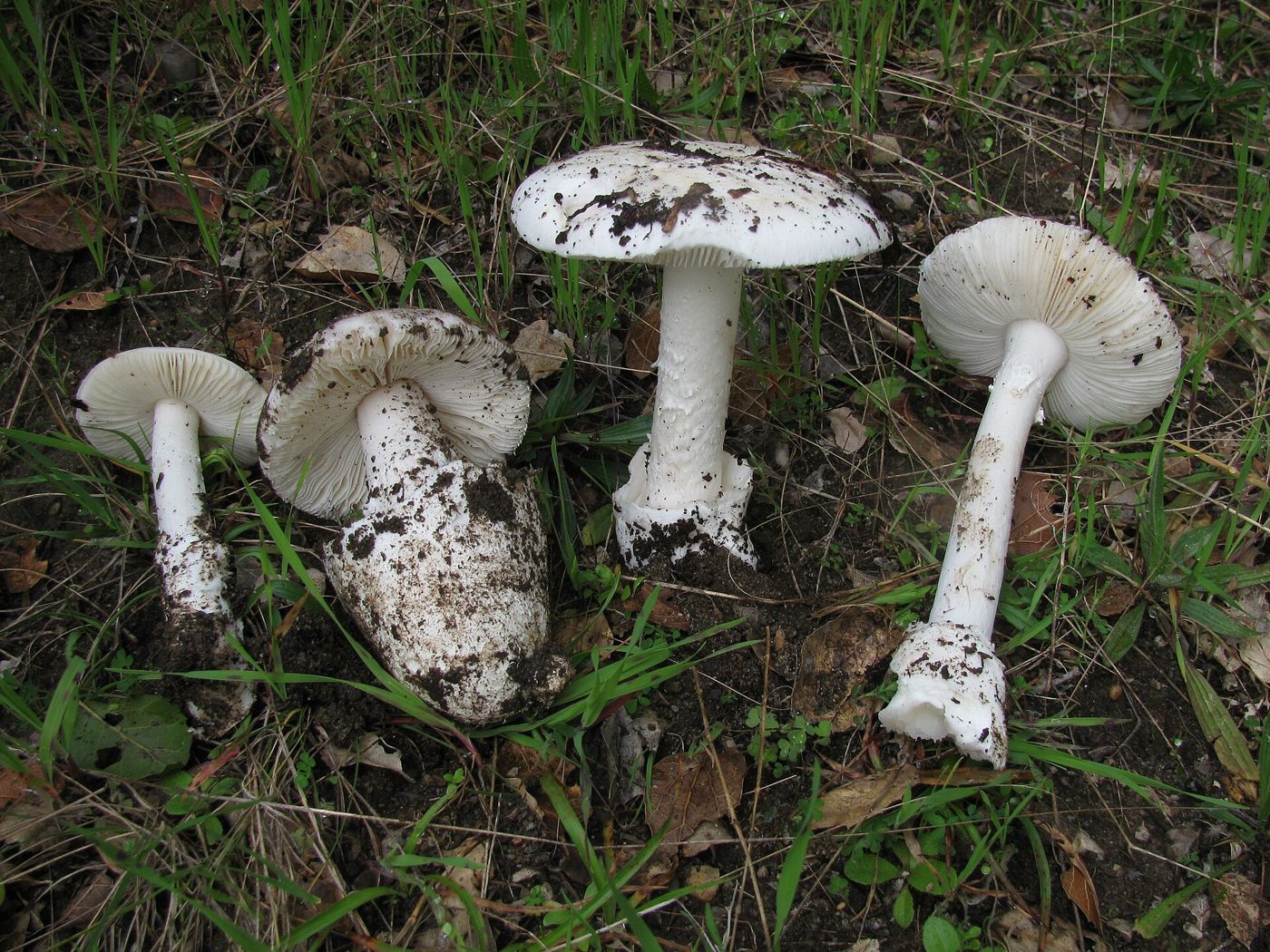
The genus Amanita contains some of the most striking, ecologically widespread, and perilous fungi on the planet. Found in woodlands across North America, Europe, Asia, and Australasia, Amanita species form vital mycorrhizal partnerships with broadleaf trees like oaks and birches, as well as conifers like pines and firs. While the genus includes culturally iconic species like the vibrant red fly agaric (Amanita muscaria), it is best known among mycologists for harboring the world's most toxic mushrooms, including the death cap (Amanita phalloides) and the destroying angels (such as Amanita bisporigera, Amanita virosa, and Amanita ocreata). In fact, species within this single genus are responsible for approximately ninety percent of all fatal mushroom poisonings worldwide. Because a single specimen of a toxic Amanita can be lethal, learning to recognize the family's distinctive morphological features is fundamental field knowledge.
The most critical structural identifier of an Amanita mushroom is the universal veil and the remnant cup it leaves behind, known as the volva. When an Amanita begins its fruiting cycle, the entire immature mushroom is encased in a protective membranous tissue resembling a small egg. As the stem elongates and the cap expands, this universal veil ruptures. In many species, fragments of the veil remain on top of the cap as raised warts or flat patches, while the bottom of the veil remains attached to the base of the stem. Depending on the species, this volva can look like a loose, papery cup enclosing the stem bulb, or it may collapse into concentric rings of scaly ridges encircling a swollen base. Because the volva often sits submerged beneath leaf litter, moss, or loose topsoil, anyone observing a mushroom must carefully excavate the entire stem base rather than cutting or plucking it at soil level, as snapping the stalk leaves this vital diagnostic feature invisible.
Another classic marker found on many Amanita species is the presence of a stem ring, or annulus, derived from the partial veil. While the universal veil envelops the entire button, a separate internal tissue covers the fragile gills on the underside of the cap as the mushroom grows. When the cap expands horizontally, this partial veil pulls away from the rim of the cap and collapses downward around the upper or mid-section of the stem, forming a soft, skirt-like collar. In some Amanita species, this ring is persistent, broad, and conspicuously grooved on its upper surface, while in others it can be fragile, easily detached, or worn away by rain and insect feeding. Observing the texture, skirt length, and position of this annulus provides valuable diagnostic clues when narrowing down a mushroom's identity.
Inspecting the underside of the cap reveals a third hallmark: the gills. Amanita mushrooms typically have gills that are free from the stem, meaning the delicate blades run toward the central stalk but stop just before making physical contact with it, leaving a small gap or channel. Furthermore, the gills of most Amanita species are pure white, off-white, or pale cream, and they remain this pale color throughout the entire life of the fruiting body. This consistency stands in stark contrast to genera like Agaricus (which includes common field mushrooms and store-bought button mushrooms), whose gills transition from pale pink to dark chocolate brown as their spores mature. Taking a spore print on a dark sheet of paper will confirm that Amanita spores are stark white, an invaluable check when distinguishing them from brown-spored or green-spored imitators.
Relying on traditional folklore or superficial rules of thumb to determine whether a mushroom is safe or dangerous is exceptionally hazardous. Widespread myths claim that poisonous mushrooms will tarnish a silver coin, that peeling the cap skin removes toxins, that boiling with vinegar neutralizes dangerous compounds, or that nibbles left behind by squirrels, slugs, or insects prove a mushroom is safe for human consumption. Every one of these claims is biologically false. The amatoxins present in lethal Amanita species are powerful cyclic peptides that cannot be degraded by boiling, baking, drying, or human stomach acids, and they interact with mammalian liver cells in ways that invertebrate pests or specialized wildlife tolerate without harm. Furthermore, young Amanita buttons hidden under the soil can closely resemble harmless puffballs, while mature white Amanitas are frequently confused with edible field mushrooms by untrained eyes. If there is ever any suspicion that a wild mushroom was ingested, contact poison control or emergency medical services immediately without waiting for symptoms, and preserve any remaining specimens in a clean container for toxicological analysis.
Safely identifying wild fungi requires thoroughness, patience, and attention to every individual part of the fruiting body. When you find a mushroom in the wild, never pull it up by the neck; gently excavate around the base with a garden trowel or pocket knife so you can determine whether a cup-like volva is hidden under the dirt. Take clear, sharp photographs showing the cap surface, the attachment and color of the gills, the stem ring, and the fully unearthed base. Submitting these detailed images to the Shroomly app will help you examine likely species matches and compare your specimen against notorious Amanita varieties and their look-alikes. However, because automated tools and photographs cannot replace hands-on taxonomic study, always bring your physical finds to a local mycological society or certified expert before drawing definitive conclusions about wild fungi.