


To understand how long a mushroom lives, it helps to first separate the visible mushroom from the organism that created it. What we casually call a mushroom is only the temporary reproductive structure of a fungus, fulfilling a role similar to an apple on a tree. The vast majority of the fungus lives out of sight as mycelium, a web of fine, microscopic threads woven through soil, leaf litter, or wood. While the hidden mycelium can survive across seasons, years, or even centuries, the mushrooms that pop up above ground are built for a single, focused mission: to release spores into the air and carry on the genetic line.
For typical soft-fleshed mushrooms found in lawns and woodland paths, life above ground is remarkably brief. Delicate species such as pleated inkcaps (Parasola plicatilis) or tiny bonnet mushrooms (Mycena species) can complete their entire lifecycle within twenty-four hours, emerging at dawn and withering into dry husks or melting into black liquid by dusk. Sturdier ground-dwelling mushrooms, including members of the genera Amanita, Boletus, and Agaricus, usually persist somewhat longer. On average, these fleshy caps take two to four days to fully expand, shed their spores over another day or two, and begin collapsing within a week to ten days of their first appearance.
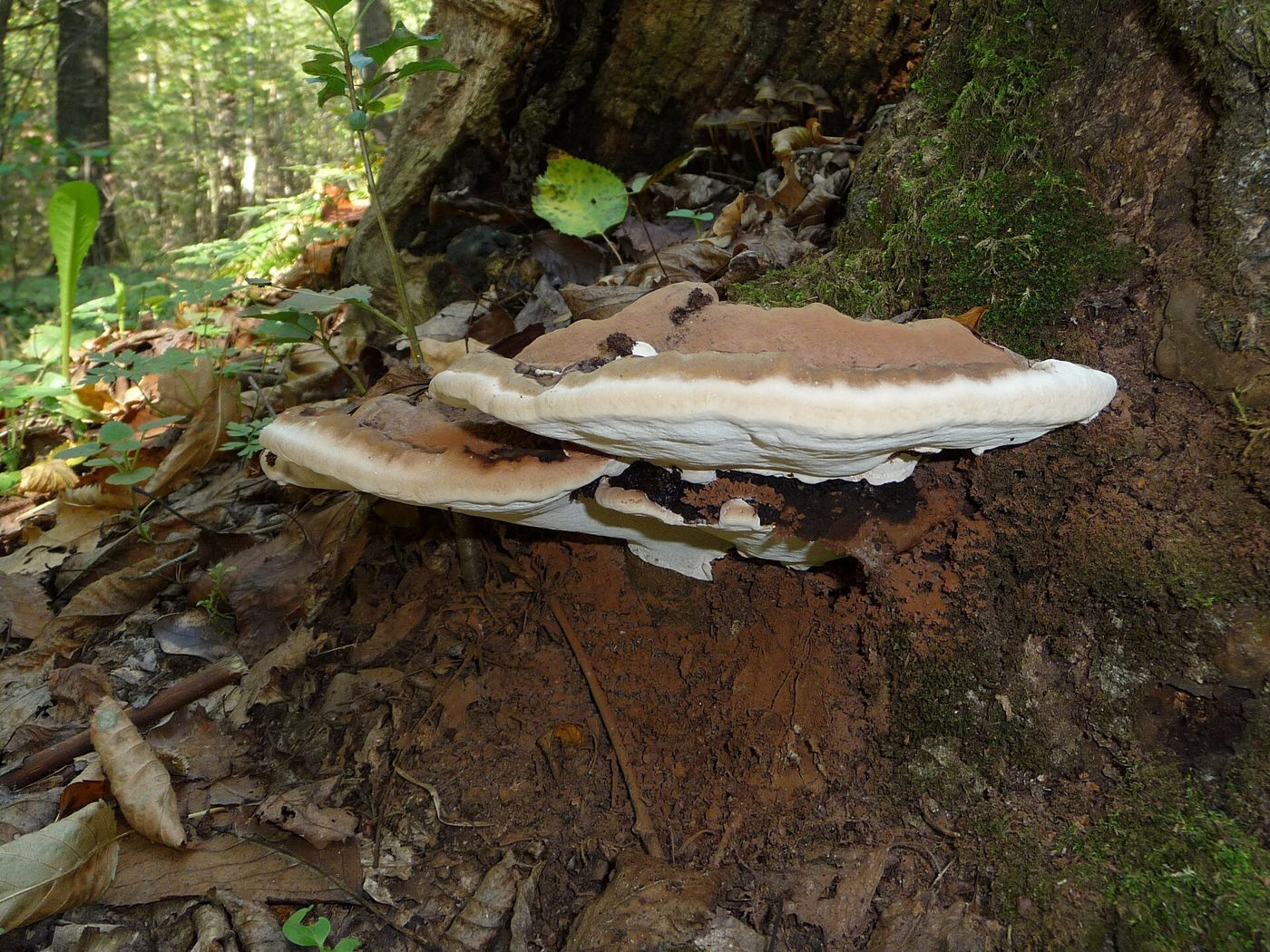
At the opposite end of the spectrum are lignicolous bracket fungi and polypores, which inhabit dead or living timber. Rather than producing delicate, water-filled flesh that rots quickly, species such as the artist's conk (Ganoderma applanatum) or the tinder fungus (Fomes fomentarius) construct rigid, perennial fruiting bodies reinforced with tough chitin and lignin. Instead of dying off after a week, these shelf-like structures add a fresh layer of spore tubes to their undersides each year, forming visible growth rings much like the annual rings of a tree. A single bracket can survive through blistering summers and freezing winters, enduring on the side of a trunk for ten, twenty, or occasionally upwards of fifty years.
Weather and ecology heavily dictate the lifespan of soft mushrooms in the wild. High heat and dry winds can desiccate a young mushroom before its cap even opens, while heavy rain can waterlog cap tissues and invite bacterial slime. Simultaneously, a thriving mushroom serves as prime real estate for woodland wildlife; fungus gnats lay eggs inside the cap within hours of emergence, and developing larvae, slugs, rodents, and beetles quickly hollow out the stem. Some folklore claims that mushrooms touched by humans immediately stop growing, or that toxic mushrooms resist rotting longer than harmless varieties. In truth, these are persistent myths. Neither human sight nor human touch halts fungal cellular expansion, and lethal mushrooms decay at the exact same rate as any other species when exposed to moisture and insect activity.
Beneath the leaf litter, the parent mycelium enjoys an endurance that dwarfs the fleeting life of its fruiting bodies. In temperate forests, perennial mycelial mats steadily consume lignin and cellulose or exchange nutrients with tree roots across decades. In fact, studies of honey fungus (Armillaria species) in North American forests have revealed individual fungal colonies that span hundreds of acres and are estimated to be thousands of years old. When you notice mushrooms sprouting in the exact same ring in your yard or beside the same oak stump year after year, you are not seeing new colonies arriving from airborne spores, but rather the same ancient organism producing another brief crop of seasonal fruit.
Because mushrooms change in color, shape, and texture so rapidly throughout their brief lifespans, identifying a wild specimen requires careful observation while the cap is fresh and intact. Decaying, waterlogged, or sun-bleached mushrooms lose essential identifying features, and attempting to guess the species of a deteriorating specimen is hazardous, especially since fungal toxins do not disappear as a cap decomposes. Never consume any wild mushroom based on casual observation, an automated result, or traditional rules of thumb about edibility. When studying fungi in the field, use your phone to photograph the top of the cap, the spore-producing surface underneath, and the base where the stem meets the ground. Shroomly can help analyze these images to identify likely species and alert you to dangerous look-alikes, after which any unfamiliar mushroom should be confirmed in person by a local mycological society or professional expert.