


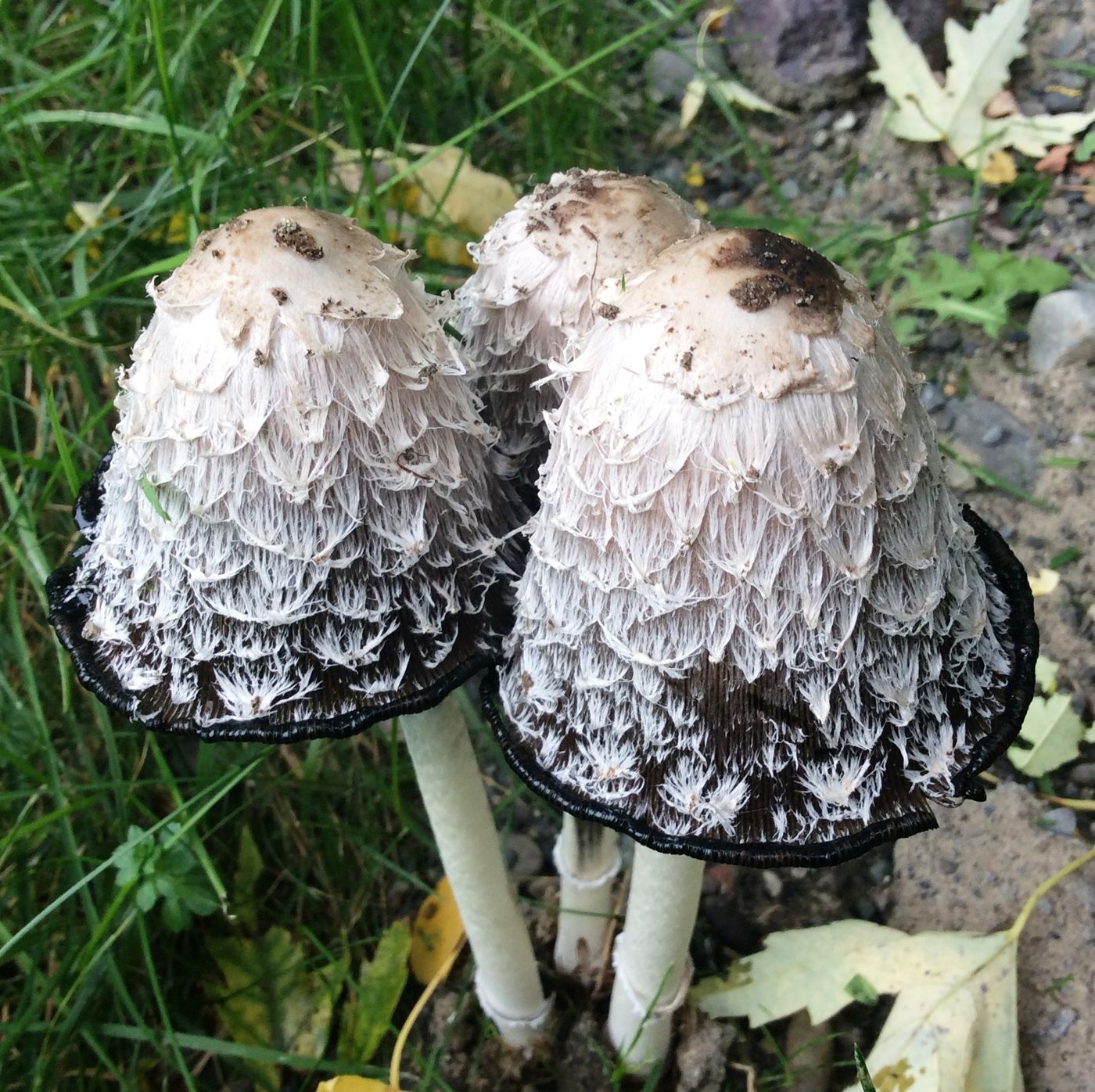
Few sights surprise people more than a cluster of soft, fragile mushrooms pushing up through a driveway, a tennis court or a newly laid path. Something you could crush with one finger seems to have beaten a material built to carry cars. Searches like how do mushrooms break through asphalt and why are mushrooms growing through my concrete are common every autumn. The answer is real biology, not a trick of the eye. Fungi grow in a way that lets them produce steady, focused pressure, and given the right conditions that pressure is enough to lift or crack a weak surface.
The key is that a mushroom is not growing the way a plant stem does, by steadily making new cells at a growing tip. Most of the cells a mushroom needs are formed in a tiny compact primordium, often called a pin, that develops below ground from the mycelium. The mycelium is the network of thread-like hyphae that feeds on organic matter. When conditions are right, usually after rain in mild weather, those existing cells take up large amounts of water and expand. Fungal cells have tough walls containing chitin. As water flows in, internal pressure builds against those walls. This pressure is called turgor, and it lets the young fruiting body swell and lengthen quickly. Thousands of cells expanding together act like a slow hydraulic jack pushing upward.
What makes this force so effective against hard surfaces is how it is applied. A mushroom does not hit the asphalt. It presses continuously from beneath, spreading the load across the cap while the base anchors in the soil. A blunt, rounded, tightly packed young cap is especially good at this, which is why the classic examples involve species that emerge as dense buttons or tight cylinders. The shaggy ink cap, Coprinus comatus, is famous for it. There are many reports of it lifting paving and breaking through freshly laid tarmac on roadsides, car parks and sports grounds. Various Agaricus species and other ground-dwelling mushrooms have also been seen heaving up path surfaces.
It is important not to exaggerate. Mushrooms are not drilling through solid, well-laid concrete slabs or thick road surfaces. They almost always appear where the barrier is already thin, soft or broken: a fresh layer of asphalt that has not fully hardened, a thin skim of tarmac over a footpath, gaps between pavers, expansion joints, or existing hairline cracks. Asphalt also softens in warm weather and can deform slowly under pressure, which a growing mushroom can exploit. Concrete is much harder to move, so mushrooms you see there are usually using a joint or crack that was already present. The fungus finds the weakest point and widens it.
The other part of the story is food. A mushroom cannot appear unless a well-fed mycelium lies underneath, and paved areas often hide plenty of nourishment. Buried roots from removed trees, old stumps, wood chips, construction timber, leaf litter or rich topsoil left under a surface can all support fungi for years. When a path or drive is laid over that material, the mycelium keeps living in the dark, digesting it. Eventually it gathers enough energy and moisture to fruit. So a ring or line of mushrooms breaking through a driveway can point to a buried root or old stump below. It is rarely a sign of structural danger to a house. If paving is repeatedly lifted, a contractor can check for decaying organic matter underneath.
People sometimes ask whether mushrooms that manage this feat are a particular edible kind. Some well-known edible species do push through roadsides, but many unrelated mushrooms, including toxic ones, grow in the same disturbed, urban places. Some deadly species look similar to popular edible ones. Fungi growing beside roads and car parks can also absorb pollutants such as heavy metals from the surrounding soil. No single trait, location or folk test tells you whether a mushroom is safe. That includes the idea that strong, vigorous growth means a healthy mushroom, or that animals nibbling it proves anything. Only an expert who has examined the actual specimen can confirm edibility. If anyone, including a child or pet, eats a wild mushroom, call poison control or emergency services immediately and keep a sample of the mushroom.
If you spot mushrooms erupting through your driveway or a local path and want to know what they are, take clear photos from several angles. Photograph the top of the cap, the gills or pores underneath, and the full stem down to its base, gently clearing soil or debris so any bulb, sac or ring is visible. Shroomly can use those photos to suggest likely species and flag toxic look-alikes, which makes a good starting point for learning what lives beneath your paving. Treat any app result as a lead rather than a verdict, and confirm the identification with a local mycological society or an experienced expert who can examine the specimen in person.