


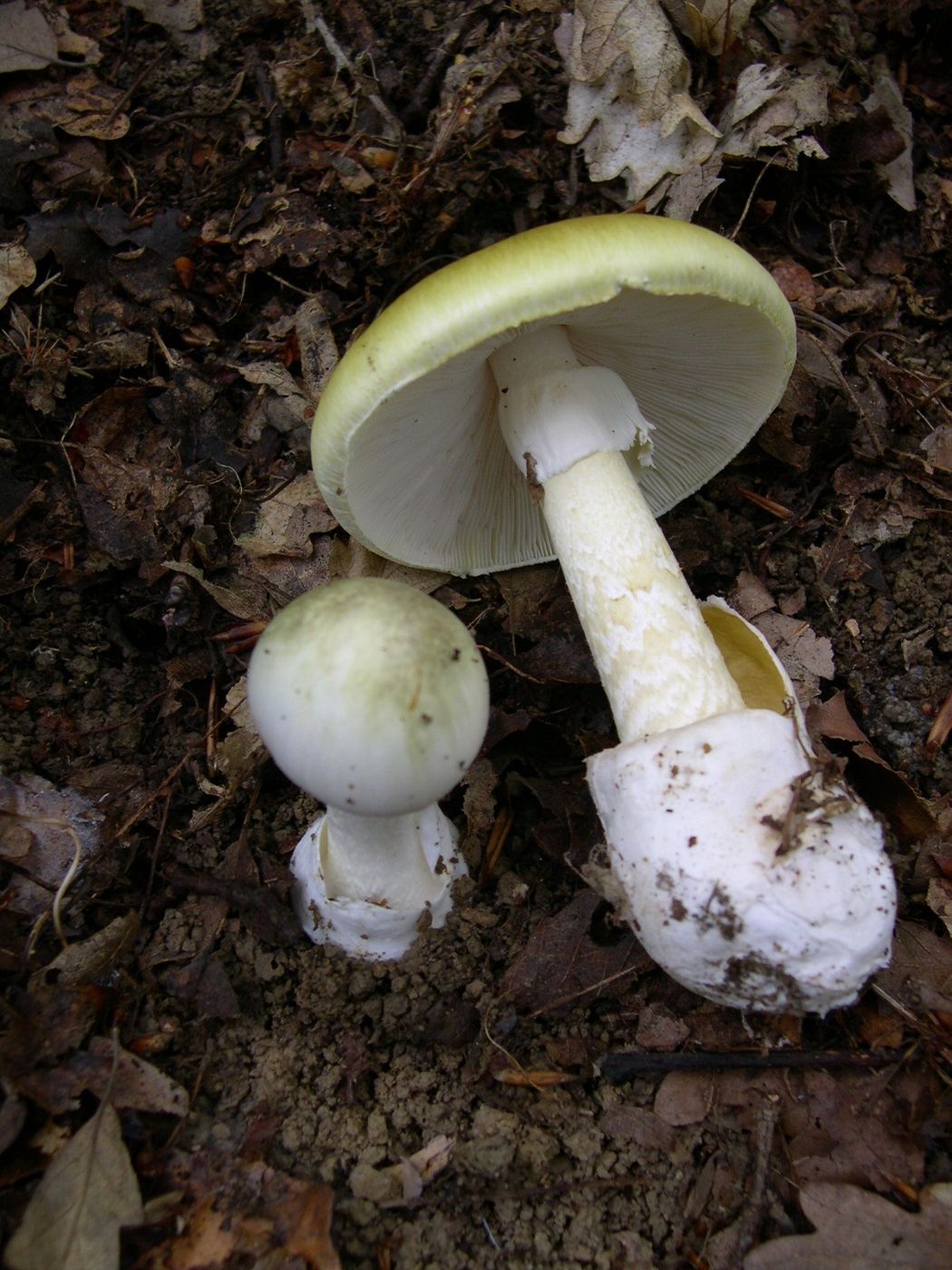
The field mushroom (Agaricus campestris) is one of the most widely sought-after wild fungi, celebrated for its resemblance to grocery store button mushrooms and its habit of fruiting in sunny pastures and lawns. Unfortunately, this familiarity can create dangerous complacency. The death cap (Amanita phalloides) is responsible for the vast majority of fatal mushroom poisonings worldwide, and confusion between death caps and field mushrooms or related white-capped Agaricus species is among the leading causes of these tragedies. Because immature death caps can appear in grassy areas near trees and share a rounded, whitish or pale cap shape, untrained eyes can easily overlook the subtle botanical details that separate a harmless find from a medical catastrophe.
The most reliable anatomical difference between the two species lies on the underside of the cap. A true field mushroom features gills that start delicate pink when young and mature into a rich, deep chocolate-brown as its dark spores develop. Death caps, which belong to the genus Amanita, possess gills that remain stubbornly white or pale cream throughout their entire life cycle. When a spore print is taken, the field mushroom leaves behind an unmistakable dark brown deposit, whereas the death cap produces a pure white print. Foragers must never assume a mushroom with pale gills is simply a young field mushroom, as cutting into an immature cap before the gills have developed full coloration is an easy way to misjudge this vital characteristic.
Perhaps the most critical distinguishing structure is found at the very bottom of the stem. Amanita species, including the death cap, begin their development enclosed inside a protective tissue called a universal veil. As the mushroom expands, this veil tears open, leaving behind a loose, cup-like structure known as a volva around the base of the stem. This volva is often partially or entirely subterranean, hidden under turf, moss, or fallen leaves. Field mushrooms never possess a volva; their stems taper or end in a simple rounded base without any surrounding cup. Anyone examining a suspected field mushroom must excavate the entire stem base intact, because snapping or cutting the stem at ground level leaves the telltale volva buried in the soil, obscuring the primary warning sign of a lethal Amanita.
Habitat provides helpful clues, but relying on location alone can be deeply deceptive. Field mushrooms are saprotrophic fungi that break down dead organic matter in open pastures, meadows, and lawns, rarely forming connections with living tree roots. Death caps, on the other hand, are ectomycorrhizal fungi that form symbiotic partnerships with broadleaf trees such as oaks, beeches, and chestnuts, as well as certain conifers. However, tree roots frequently extend dozens of feet beyond the tree canopy into manicured lawns, golf courses, and parklands. A death cap fruiting above a buried oak root can easily appear in the middle of an open lawn alongside grass-loving fungi, completely erasing the perceived safety barrier of open ground.
Tragic poisonings are frequently fueled by dangerous folk myths that must be firmly rejected. Many people mistakenly believe that peeling the cap skin, boiling the mushroom with a silver coin, or observing whether insects and woodland animals have nibbled the flesh will reveal toxicity. In reality, the skin of a death cap peels readily, silver reacts only to certain sulfur compounds, and slugs and squirrels regularly consume lethal Amanita species without harm. Death caps do not taste bitter, acrid, or foul; victims consistently report that they taste pleasant and mild. The amatoxins they contain are impervious to boiling, baking, freezing, and drying. These toxins disrupt cellular protein synthesis, attacking the liver and kidneys after a deceptive delay of six to twenty-four hours during which the victim feels entirely healthy. If someone suspects they have ingested any part of an unidentified wild mushroom, they must contact poison control or emergency medical services immediately and preserve a physical sample for expert analysis.
Because misidentifying a single specimen can have fatal consequences, careful identification requires examining every part of the mushroom in detail. Photographing the cap surface, the color and attachment of the gills, the stem ring, and the fully excavated stem base provides the clear visual evidence necessary for a thorough evaluation. Using the Shroomly app allows you to upload these photographs and receive instant guidance on likely species, including critical alerts about toxic look-alikes like the death cap. However, technology should serve as an educational starting point rather than an edibility endorsement. Never consume any wild mushroom unless a local mycological expert has personally inspected the physical specimen in hand and confirmed its identity beyond all doubt.