


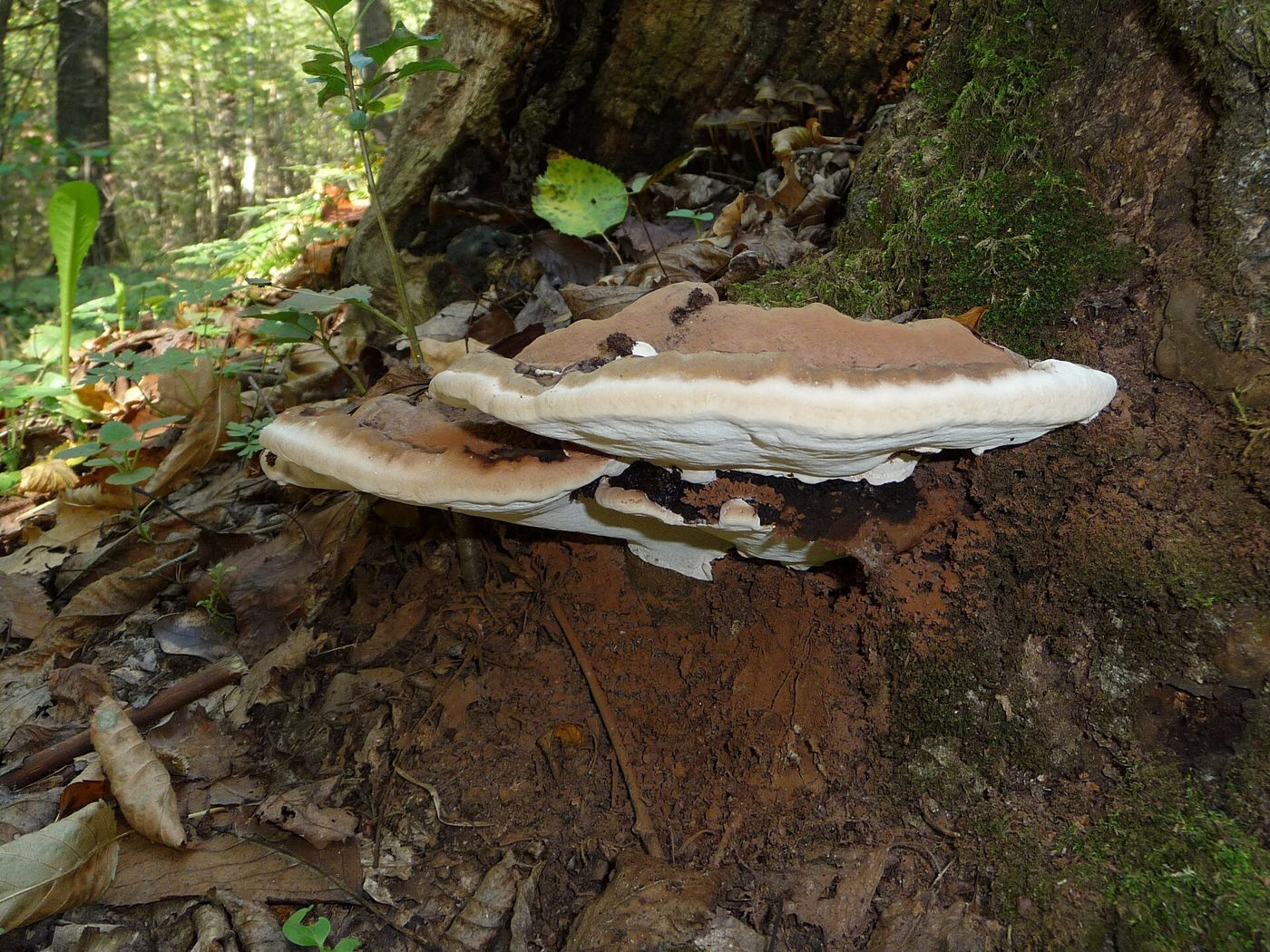
Seeing rigid, semicircular shelves protruding from the bark of a beloved yard tree or forest giant often causes immediate alarm. Known broadly as shelf mushrooms, bracket fungi, or conks, these organisms include widespread species such as the artist's conk (Ganoderma applanatum) and turkey tail (Trametes versicolor). While the mushroom itself is not an external toxin attacking the bark from the outside, its emergence on a living trunk or major limb is rarely good news for the tree's structural future. By the time a visible bracket forms on the outside of the bark, the underlying fungal network has already spent seasons or even decades living and feeding deep within the wood, quietly decomposing the tree's internal load-bearing structure.
Bracket fungi feed by spreading microscopic threads of mycelium through the interior of the tree, digesting the two primary organic polymers that give wood its strength: cellulose and lignin. Mycologists categorize this damage into distinct decay types based on which components the fungus breaks down. White rot fungi metabolize both lignin and cellulose, leaving behind pale, spongy, and fibrous wood that bends and shreds easily. Brown rot fungi consume cellulose while leaving oxidized, brittle lignin behind, causing the wood to fracture into characteristic cubical blocks that crumble into powder under fingers. Heartwood rots typically hollow out the non-living interior cylinder of the trunk, which explains why an affected tree can continue to produce lush green leaves and look vibrant from afar even while its structural center becomes dangerously hollow.
A key distinction in forest ecology is whether a wood-decay fungus is an aggressive parasite or a passive saprotroph that merely consumes tissue that has already died. Healthy trees possess formidable chemical and physical defenses against fungal colonization, with protective bark, defensive resins, and specialized barrier zones designed to seal off internal infections. Fungal spores almost invariably gain entry through mechanical wounds, broken storm limbs, lawnmower strikes, or pruning wounds. Consequently, shelf mushrooms are often opportunists capitalizing on prior physical trauma, drought stress, or natural aging rather than the sole cause of decline. However, certain aggressive species, including root-rot agents and parasitic polypores, can actively attack living sapwood and root flares, accelerating structural death.
Homeowners often react to bracket mushrooms by attempting to chisel, pry, or scrape the tough conks off the bark in hopes of curing the tree. Unfortunately, removing the visible bracket does nothing to halt the decay, as the mushroom is merely the reproductive spore-producing fruit of an extensive fungal network woven throughout the wood fibers. Chemical sprays and sealants applied to the trunk are equally ineffective, as the mycelium remains protected deep inside the heartwood. The primary hazard posed by bracket fungi in suburban landscapes is mechanical failure rather than disease transmission. A tree hollowed out by internal decay may look healthy in mild weather, but it lacks the tensile strength to endure heavy snow loads, saturated soil, or severe storm winds, turning it into a potential fall hazard.
Beyond tree care, the appearance of shelf mushrooms frequently draws the interest of foragers, but safety cautions around wood-dwelling fungi are paramount. Folk beliefs often suggest that mushrooms growing on living trees are inherently safe to eat, or that observing wildlife feeding on bracket caps proves they are non-toxic. Both assertions are dangerously untrue; wild animals, including squirrels, beetles, and slugs, possess digestive physiologies capable of tolerating toxins that can trigger severe poisoning or organ damage in humans. Furthermore, several wood-inhabiting mushrooms contain gastrointestinal toxins, and deadly species can emerge directly from buried tree roots. Only an experienced mycological authority who has physically examined the actual specimen can confirm edibility, and no wild fungus should ever be sampled based on casual assumptions. If anyone suspects that a person or domestic pet has ingested an unidentified wild mushroom, contact poison control or emergency medical services immediately and retain an intact specimen for professional identification.
Evaluating a shelf fungus on your property begins with documenting the species accurately, as different bracket fungi signal very different rates of decay and hazard levels. When assessing a bracket mushroom, take sharp, well-lit photographs of the top surface of the cap, the underside showing whether it has pores, gills, or a smooth surface, and the exact point where it attaches to the tree trunk or root collar. You can upload these images to Shroomly to explore likely species matches and learn about relevant toxic look-alikes. Once you have a preliminary identification, share your photographs and specimen details with a local mycological society and consult an ISA-certified arborist, who can perform a formal tree risk assessment to determine whether your tree remains structurally sound.