


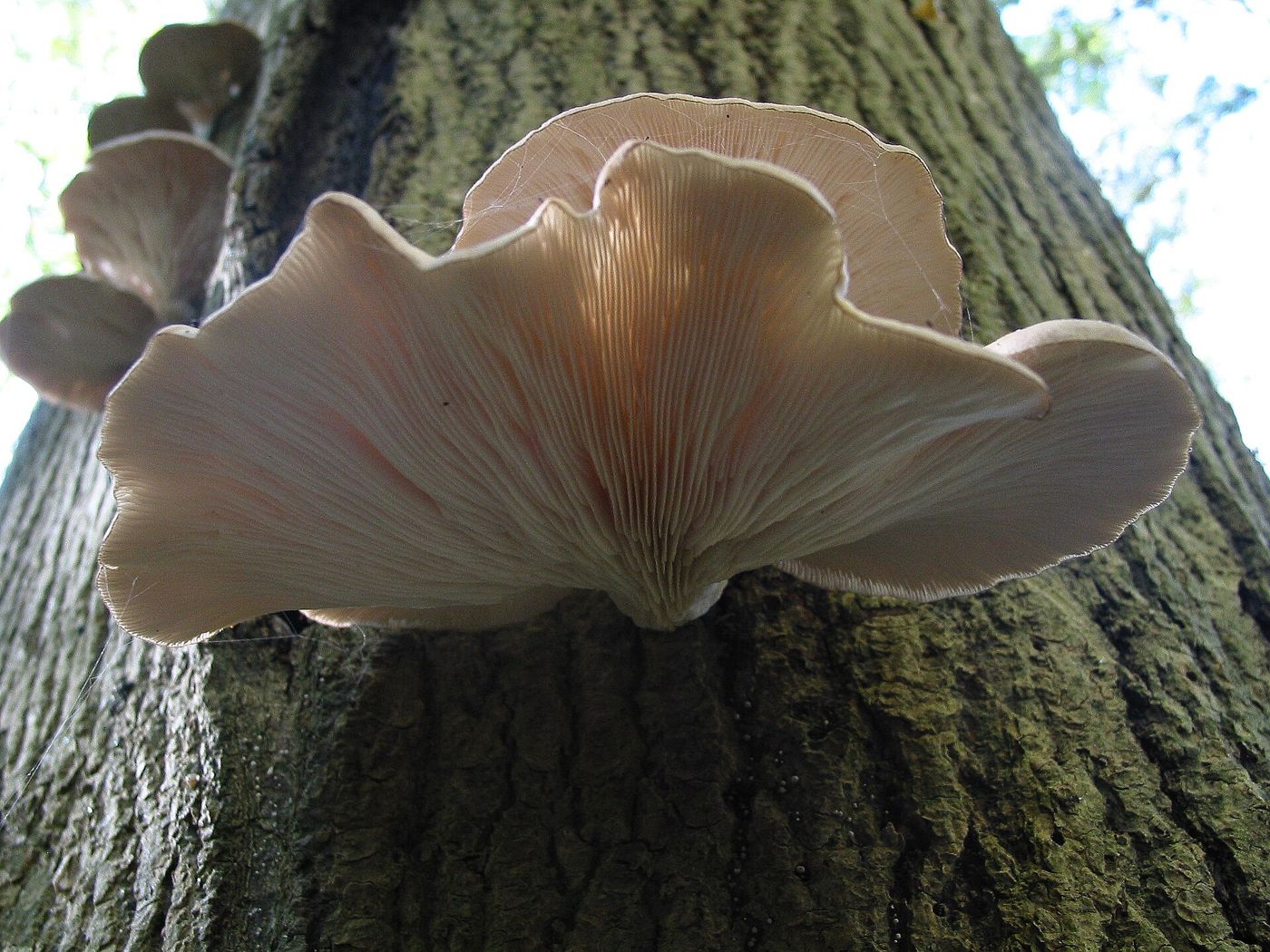
Because wild mushrooms sprout from the soil, grow alongside mosses, and share produce displays with vegetables, many people naturally assume they produce fresh oxygen like garden plants. In reality, fungi belong to an entirely separate biological kingdom. Mushrooms contain no chlorophyll, the green pigment that allows plants to harness sunlight, capture carbon dioxide from the air, and produce oxygen through photosynthesis. Rather than generating oxygen, mushrooms do the exact opposite: they are strictly aerobic organisms that consume oxygen from their immediate environment and release carbon dioxide as a byproduct of cellular metabolism, behaving far more like animals than flora in their respiratory lives.
Without lungs, gills, or the specialized leaf openings known as stomata, fungi manage gas exchange through direct diffusion across their cell walls. The vast vegetative network of microscopic threads, called mycelium, weaves through leaf litter, soil pockets, or rotting wood, drawing dissolved oxygen directly from microscopic air spaces within the substrate. When environmental triggers prompt this subterranean network to produce a fruiting body—the familiar mushroom cap and stem—cell division and fluid uptake skyrocket. To fuel this intense burst of biological activity, the developing mushroom absorbs oxygen continuously from the surrounding air while exhaling carbon dioxide across the entire surface of its cap, stem, and spore-bearing tissues.
This dependence on oxygen shapes how mushrooms develop in the wild. Forest soils and the centers of decaying logs often harbor stagnant pockets filled with heavy carbon dioxide and very little oxygen. Many woodland species, including the widespread oyster mushroom (Pleurotus ostreatus), use carbon dioxide concentration as an environmental cue. When carbon dioxide levels remain high, the fungus senses that it is still confined beneath bark or leaf mulch, directing its energy into elongating its stem upward. Only when the fruiting body breaches the surface and encounters fresh, moving air rich in oxygen does the stem cease stretching, allowing the cap to expand fully and release its spores into passing wind currents.
On a larger scale, fungal respiration is a cornerstone of the planetary carbon cycle. Beneath the canopy of every healthy woodland, vast fungal colonies act as primary decomposers, breaking down tough structural polymers such as cellulose and lignin found in fallen timber. As saprobic fungi digest these organic materials with specialized enzymes, their respiration continuously returns stored carbon back into the atmosphere in the form of carbon dioxide. Surrounding trees and shrubs immediately reabsorb this ambient gas to power their own photosynthetic growth, creating an unbroken exchange where plants supply fungi with organic matter and fungi return essential carbon to the canopy above.
The tendency to view mushrooms as harmless woodland plants often leads to dangerous assumptions regarding their safety. Some foragers mistakenly believe that mushrooms growing in clean, well-aerated outdoor settings are wholesome, or they rely on unreliable folk rules such as peeling the cap skin, looking for insect nibbles, or boiling fungi with silver utensils to test for danger. These traditional tests have no basis in fungal biology. Toxic species respire the same air, absorb the same soil moisture, and produce the same outward appearances as edible varieties. Highly dangerous species, including the destroying angel (Amanita bisporigera) and the funeral bell (Galerina marginata), thrive in the very same oxygen-rich forest habitats as edible mushrooms, and their deadly cellular toxins remain potent regardless of how or where they grew.
Learning how fungi breathe and interact with forest ecology deepens your understanding of every trail walk, but accurately identifying individual species requires thorough field observation. When you encounter a wild mushroom, take clear, well-lit photographs showing the top of the cap, the reproductive surface beneath it, and the full stem base lifted carefully from the ground. Uploading these images to Shroomly can quickly highlight likely species and warn you of dangerous look-alikes. However, photo matching and digital tools cannot establish whether a mushroom is safe to eat; only a qualified local mycologist who has examined the actual specimen in person can confirm edibility. Never consume any wild-harvested mushroom based on an app or a visual guide, and if you ever suspect that someone has eaten an unidentified wild fungus, contact emergency medical services or your regional poison control center immediately with a preserved specimen on hand.