


Gardeners and nature enthusiasts who are accustomed to planting vegetable seeds or watching wildflowers sprout often wonder where mushroom seeds can be found in nature. The simple biological reality is that mushrooms do not have seeds at all. Fungi occupy their own distinct biological kingdom, entirely separate from plants and animals, and their reproductive strategies evolved along a completely different path. Instead of producing flowers, pollen, and seeds, fungi rely on microscopic reproductive structures called spores to spread across lawns, woodlands, and garden beds.
To understand why fungi do not use seeds, it helps to examine the vast structural difference between a plant seed and a fungal spore. A botanical seed is a complex, multicellular organism containing an embryonic plant with pre-formed root and shoot structures, along with a protective outer coat and an endosperm that supplies food until the seedling can photosynthesize. A fungal spore, by contrast, is usually a single microscopic cell that carries genetic material and very little stored energy. While a flowering plant may invest significant biological resources into producing dozens or hundreds of robust seeds, a single mature mushroom can release billions of lightweight spores into the atmosphere, relying on sheer numbers to ensure that at least a few land on suitable organic matter.
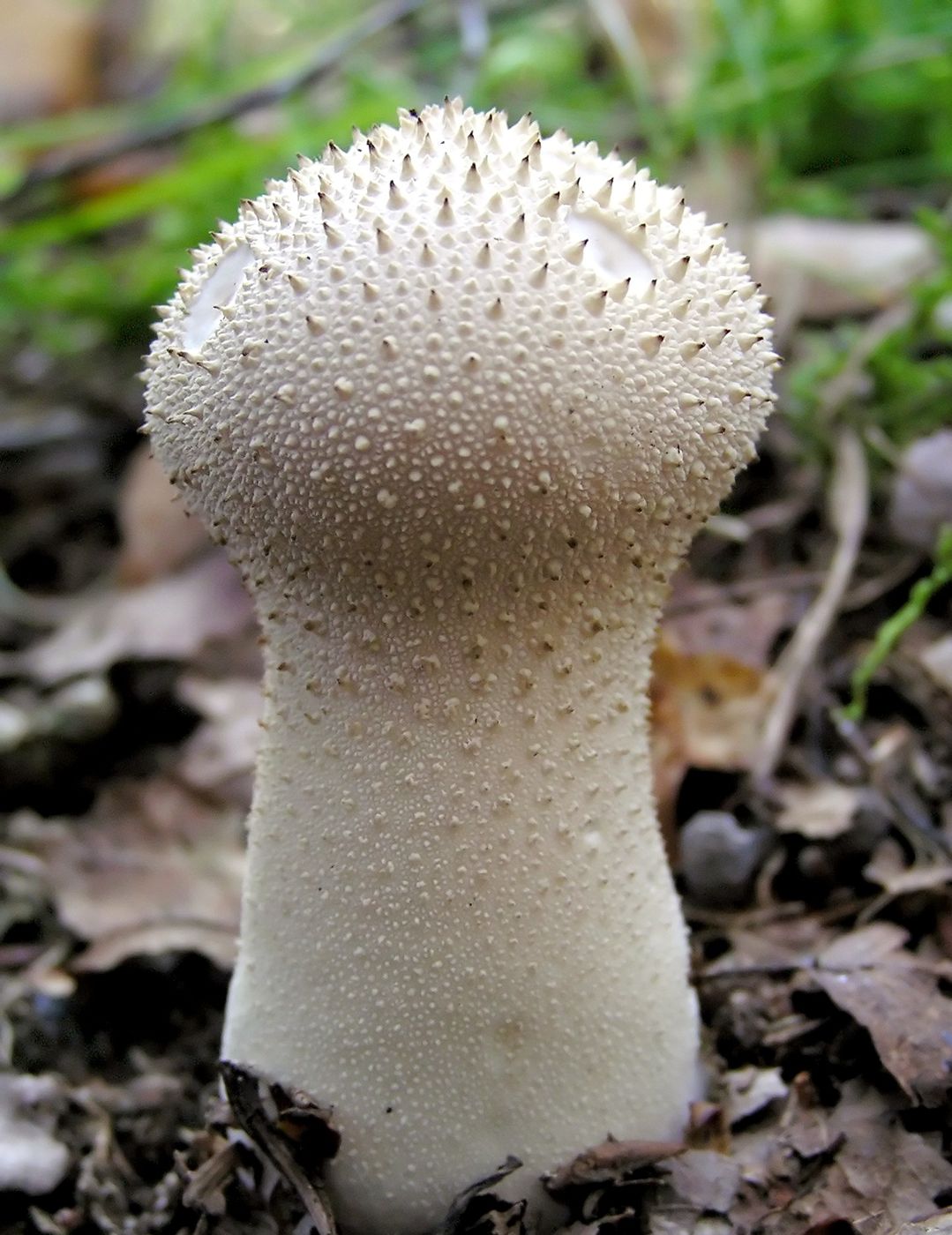
Mushrooms produce these microscopic spores across specialized reproductive surfaces known as the hymenium. Depending on the species, this surface might consist of paper-thin gills beneath the cap, tiny pores, downward-pointing teeth, or an enclosed internal cavity. Species like the common puffball, scientifically known as Lycoperdon perlatum, develop their spores entirely inside a spherical fruiting body; when raindrops or passing animals compress the outer wall, billions of dust-like spores puff out through an apical pore directly into the air. In gilled mushrooms and bracket fungi, spores drop from vertical surfaces into subtle thermal air currents that lift them away from the parent organism to colonize new terrain miles away.
Once a spore settles on a hospitable substrate with adequate moisture, temperature, and nutrients, it germinates into a microscopic filament called a hypha. As multiple hyphae grow and branch out through the soil or decaying wood, they fuse with compatible filaments from other germinated spores to form a vast underground network known as mycelium. This vegetative mycelial web is the true primary organism, quietly digesting dead wood, fallen leaves, or organic soil matter for months or even years. The toadstools and brackets that people notice popping up after warm rains are merely the fleeting reproductive structures—the fungal equivalent of an apple on an apple tree—produced solely to manufacture and disperse the next generation of spores.
Confusion about whether mushrooms have seeds often stems from commercial cultivation supplies labeled as mushroom spawn. Home growers and curious foragers frequently assume that spawn is a packet of fungal seeds, but it is actually a sterile growing medium, such as rye grain, sawdust, or wooden plugs, that has already been inoculated and thoroughly colonized by living mycelium. Commercial growers do not plant dormant seeds into potting soil; instead, they introduce this actively growing fungal tissue into pasteurized straw, compost, or hardwood logs, allowing the network to expand and eventually produce fresh mushrooms under controlled environmental conditions.
Because fungal spores travel effortlessly on breezes, wild mushrooms of all varieties can appear unexpectedly in backyards, compost heaps, and forest trails. Finding unfamiliar fungi in your garden should always prompt caution, particularly where curious pets or young children are present. There are persistent folk myths claiming that toxic mushrooms can be identified by whether animals eat them, by boiling them with a silver coin, or by peeling their caps, but none of these rules have any scientific basis. In reality, some of the most dangerous fungi on the planet, including deadly white species like Amanita phalloides and Amanita bisporigera, grow right alongside harmless varieties and spread using identical spore mechanisms. Cooking never makes an inherently deadly mushroom safe to eat, and edibility can only be verified by an expert who physically handles and examines the specimen. If you suspect anyone has ingested an unknown wild mushroom, contact poison control or emergency medical services immediately and preserve a physical sample for laboratory identification.
When you encounter strange mushrooms releasing spores in your yard or local woods, the safest approach is to observe and document them without picking them for the table. To learn about the species in your area, take clear, well-lit photographs showing the top of the cap, the spore-bearing surface underneath—whether it features gills, pores, or spines—and the very base of the stem where it meets the ground. You can upload these images to Shroomly to explore likely species, understand how their spores are dispersed, and review potential toxic look-alikes. For definitive identification and a deeper look into the fungal kingdom, always consult an experienced local mycological club or regional expert before drawing conclusions.