


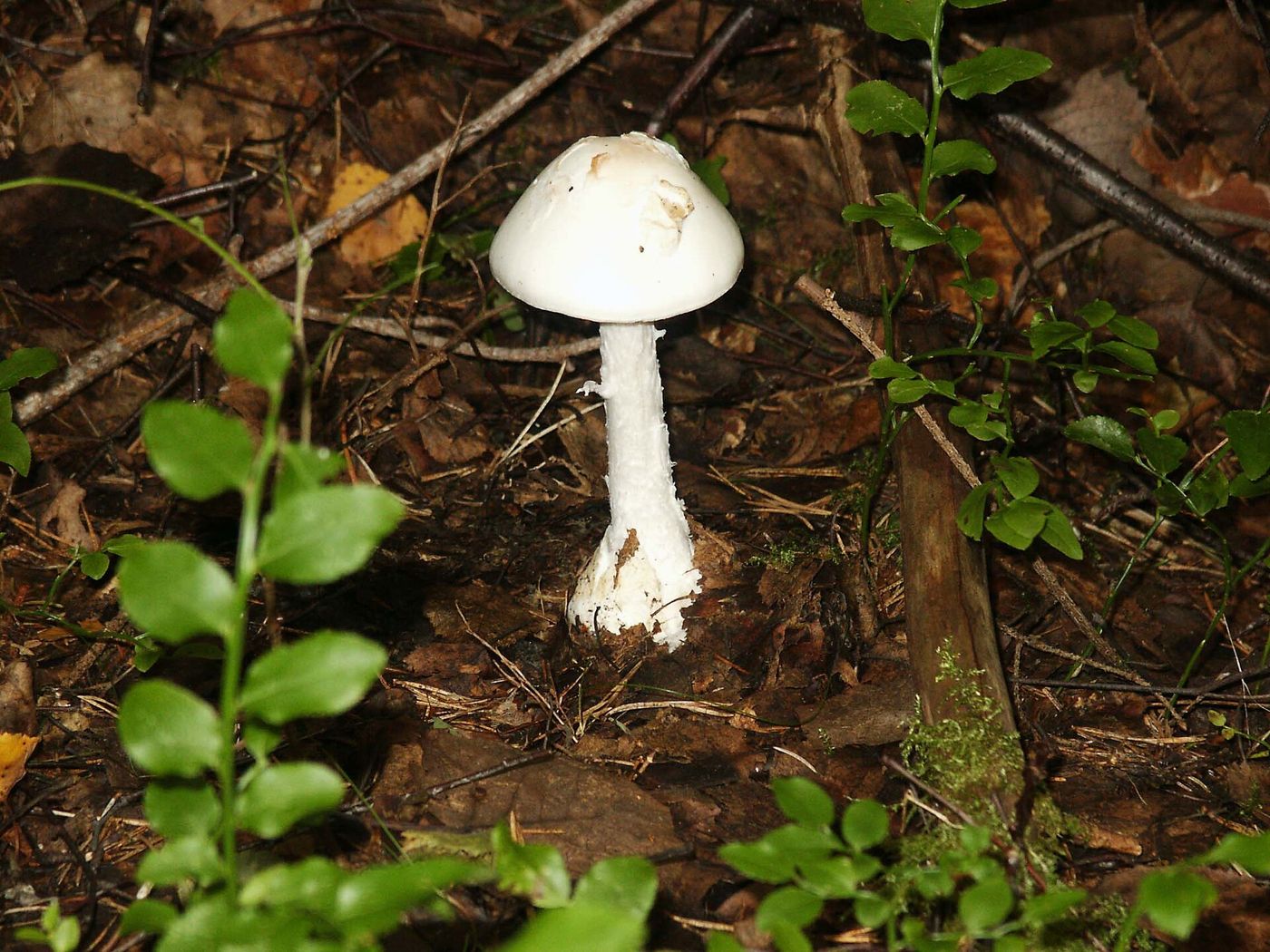
Across North America, Europe, and parts of the temperate world, destroying angel is the collective common name given to several strikingly beautiful, stark-white species in the genus Amanita, most notably Amanita bisporigera, Amanita virosa, and Amanita ocreata. While their clean, pristine appearance makes them stand out against forest duff and tree roots, they are notoriously lethal. Like their infamous close relative the death cap (Amanita phalloides), destroying angels produce powerful bicyclic octapeptides known as amatoxins. Amatoxins inhibit RNA polymerase II inside human cells, effectively halting protein synthesis and triggering massive cell death, primarily targeting the liver and kidneys. Even a single cap contains more than enough toxin to cause fatal organ damage in an adult human.
Identifying a destroying angel requires careful observation of several distinct anatomical features that span the entire fruiting body from top to bottom. The cap is typically pure silky white, sometimes developing a faint ivory or yellowish tint at the center as it matures, and it progresses from an oval or hemispherical button into a broad, flattened dome. Beneath the cap, the gills remain brilliant white throughout the mushroom's entire lifecycle, crowded closely together and free from the stem. The stem itself is tall, slender, and white, often draped with a delicate, skirt-like ring or annulus hanging from its upper half. Most critically, the base of the stem emerges from a distinct, cup-like membranous structure called a universal veil or volva, which often sits partially or completely buried beneath soil, moss, or fallen leaves.
The tragic reputation of the destroying angel stems directly from how easily it can be confused with popular edible wild mushrooms, particularly by novice foragers or immigrants accustomed to edible species in other parts of the world. In its immature button stage, an unexpanded destroying angel egg can be mistaken for an edible puffball if a collector fails to slice it lengthwise to check for the internal silhouette of a cap and stem. Once mature, destroying angels are frequently mistaken for edible meadow mushrooms (Agaricus campestris) or horse mushrooms (Agaricus arvensis), which share a white cap and ringed stem. However, true Agaricus species develop pink gills that turn dark chocolate-brown as their spores mature, whereas the destroying angel stubbornly retains bright white gills and white spores until it decays.
Dangerous myths persist regarding how to detect poisonous mushrooms, and following them around destroying angels can have catastrophic consequences. Old folk rules claim that mushrooms with peeling cap skins are safe, that toxic fungi will tarnish a silver spoon during cooking, or that mushrooms nibbled by insects, slugs, or squirrels must be safe for human consumption. None of these tests have any scientific merit; amatoxins do not affect invertebrates or certain rodents the way they affect humans, and toxic cap skins peel just as easily as edible ones. Furthermore, amatoxin poisoning is deceptive because it exhibits a prolonged latency period. Victims often feel perfectly normal for six to twenty-four hours after eating the mushroom, followed by severe gastrointestinal distress, a misleading temporary period of apparent recovery, and subsequent acute liver and kidney failure. Anyone who suspects that a person or pet has ingested a wild mushroom should call emergency services or their national poison control center immediately, never wait for symptoms to appear, and keep physical samples or photos of the fungus for clinical identification.
Because wild fungi share so many subtle morphological traits across deadly and edible groups, never assume any wild mushroom is safe to eat based on an app, a photograph, or a single checklist feature. Only an experienced mycologist or qualified expert who has physically examined the entire intact specimen can confirm an identification. When foraging or simply exploring nature, thorough documentation is the first line of defense against dangerous mistakes. If you encounter an unfamiliar white mushroom, take clear, well-lit photos showing the top of the cap, the gills underneath, and the fully excavated stem base. The Shroomly app can analyze these photos to suggest potential species and highlight dangerous toxic look-alikes like the destroying angel, providing an educational starting point before you seek local expert verification from a regional mycological society.