


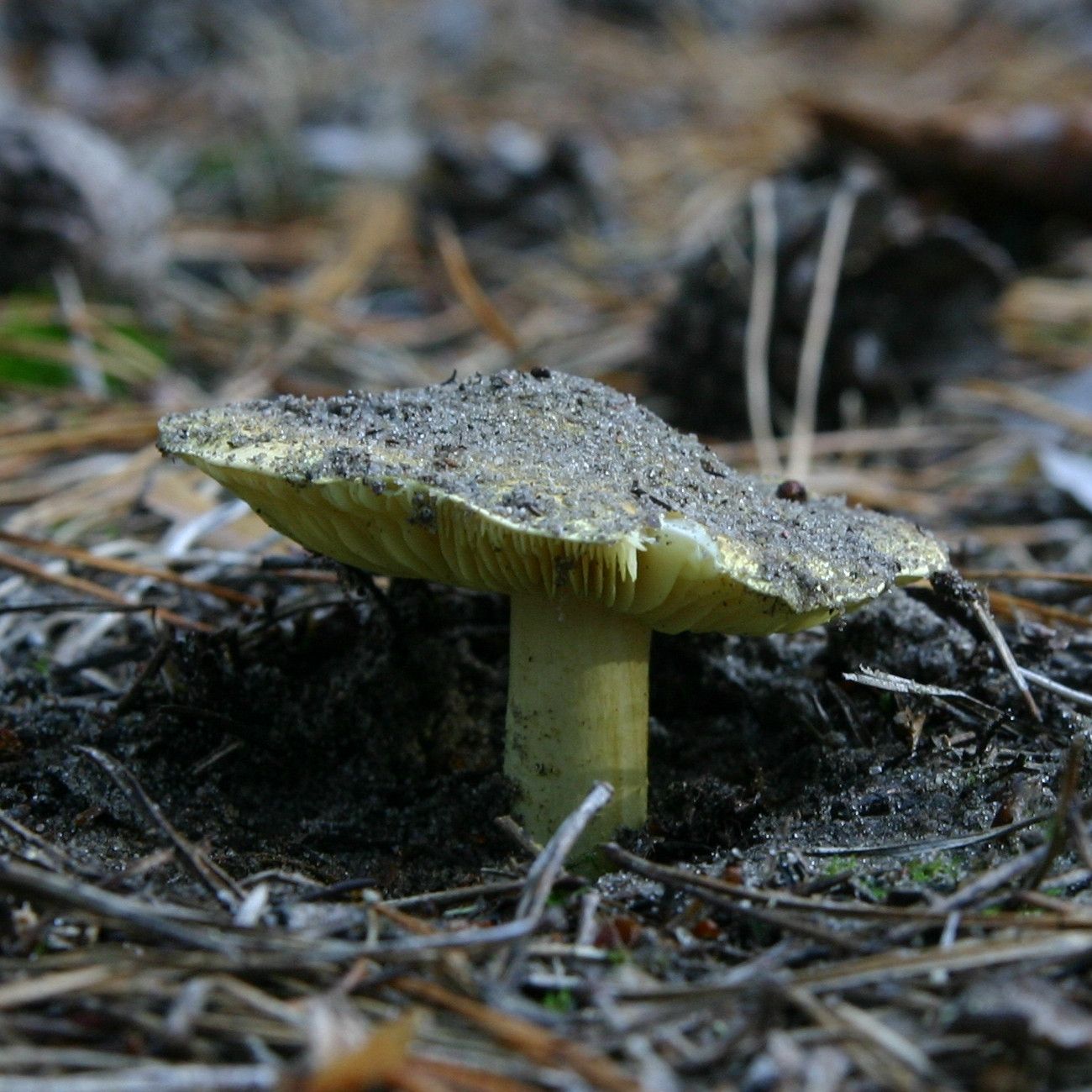
Yellow mushrooms catch the eye wherever they appear, whether it is a bright lemon cap in a flowerpot, a cluster of sulphur-colored caps on a rotting stump or a pale golden mushroom pushing up through the lawn after rain. The natural question is whether that color is a warning. The honest answer is that yellow is not a reliable signal of anything. Yellow fungi range from harmless decomposers to species that cause severe gastrointestinal illness, and the color appears in some well-known edible mushrooms as well. The popular idea that bright colors mean poison and dull colors mean safety is a myth, and it fails in both directions: several of the deadliest mushrooms are white, brown or greenish, while some brightly colored species are not especially toxic. Color is just one clue among many, and on its own it cannot tell you whether a mushroom is safe.
One of the most common places people find a yellow mushroom is indoors, in the soil of a houseplant. This is very often Leucocoprinus birnbaumii, sometimes called the flowerpot parasol or yellow houseplant mushroom. It has a delicate, bell-shaped to flattened yellow cap dusted with fine powdery scales, a slender yellow stem and often a small ring. It arrives in potting compost and fruits in warm, humid conditions. It does not harm the plant, but it is regarded as poisonous if eaten and should never be tasted. If you have small children or pets, the simplest approach is to pick the mushrooms off as they appear, wearing gloves if you prefer, and dispose of them where nobody can reach them. They will likely return, because the mycelium lives in the soil, so check the pot regularly.
Outdoors, a dense clump of yellow to greenish-yellow mushrooms on a stump or buried wood is frequently sulphur tuft, Hypholoma fasciculare. Its gills start sulphur-yellow and darken to greenish and then purplish-brown as the dark spores mature. Sulphur tuft is poisonous and has caused serious gastrointestinal illness. It also overlaps in appearance with other clustered wood-growing mushrooms, including honey fungus (Armillaria species) and, more worryingly, the small brown funeral bell, Galerina marginata, which contains the same liver-damaging amatoxins as the death cap. In lawns and on dung or rich grassland you may also see the yellow fieldcap, Bolbitius titubans, a fragile, slimy, egg-yolk-yellow mushroom that fades quickly; it is not considered edible and is easily confused with other small lawn species.
The most dangerous yellow-tinged mushrooms belong to the genus Amanita. The death cap, Amanita phalloides, is usually described as greenish, but its cap color is variable and can look yellowish-olive or pale and washed out, especially in older or rain-soaked specimens. The false death cap, Amanita citrina, has a pale lemon-yellow cap, white gills and a bulbous base, and its strong resemblance to the death cap is exactly why no Amanita should ever be guessed at. In North America, yellow to yellow-orange forms of the fly agaric (Amanita muscaria var. guessowii), the jonquil amanita (Amanita gemmata) and Amanita flavoconia are common in woodlands. Several of these contain ibotenic acid and muscimol, which can cause confusion, agitation, drowsiness and vomiting. The features that matter most with Amanita species, such as a sac-like volva or bulb at the stem base, a ring on the stem and white gills, are often hidden underground or lost with age, which is why digging up the whole base for identification is so important.
Some yellow mushrooms are famous for their links to poisoning precisely because they were once considered edible. The yellow knight, Tricholoma equestre, with its yellow cap and bright yellow gills, was traditionally eaten in parts of Europe, but it has been associated with cases of rhabdomyolysis, a serious breakdown of muscle tissue, after repeated meals. Golden chanterelles (Cantharellus species) are sought after by foragers, yet they have yellow and orange look-alikes, including the false chanterelle (Hygrophoropsis aurantiaca) and the toxic jack-o'-lantern mushrooms (Omphalotus species). Chicken of the woods, Laetiporus sulphureus, is a bright sulphur-yellow bracket that some people react to badly. These examples show why edibility can never be decided from color, a single feature or a photo: only an expert who has examined the actual specimen can confirm it, and some deadly species look remarkably like popular edible ones. Folk tests such as checking whether a silver spoon darkens, whether the cap peels, whether it smells pleasant or whether slugs and squirrels have eaten it are all unreliable and have contributed to real poisonings.
If a child or pet has eaten, licked or chewed any yellow mushroom, or you even suspect they might have, do not wait to see whether symptoms develop and do not try any home treatment. Call poison control or emergency services immediately, or your vet or an animal poison helpline for a pet. Keep a sample of the mushroom, ideally a whole specimen including the stem base, wrapped in paper rather than plastic, and note where it was growing, because this helps professionals assess the risk. Some of the most dangerous mushroom toxins cause no symptoms for many hours, so feeling fine or looking fine is not a reason for reassurance. To reduce risk at home, check lawns, flower beds, mulch and houseplant pots after wet weather and remove mushrooms before children and pets can reach them.
If you want to know what that yellow mushroom actually is, a careful photograph is the best place to start. Capture the top of the cap, the gills or pores underneath, the full stem and especially the stem base, dug up rather than snapped off, and note the habitat, whether it was on wood, soil, grass, dung or potting compost. Shroomly can suggest likely species from these photos and flag toxic look-alikes you should rule out, which is a useful way to learn the differences between yellow fungi. Treat the result as a starting point for learning, not a verdict on edibility, and confirm any identification with a local mycological society or experienced expert who can examine the specimen in person.