


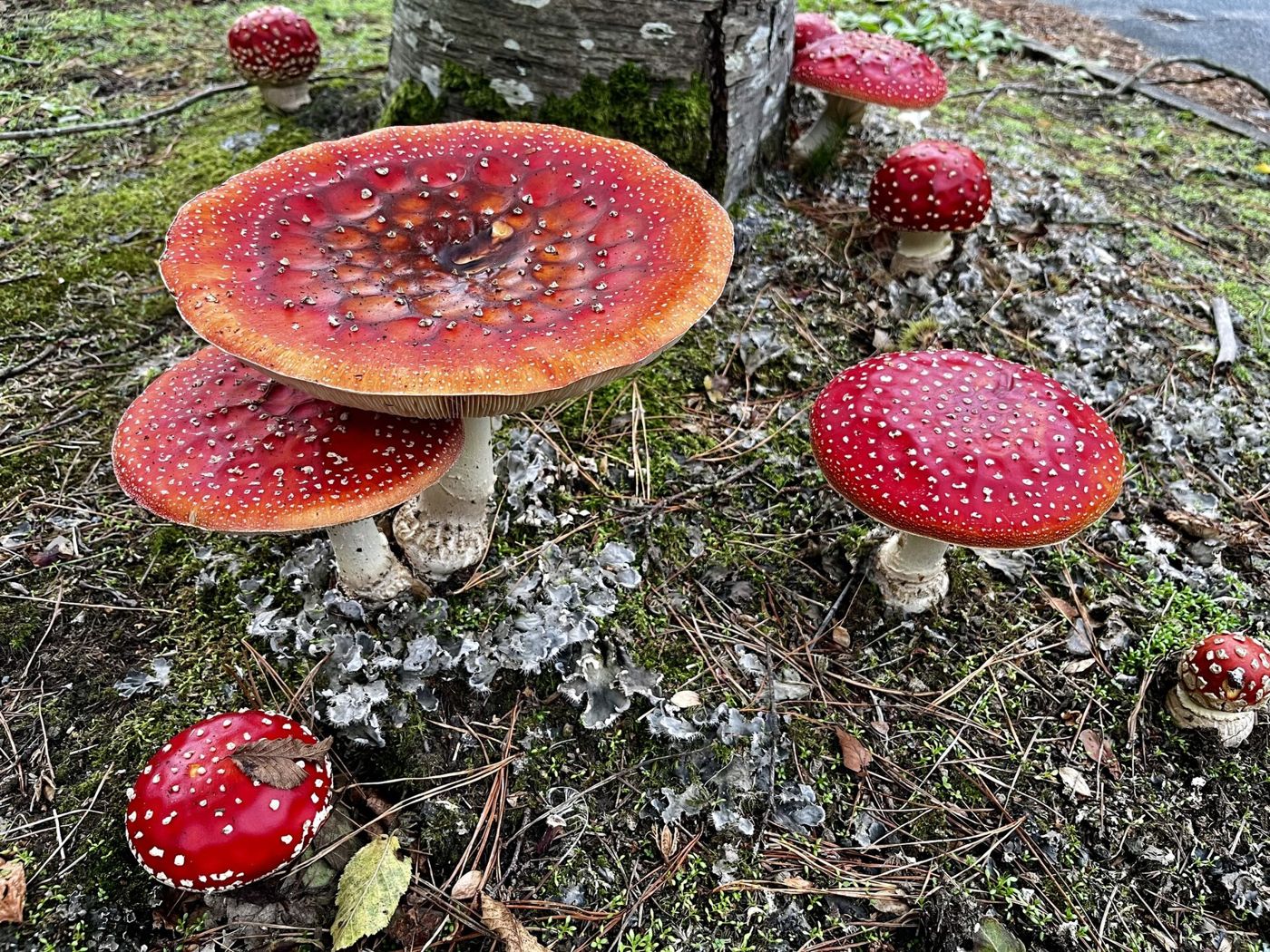
Red wild mushrooms immediately capture attention when they erupt from forest duff or garden lawns, but their vivid appearance tells you remarkably little about their safety. In folklore and popular culture, bright red mushrooms are often treated as universal symbols of danger, while in other contexts people mistakenly assume that vivid coloring exists solely to deter wildlife. In reality, wild mushrooms do not follow human color codes. Fungi produce pigments through a wide range of biochemical pathways that have evolved for spore protection, moisture retention, and environmental adaptation rather than to signal edibility to humans. Some red mushrooms contain dangerous neurotoxins or intense gastrointestinal irritants, while others belong to historically harvested groups, and still others are simply inedible due to tough texture or acrid taste.
Among the most globally recognized red fungi is the fly agaric, scientifically known as Amanita muscaria. Instantly recognizable by its scarlet to orange-red cap adorned with white or yellowish universal veil remnants, this iconic species is classified as toxic. Amanita muscaria produces compounds such as ibotenic acid and muscimol, which target the central nervous system. Ingestion can cause sweating, severe nausea, ataxia, confusion, visual disturbances, hallucinations, and muscle twitching. While healthy adults rarely suffer fatal outcomes under modern medical care, poisonings are medically serious, distressing, and unpredictable. Regional variants across North America, such as Amanita muscaria var. guessowii, can range in color from bright yellow-orange to fiery red-orange and contain the exact same harmful compounds.
Another widespread group of red fungi belongs to the genus Russula, commonly called brittlegills. Species such as the sickener, Russula emetica, boast striking crimson or cherry-red caps paired with stark white gills and fragile, chalk-like stems. Ingesting Russula emetica or closely related red-capped Russula species triggers rapid and violent gastrointestinal illness characterized by severe stomach cramps, persistent vomiting, and dehydration. Telling individual red brittlegill species apart is exceptionally difficult even for professional mycologists, often requiring chemical reagents and microscopic spore measurements. Assuming that a particular red brittlegill is harmless because it lacks the warts of an Amanita is a frequent mistake that leads to acute poisoning.
Toxicity in reddish fungi is not limited to Amanita and Russula. Several species within the genus Cortinarius, such as the deadly webcap (Cortinarius rubellus), exhibit reddish-brown, rusty-cinnamon, or tawny-red caps. These mushrooms harbor orellanine, an insidiously dangerous fungal toxin that destroys renal tissue, frequently leading to acute kidney failure several days or even weeks after ingestion. In the bolete group, species like the Satan's bolete (Rubroboletus satanas) feature red pores and reddish stem netting that produce severe, exhausting bouts of gastrointestinal poisoning. Because reddish coloration occurs independently across vastly different fungal families with completely different toxic profiles, treating red fungi as a single uniform category is profoundly unsafe.
Novice foragers often attempt to simplify wild fungi by relying on folk rules to separate poisonous species from edible ones. Common myths suggest that peeling the cap skin removes toxins, that boiling a mushroom with a silver coin will turn the metal black if poison is present, that pleasant smells indicate safety, or that wild animals eating a mushroom proves it is safe for human consumption. Every single one of these traditional shortcuts is completely false. Slugs, insects, and woodland rodents possess digestive systems that tolerate amatoxins and other lethal fungal compounds that would cause fatal organ failure in humans. Never assume a wild mushroom is safe based on a single trait, folk wisdom, or superficial similarities, as some of the deadliest species closely resemble popular edible mushrooms. Only a qualified expert who has physically examined the actual specimen in person can ever confirm whether a wild fungus is safe.
If you suspect that anyone—an adult, a child, or a pet—has ingested any portion of an unidentified red mushroom, treat the situation as an urgent medical priority. Never wait for nausea, cramps, or other symptoms to develop before seeking help, as some of the most dangerous fungal toxins cause delayed symptoms that only appear after internal organ damage has already begun. Contact your regional poison control center or emergency medical services immediately. Safely gather any leftover pieces of the mushroom, including the stem base and unpicked specimens from the same patch, and transport them in a breathable paper bag or hard container to the emergency room. Having the physical mushroom allows toxicologists and consulting mycologists to examine microscopic features and initiate appropriate, targeted care without delay.
Observing wild fungi safely requires moving beyond color and examining the full anatomy of the specimen. Whenever you encounter a red mushroom in nature, capture detailed, well-focused photographs of the entire cap surface, the gills or pores beneath the cap, the stem texture, and the intact base of the stem unearthed carefully from the soil or wood. You can upload these images into Shroomly to explore likely species matches and review documented toxic look-alikes. However, an automated tool should always serve as an educational stepping stone, so always confirm your finds with a local mycological society or experienced specialist before making any definitive conclusions about what you have discovered.