

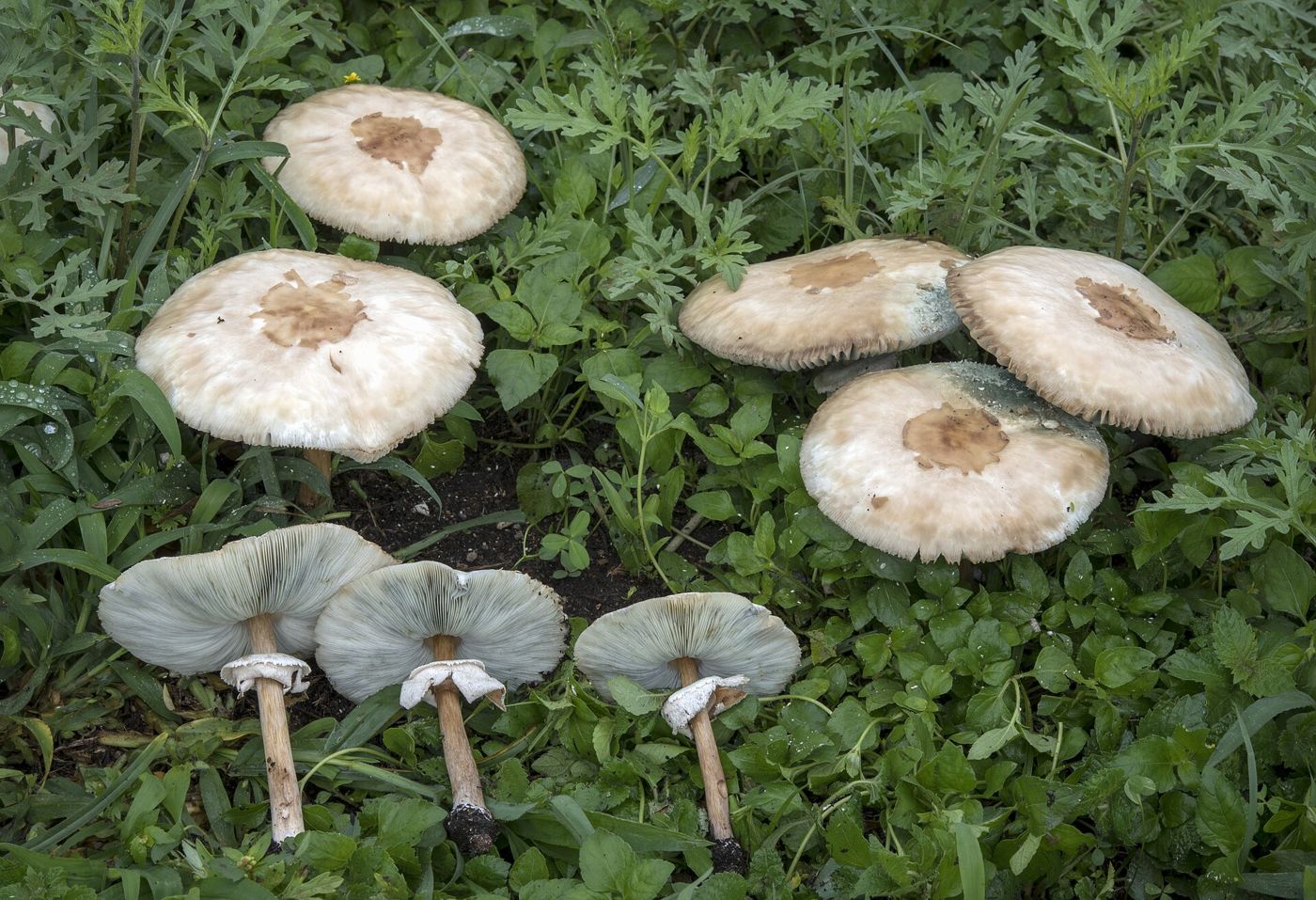
Are mushrooms in my lawn poisonous is the question that follows almost every wet week of autumn. The honest answer is that some are and most are not, but the poisonous ones do not look obviously different from the harmless ones. A lawn can host several species at once, and a mushroom that is merely unpleasant can grow a few feet away from one that sends people to hospital. That is why the safe working rule is simple: no mushroom picked from a lawn is food, and every one of them is off limits to small children and pets.
Lawn mushrooms are the fruiting bodies of fungi that live in the soil all year. The bulk of the organism is a web of fine threads, the mycelium, quietly breaking down buried roots, old stumps, thatch, and wood chips. When moisture and temperature line up, it pushes mushrooms above ground to release spores. Their appearance usually means your soil has plenty of organic matter, not that something is wrong with the grass.
In North America, the mushroom most often behind lawn poisonings is the green-spored parasol, Chlorophyllum molybdites. It is large, white to buff with brownish scales, and grows in rings or arcs on lawns and in parks. Its gills turn a dull greenish grey as it matures, which is the tell, but young specimens look convincingly like edible parasols and field mushrooms. Eating it causes severe vomiting and diarrhoea that can need medical care, especially in children.
Other lawn species carry more serious toxins. The ivory funnel, Clitocybe dealbata, is a small white mushroom that grows in grass and contains muscarine, which causes heavy sweating, salivation, and a slow heart rate. Some small brown lawn mushrooms, such as Pholiotina rugosa, contain the same amatoxins found in the death cap. These are the reason experienced foragers ignore 'little brown mushrooms' entirely: too many species look alike, and a few of them are deadly.
If you want the mushrooms gone, pick or mow them before they open and drop them into a bag for the bin, wearing gloves if you prefer. Fungicides rarely help because the fungus lives in the soil, not in the mushrooms you can see. Raking up wood debris, aerating compacted soil, and improving drainage reduce how often they appear. If a child or pet may have eaten one, call poison control or your vet straight away, and keep a sample of the mushroom for identification.
Wondering what is actually growing in your grass is reasonable, and a photo is a good place to start. Take pictures of the cap, the gills underneath, and the whole stem down to the soil, then let Shroomly suggest the likely species and flag toxic look-alikes. Use the result to decide how careful to be around the patch, not to decide whether to eat it; for that, only a local expert who has examined the specimen can help.