


People are often surprised to hear that the mushroom on their lawn is a living thing, partly because it does not move, has no obvious face and seems to appear from nowhere overnight. But by every standard biological definition, fungi are alive. They are made of cells with nuclei and DNA, they take in nutrients, they respire by consuming oxygen and releasing carbon dioxide, they grow, they reproduce, and they respond to changes around them. Fungi form their own kingdom, separate from plants and animals, and molecular studies show they are actually more closely related to animals than to plants. The mushroom you see is only one part of the organism, though, and understanding that is the key to most questions about whether mushrooms feel anything.
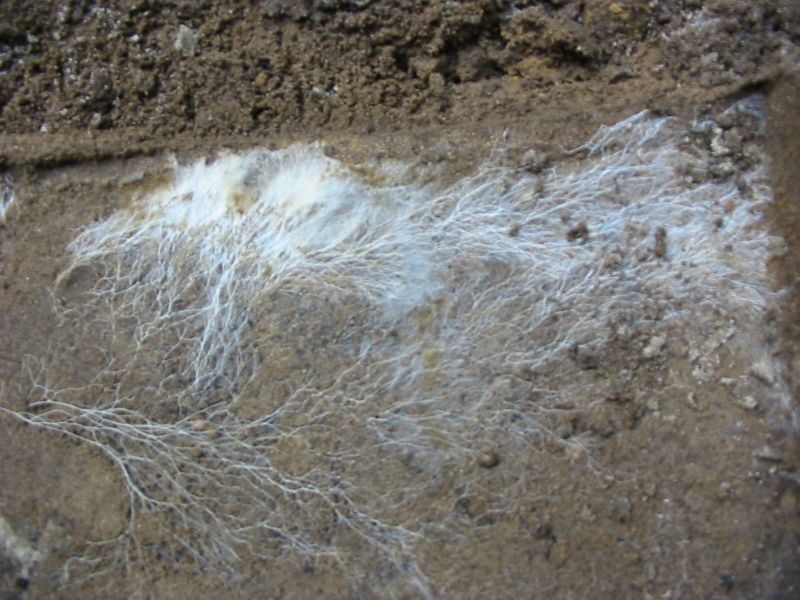
The main body of a fungus is the mycelium, a network of microscopic threads called hyphae that spreads through soil, leaf litter, wood or dung. The mycelium can live for years, and in some species for a very long time, quietly digesting organic matter or trading nutrients with tree roots. A mushroom is a temporary reproductive structure, roughly comparable to an apple on a tree. It pushes up when conditions are right, releases spores, and then decays within days or weeks. Picking a mushroom removes that fruiting body but usually leaves the mycelium below ground intact, which is why the same patch often fruits again in later seasons. So the mushroom is alive, but it is a short-lived part of a much larger and longer-lived organism.
So do mushrooms feel pain? Pain, as biologists understand it in animals, depends on specialised nerve cells that detect damage and a nervous system, usually including a brain, that processes those signals into an experience. Fungi have none of this. They have no neurons, no nerves, no brain and no pain receptors. When a mushroom is cut, bruised or eaten by a slug, its cells do react chemically, and some species change colour, ooze latex or produce defensive compounds at the wound. These are cellular responses, similar in principle to the way a cut plant seals itself, and there is no evidence that they involve any awareness or suffering. Feeling bad about picking a mushroom is understandable, but there is no scientific basis for believing it hurts.
That does not mean fungi are passive. Fungal hyphae can sense and respond to a remarkable range of cues, including moisture, temperature, light, gravity, touch, nutrients and chemicals released by other organisms. Mushroom stems bend upward against gravity so the cap ends up level and the spores fall cleanly from the gills or pores. Many species need a change in light or temperature to begin fruiting. Mycelium can grow toward a food source and away from poor conditions, and it can redirect resources through its network, thickening some threads and abandoning others. Parasitic and predatory fungi detect their hosts chemically, and some soil fungi even trap tiny nematode worms with sticky nets or constricting loops. All of this is sophisticated behaviour, but it happens without a brain.
You may have seen headlines claiming that fungi think, talk or have a language. These stories usually come from genuine research showing that fungal mycelium carries electrical signals, sometimes in patterns of spikes, and that some networks appear to change their activity in response to stimuli. Researchers are still debating what these signals mean, how widespread they are, and whether they play any role in coordinating growth. Similarly, fungi linking tree roots underground do move water, nutrients and chemical signals between plants, although some popular claims about a cooperative wood wide web have been criticised as going beyond the evidence. The careful summary is that fungi process information and respond adaptively, but calling this thinking or consciousness is a metaphor, not an established finding.
There is one practical lesson in all of this. Because a mushroom is just the visible tip of a living fungus, its appearance can vary a great deal with age, weather and habitat, and fungal chemistry, including toxins, is not something you can sense by looking, touching or smelling. Folk ideas such as a mushroom being safe because animals nibble it, because the cap peels, or because it does not tarnish a silver spoon are all false, and some deadly species, including Amanita phalloides, closely resemble popular edible mushrooms. Only an expert who has examined the actual specimen can confirm whether a wild mushroom is edible, and if anyone may have eaten an unknown mushroom, call poison control or emergency services immediately and keep a sample of it.
If you are curious about the mushrooms living around you, the best way to learn is to observe them closely. With Shroomly, photograph the top of the cap, the gills or pores underneath and the very base of the stem, including any sac, ring or bulb, and the app will suggest likely species along with toxic look-alikes to compare. Treat that result as a starting point for learning rather than a verdict, and confirm any identification with a local mycological society or an experienced expert, who can examine the specimen in person and help you understand the remarkable living organism behind every mushroom you find.