

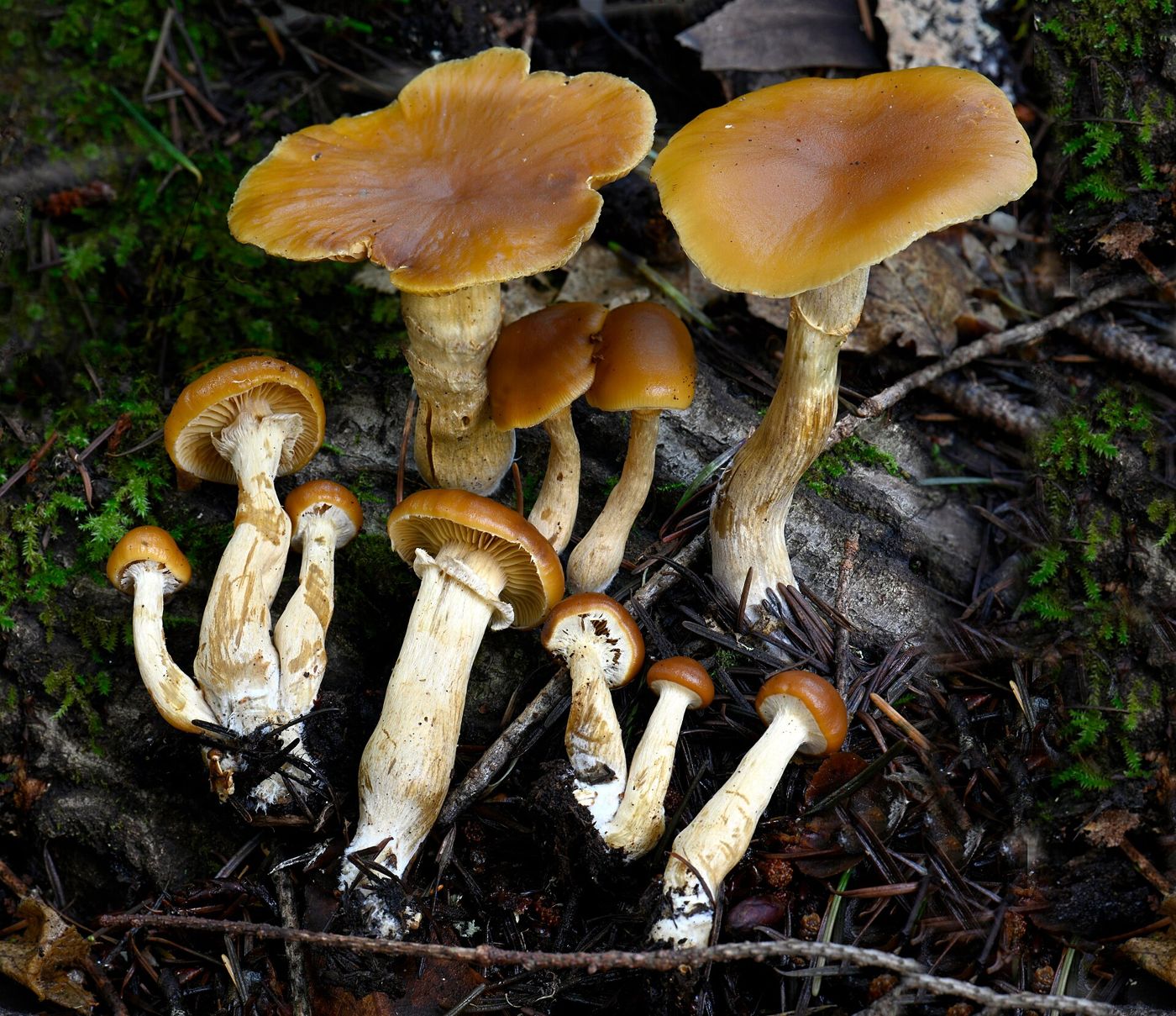
People often worry about “little brown mushrooms” (LBMs) because they’re common in lawns, mulch and wood debris and look so similar to one another. LBM isn’t a taxonomic term — it’s a practical, visual label for many small, drab species across several genera. The problem for safety is that some of those genera include species with serious toxins, and inexperienced observers can’t reliably tell them apart. For that reason, treat unknown small brown mushrooms with caution and don’t rely on casual rules or an app alone to decide whether they’re safe.
Several toxic species commonly show up in the LBM appearance range. Galerina species (such as Galerina marginata) and Conocybe filaris can contain amatoxins, the same group of liver-damaging compounds found in Amanita phalloides; Inocybe species commonly contain muscarinic toxins that produce strong cholinergic symptoms; and other small brown fungi can cause severe gastrointestinal upset. Scientific names matter because look-alikes are common: a harmless little brown cap may be close in appearance to a dangerous relative, and only a trained mycologist examining the real specimen can make a confident identification.
Symptoms and timing vary by toxin. Amatoxin poisoning typically begins with delayed gastrointestinal symptoms (nausea, vomiting, diarrhea) several hours after ingestion, which can be followed by an apparent improvement and then signs of liver injury; muscarinic toxins tend to cause earlier onset sweating, salivation, blurred vision and abdominal cramps; many species cause immediate nausea and vomiting without systemic organ failure. Because timing and symptoms can be deceptive, if anyone — child, adult or pet — has eaten an unknown mushroom you should call your regional poison control center or emergency services right away and bring or preserve a sample of the mushroom for identification.
Ignore folk tests and rules of thumb. Common myths — that a mushroom is safe if a silver spoon doesn’t tarnish on it, that animals eating a mushroom proves it’s harmless, or that poisonous mushrooms always taste bad or cause immediate reactions — are unreliable. Peeling a cap, cooking or boiling is not a safe way to neutralize toxins; some deadly compounds withstand heat or require very specific processing that is not predictable at home. Never assume a mushroom is edible based on one trait, one photo, or an old wives’ test.
You can reduce risk in yards and gardens with practical steps: remove fruiting bodies promptly (using gloves or a tool) and dispose of them in sealed bags, keep mulch and wood debris away from play areas, supervise children outdoors and teach them not to touch or eat wild mushrooms, and prevent pets from nibbling mushrooms by keeping them on a leash or restricting access. If you collect a suspect mushroom for disposal or identification, place it in a sealed container or bag and refrigerate if possible — don’t compost it. These measures won’t eliminate all risk but will lower the chances of accidental ingestion.
If you want a responsible identification, photograph the mushroom thoroughly (top of the cap, underside showing gills or pores, the stem and the stem base where it meets the soil or wood) and keep a physical sample. You can let Shroomly suggest likely species and highlight possible toxic look-alikes, but remember that an app or photos alone can’t guarantee edibility. For anything you might eat or a suspected poisoning, confirm identifications with a local mycological society or an expert who can examine the actual specimen, and contact poison control or emergency services immediately if ingestion is suspected.