


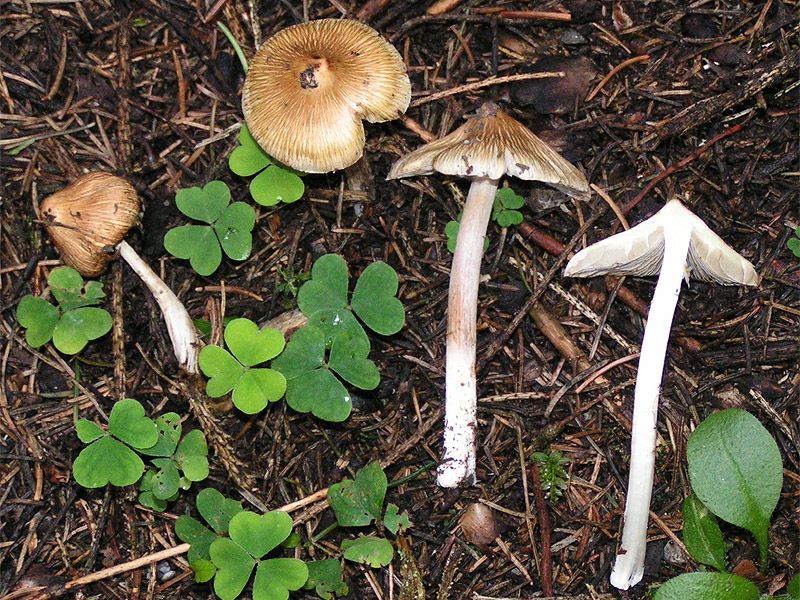
Fibrecap mushrooms, belonging to the widespread genus Inocybe, are among the most hazardous small gilled fungi found across North America, Europe, Australia, and other temperate regions. These mushrooms earn their common name from the distinct radial fibres that streak across their caps, which frequently split at the margins as the cap expands with age. Because fibrecaps routinely fruit in grass, urban parklands, along gravel pathways, and on woodland floors beneath both hardwood and conifer trees, encounters between these unassuming brown fungi and curious foragers, gardeners, children, and pets are relatively common.
The primary danger of the genus Inocybe lies in its chemistry, as a substantial number of species produce potent amounts of the toxic alkaloid muscarine. While muscarine was historically named after the famous red-and-white fly agaric, it is actually found in dramatically higher, far more dangerous concentrations in fibrecaps such as Inocybe rimosa and Inocybe erubescens. When absorbed into the human body, muscarine binds directly to acetylcholine receptors in the peripheral nervous system, causing excessive stimulation of secretory glands and smooth muscles throughout the body.
This overstimulation results in a classic clinical presentation known as cholinergic poisoning, historically summarized by clinicians as the perspiration-salivation-lacrimation syndrome. Victims typically experience intense sweating, profuse salivation, streaming tears, severe nausea, vomiting, watery diarrhea, blurred vision, and agonizing abdominal cramps. Muscarine also triggers dangerous cardiovascular and respiratory effects, including a critically slowed heart rate and bronchoconstriction that makes breathing difficult. In severe cases, especially among young children, the elderly, or those with existing cardiac and pulmonary illnesses, the poisoning can lead to fatal circulatory collapse or acute pulmonary edema.
Symptoms from fibrecap ingestion manifest rapidly, typically within fifteen to thirty minutes of consumption, though they may take up to two hours to appear in some individuals. If you suspect that a person or pet has swallowed any portion of a fibrecap mushroom, do not wait for symptoms to worsen and never attempt home remedies or induced vomiting. Contact emergency medical services or your regional poison control center immediately. If possible, collect any remaining mushroom specimens, including the base, and store them in a dry paper bag or rigid container to accompany the patient to the hospital so toxicologists can verify the species and administer appropriate medical treatments such as atropine.
Accidental poisonings involving fibrecaps often occur because novices mistake them for harmless or culinary species, such as small field mushrooms, fairy ring champignons, or edible bonnet mushrooms. Furthermore, dangerous folk myths lead people into a false sense of security. Common old wives' tales claim that cooking removes mushroom toxins, that mushrooms nibbled by insects or rodents are safe for humans, or that tarnishing a silver coin can prove whether a cap is poisonous. None of these beliefs are true. Muscarine is heat-stable and entirely undamaged by boiling, frying, or baking, and animals possess metabolic systems that tolerate compounds that are lethal to humans. Only a qualified mycological expert who has physically examined the actual specimen can reliably confirm whether any wild mushroom is safe to eat, particularly because several deadly species closely resemble popular edible varieties.
Studying wild fungi safely requires careful observation rather than speculative sampling. If you discover a suspected fibrecap while exploring your yard or walking through local woodlands, photograph it thoroughly from multiple angles before disturbing it. Capture sharp pictures of the fibrous cap, the crowded gills beneath, and the entire stem right down to where it enters the soil. You can submit these images to Shroomly to explore likely candidate species and learn about critical toxic look-alikes in your area, and you should always confirm your wild finds with an experienced local mycological society or expert identifier.